If you have a garden, then you probably understand that the biggest threat in a garden doesn’t always come from the garden bed. Most of the time, seeds slowly lose their viability because of a poorly organized junk drawer or a damp shed corner. The important thing is that fixing it doesn’t require any special tool or equipment. What it needs is a thoughtful system and a good routine to follow.
This blog will explore how to store seeds, bulbs, and plant labels. Read the full article to learn more.
The Problem with Small Garden Supplies
Gardeners prefer to buy in bulk and keep the plants in bulk. Growers tend to pile up seed packets from a dozen various companies, all on different paper stocks, in different sizes, and none of them filed anywhere consistently. The outcome is unwanted: packets get lost behind pots or dampened by a nearby leaking hose. By spring planting time, half will be gone or unreadable.
Bulbs and labels have a similar issue, but for various reasons. Bulbs are living tissue. They need ventilation, consistent temperatures, and protection from freezing and excess moisture. While Labels, are either misplaced in the hardware row or tossed into a bucket. Old garden sheds were simply not created with small-item organization in mind.
Seed Storage: Keeping Viability Intact
Seeds are chemically alive and react to heat and humidity like food, even when stored in dry. Store seeds in a cool, dark place with a stable temperature, mostly 32-41 F in the refrigerator (if you have extra space) or roughly 50-60 F in an unheated closet. Moisture is the true adversary. A silica gel packet in each storage container eliminates excess humidity and can help preserve the seed’s shelf life for years.
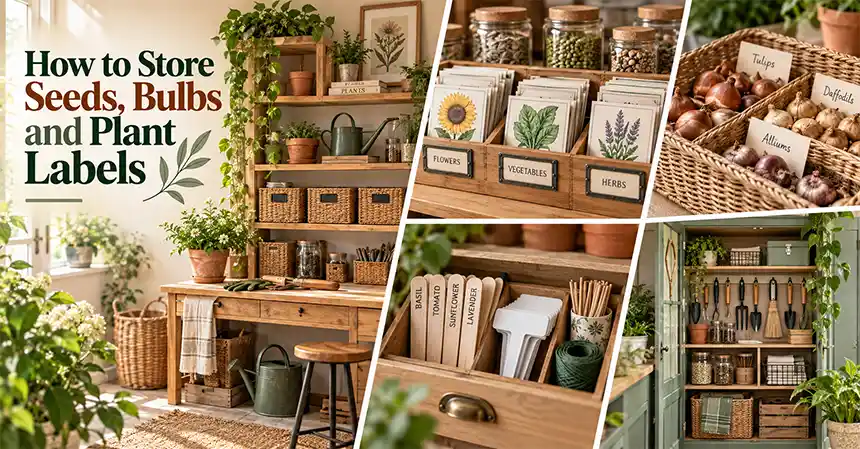
As much as climate control, organization is essential. Try organizing the seeds by planting season, not alphabetically, because that’s how I want them organized. I find a photo of a storage box with small dividers fits well for packet-sized seeds, and index cards with sowing-date labels help you plan months in advance instead of in April. If you have a more extensive garden, there are a few good practices which can make a difference:
- Ensure seeds are in their original seed packets when possible, as the packet will have the lot number and packed-for date.
- To control moisture, use a silica packet or a few grains of dry rice in any airtight container.
- Mark bins by planting month and not plant family; the bin will tell you when it is time to open it.
- Do a paper towel germination test to determine if older seed has low germination rates before the season begins.
Properly stored seed has to get germination rates above 80 percent even after five years. Seed left in a hot garage hardly makes it past year two.
Building a System: Cabinets, Bins, and Labels That Work Together
The tools aren’t as cool as they sound, but they resolve this problem. I have used stackable bins with transparent lids to store seed packets, and parts cabinets for small items to catalog bulb inventory by type and seed packets by variety. The little drawers are marked individually and designed to store nuts and bolts, but they also work great for thousands of varieties of seeds without becoming one giant heap. The drawers slide side to side so you can get everything, which matters when you’re looking for one important packet in the depths of the drawer.
A shed or garage corner set up this way pays for itself in less time. Mount a shallow cabinet to your work table at the working height and place anything you want to sow in the next month in the bottom layer. Put any bulbs in dormancy on a shelf above that. Ensure you have a rotating seed bank near the door for any new seed you intend to sow. This will need no custom carpentry. It decides where each item belongs, then places it there.
Bulb Storage Through the Off-Season
In most climates, tender bulbs such as dahlias, gladiolus, and caladiums must be eliminated from the ground before frost, and storage quality will determine whether they thrive through the winter. We advise harvesting after the first hard frost has fallen and blackened the leaves. Let them dry out for a couple of days out of the sun, then keep them in crates with a little damp peat moss or vermiculite in a ventilated area. Airtight plastic containers are a better choice here. Bulbs must breathe, and once you keep them in a lidded container, moisture will condense and rot the bulbs within weeks.
Bulbs that are ready to be planted, such as tulips or daffodils bought in bulk from a supplier, must be managed differently. They need to stay cool and dry, and not be stacked on top of each other, so air can circulate around each one. Put old onion sacks or mesh bags from a rafter in an unheated area. This way, rodents don’t make a fifty-bulb sale into a feast. By pruning bulbs regularly during the winter, you uncover any soft or moldy bulbs in time, preventing rot from spreading to adjacent bulbs.
Plant Labels and Markers: An Underrated Mess
Plant labels seem not so important at first, but when you’re faced with forty pots that all look the same in April, and you have no idea which is which, they’re not so insignificant. In most cases, a dedicated label station resolves this. Get blank labels, a permanent marker, and a little cup of used labels that you can reuse, all in one container close to your potting bench so it only takes 10 seconds to write a new tag instead of a 5-minute search.
The reuse of components should also be thought of as part of the system. Plastic and metal labels can be wiped down or sanded clean and reused for many years, limiting clutter and cost. Do not put all markings together: wooden stakes for temporary seedling trays, metal tags for permanent perennial beds, and waterproof paper tags for anything that goes into cold storage over the winter. This allows you to grab the right one at a glance instead of sifting through a jumble every time.
Conclusion
Good storage doesn’t have to be fancy, but it can make the difference between losing half the season to a missing seed packet or a forgotten bulb that rots. A little structure and a cool, dry place are the best investments a gardener can make.
FAQs
What is the best way to store seed packets?
The best way to store seed packets is in an airtight container in a cool and dry place.
How long do seeds stay good in a packet?
Seeds often stay good in a packet for 1 to 5 years, depending on plant type and how well it’s stored.
What happens if seeds expire?
When seeds expire, they lose their ability to sprout and their internal energy.