


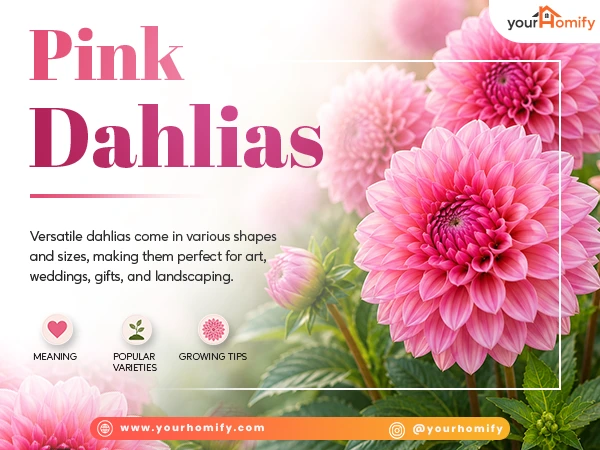
I love how Pink Dahlia instantly adds softness, beauty, and color to a garden. As per the Dahlia Society of Victoria, this stunning pink flower belongs to a group of Dahlias that originated in Mexico, where the bloom was later declared the national flower in 1963.
Its impressive appearance, rich symbolism, and long flowering season make it a favorite choice for many gardeners. Moving further, in this guide, I have explained how to grow and care for pink Dahlia successfully, along with some of its popular varieties and tips to manage pests and diseases.
Quick Answer
Pink Dahlia symbolizes grace, kindness, love, and emotional strength. This elegant flower grows best in full sunlight, well-draining soil, and regular watering. Proper pruning, fertilizing, and staking help the plant stay healthy and produce vibrant blooms throughout the season.
Pink Dahlia: Meaning and Symbolism of the Bloom
Pink Dahlia is often loved for its soft beauty and elegant appearance. This flower is usually linked with kindness, emotional warmth, grace, and strength. Its meaning and symbolism have captivated both gardeners and novice plant lovers for centuries.
- Love and Affection: Pink Dahlias are commonly connected with love, care, and emotional bonding. Unlike the Black Dahlia flower, which symbolizes mystery and resilience, pink flowers are often used to express gentle feelings such as admiration and heartfelt affection among friends, partners, or family members.
- Kindness and Compassion: Many people gift pink dahlias to show appreciation, encouragement, or gratitude towards someone who has been caring and supportive in their life. The soft pink shades of the genus represent empathy, gentleness, and compassion.
- Grace and Femininity: Pink Dahlias are often seen as symbols of elegance, charm, motherhood, and femininity. The stunning arrangement of their petals has made them a popular wedding flower and is often used in many floral arrangements.
- Strength and Long Lasting Resilience: During the Victorian era, especially in Europe, this genus was known to represent inner strength, long-term connection, and endurance. The ability of the bloom to last for a longer season was linked to the ability to stay strong during difficult times.
As per the American Dahlia Society, pink Dahlias and other varieties of this genus originated in the mountains of Mexico and Guatemala. The flower was highly valued by the Aztecs in the early 16th Century for both decorative and practical uses.
Explore Some Popular Pink Dahlia Varieties
Just like me, if you are also planning to add some stunning and popular pink dahlia flowers to your front lawn, here is a short list of some of the most eye-pleasing and easy-to-grow varieties.
1: American Dream Pink Dahlia
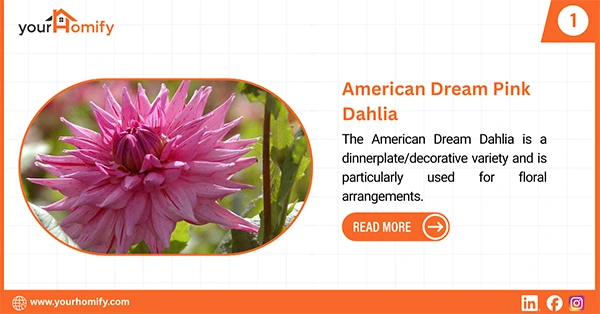
The American Dream Pink Dahlia is a stunning decorative dahlia variety known for its soft pink petals, beautifully blended with cream white color. Its large blooms make it an ideal variety for flower beds, border cover, and floral arrangements during the summer and fall seasons.
- Hardiness Zone: 8-11 USDA
- Bloom Time: Midsummer to frost
- Growth Type: Herbaceous perennial
- Native Region: Mexico and Central America
- Botanical Name: Dahlia pinnata
2: April Dawn Pink Dahlia
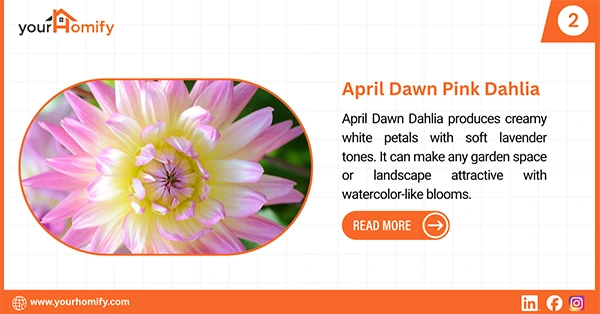
April Dawn Dahlia is a magnificent variety admired for its lavender blooms with creamy white shades. Its alluring blossoms with elongated petals create a delicate and romantic look on my front lawn. This cultivar grows up to 4-6 ft tall and is popular in cottage gardens, floral displays, and cut flower arrangements throughout the season.
- Hardiness Zone: 8-11 USDA
- Bloom Time: Summer to early winter
- Growth Type: Herbaceous perennial
- Native Region: Mexico and Central America
- Botanical Name: Dahlia pinnata
3: Café Au Lait Rose Pink Dahlia
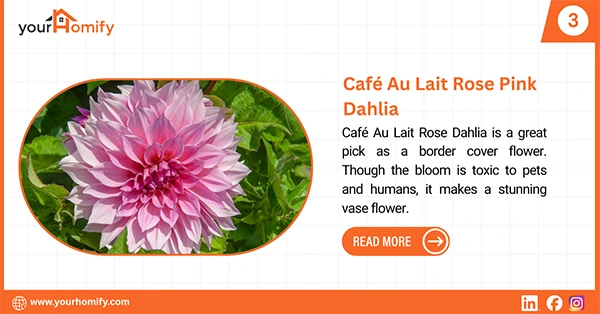
The Café Au Lait Rose Dahlia is a dreamy decorative variety known for its large blush-pink blooms with off-white undertones. Its fluffy appearance makes it a favorite for wedding bouquets, floral displays, and elegant garden arrangements that can be enjoyed during late summer or fall.
- Hardiness Zone: 8-11 USDA
- Bloom Time: Midsummer to early frost
- Growth Type: Herbaceous perennial
- Native Region: Mexico and Central America
- Botanical Name: Dahlia pinnata
4: Edinburgh Pink Dahlia
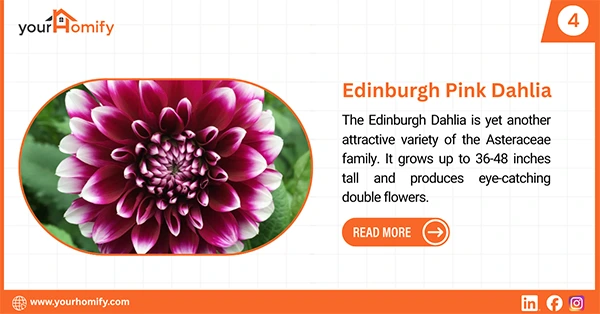
The Edinburgh Pink Dahlia is admired for its rich pink blooms, layered petals, and eye-catching appearance. It typically adds brightness and texture to any landscape, flower beds, or bouquet arrangements. The dark green leaves of this flower create a stunning contrast, and its ingestion can lead to gastrointestinal issues in both humans and pets.
- Hardiness Zone: 8-11 USDA
- Bloom Time: Midsummer to early frost
- Growth Type: Tuberous perennial
- Native Region: Mexico, Central America, and the United Kingdom
- Botanical Name: Dahlia pinnata
5: Pink Pearl Dahlia
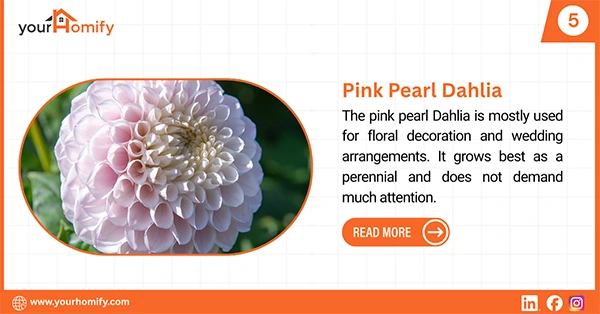
The Pink Pearl Dahlia features soft, rosy-pink blooms arranged in a tightly rounded shape along with contrasting green leaves. Growing up to 36 inches tall, this dahlia cultivar gives the best visual effect and adds charm to any garden space or landscape. It is sometimes also called Ball Dahlia and is best used for container planting or floral decorations.
- Hardiness Zone: 8-11 USDA
- Bloom Time: Midsummer to frost
- Growth Type: Bushy perennial
- Native Region: Mexico and Central America
- Botanical Name: Dahlia pinnata
Pink Dahlia varieties bring different shades, flower shapes, and charm to the garden. From soft pink tones to vibrant hues, each variety adds its own essence to the space and is loved for its long blooming season, fragrance, and eye-pleasing beauty.
Pink Dahlia Flower – Planting Essentials to Keep in Mind
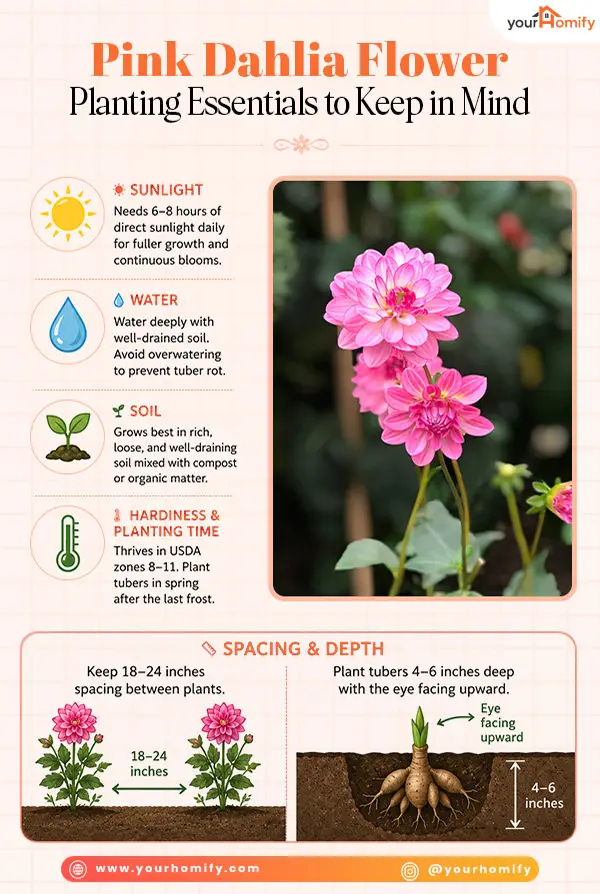
As per the American Dahlia Society, it is essential to keep in mind the fundamentals of growing this flower. Though the bloom is easy to care for and yields stunning blossoms from mid-summer to frost, it will be ideal to understand its ideal care needs. Proper planting conditions help them produce stronger stems and healthy foliage throughout the growing season.
- Sunlight: Pink Dahlias need at least 6-8 hours of direct sunlight daily. Planting them in bright and open locations can help the plants grow fuller and encourage continuous flowering during summer and early autumn.
- Water: Consider watering the bloom deeply, but avoid soggy soil. Young plants need moderate watering, while mature dahlias prefer consistent moisture during active blooming. Do not overwater, as it can cause tuber rot and stunted growth.
- Soil: Pink Dahlias grow best in rich, loose, and well-draining soil. Mixing compost or organic matter into the planting area improves drainage, supports root development, and keeps the overall health of the plant in optimal condition.
- Hardiness Zone and Planting Time: Pink Dahlias usually thrive in USDA hardiness zones 8-11 as perennials. I personally prefer planting Dahlia tubers in spring after the last frost has passed and the soil starts warming up. Warm conditions help the tubers sprout faster and have a healthy growth rate.
- Spacing and Depth: Leave about 18-24 inches of space between each plant. Proper spacing improves airflow, reduces fungal problems, and gives the flower enough area to bloom fully and spread naturally. I usually place the tubers around 4-6 inches deep with the eye facing upward.
Providing the right growing conditions to this flower of love makes it healthier, more colorful, and helps it bloom for a longer period. With enough sunlight, proper spacing, and well-draining soil, pink Dahlias can easily become one of the most attractive elements in any garden space.
Care and Maintenance Guide for Pink Dahlia Flowers
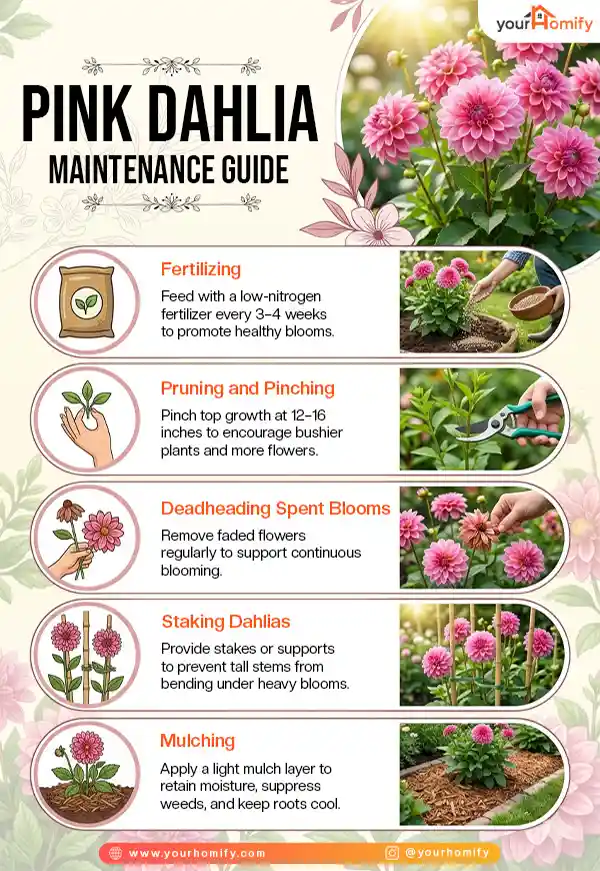
Pink Dahlia can stay healthy and bloom beautifully when it receives regular care throughout the growing season. I follow simple maintenance practices like watering, feeding, pruning, and staking that help my plants grow stronger and produce fuller flowers.
- Fertilizing: Feed pink dahlias with a low-nitrogen fertilizer every 3-4 weeks during the active growing season, but remember that too much nitrogen can cause leafy growth instead of flowers. Balanced feeding can produce larger and more colorful blossoms.
- Pruning and Pinching: Pinch the top growth when the plant reaches around 12-16 inches tall. This encourages branching and creates a bushier plant with more flower production throughout the season. I prefer pruning dead or damaged leaves to avoid stunted growth.
- Deadheading Spent Blooms: It is ideal to remove faded flowers regularly to encourage continuous blooming. Deadheading helps the plant to focus its energy on producing fresh buds instead of simply forming seeds.
- Staking Dahlias: Tall pink dahlias often need support because heavy blooms can bend or break the stems. Use bamboo stakes, garden ties, or flower supports early, before the plant becomes too large.
- Mulching: Add a light layer of mulch around the base to help retain moisture, reduce weeds, and keep the soil cooler during hot, dry spells. Avoid piling mulch directly against stems, as this can cause the stems to bend.
Regular care keeps pink dahlias blooming for a longer time and helps the plants stay vibrant throughout the season. With proper feeding, pruning, support, and seasonal care, these flowers can reward gardeners with healthy foliage and eye-catching blooms year after year.
Pest and Disease Management for Pink Dahlias
Pink Dahlias can sometimes face problems from pests, fungal infections, and poor growing conditions. Regular monitoring and proper plant care help prevent most issues before they become serious. While the species has vibrant blooms and lush green foliage, it can easily become a host for many pesticides.
| Description | Symptoms | Treatment |
| Aphids | Sticky leaves, curled foliage, clusters of tiny insects on buds and stems. | Spray neem oil or wash the insects away with a strong stream of water. |
| Spider Mites | Yellow speckled leaves, fine webbing under foliage, dry-looking plant. | Increase humidity, rinse leaves regularly, and apply insecticidal soap if needed |
| Powdery Mildew | White powder-like coating on leaves and stems | Improve airflow, avoid overcrowding, and remove the infected leaves quickly. |
| Slugs and Snails | Holes in leaves and damaged flower petals, especially overnight | Use slug traps, crushed eggshells, or hand-pick them during evening hours. |
| Tuber Rot | Soft, mushy tubers and sudden wilting of the plant | Plant in well-draining soil and avoid excessive watering around the roots. |
Managing pests and diseases early helps pink dahlias remain healthy, attractive, and full of blooms. Consistent care and quick treatment reduce plant stress and can prevent serious damage.
Conclusion
For me, the pink Dahlia is one of the most rewarding flowers to grow. Its layered petals, vibrant shades, and long blooming period make my garden look lively and aesthetically attractive. From learning about its symbolism and meaning to understanding its care needs, I can see why this flower remains so popular.
By following the right planting and care practices, I can keep pink Dahlias healthy and blooming for months. You simply need to provide them with proper sunlight, permeable soil, moderate watering, and they are good to go.
FAQs
What do pink dahlias symbolize?
The pink Dahlia is commonly known to symbolize grace, kindness, elegance, and femininity. With layered petals, this bloom was often used for gifting purposes and to express feelings like admiration and long-lasting affection.
Do coffee grounds help dahlias?
Yes, coffee grounds help dahlia grow profusely by acting as a slow-release organic fertilizer. It improves the texture of the soil, which eventually results in stunning and vibrant dahlia flowers.
What is the rarest dahlia color?
The rarest dahlia color is deep burgundy, which appears to be black. Many gardeners say that it is impossible for the bloom to be naturally black, and they are usually modified genetically.
What not to plant near dahlias?
I usually avoid planting heavy feeders near my dahlias. It is also recommended to avoid planting flowers that spread aggressively, as they can deplete dahlias of nutrients.
Are eggshells good for dahlias?
Yes, eggshells are excellent for dahlias as they can be a rich source of calcium for the flower. It helps in building strong stems while keeping away pests like slugs and snails.
- Pink-Flowered Dahlias – BBC Gardeners’ World Magazine
- Fundamentals of Growing Dahlias – American Dahlia Society
- About Pink Dahlias – National Dahlia Society, UK
When to Plant Dahlias: Best Time & Planting Guide
[…] common pest infestations in dahlia flowers are aphids, slugs, earwigs, and leafhoppers. The main reason for such pest attacks in overly moist […]
How to Store Seeds, Bulbs and Plant Labels Properly
[…] most climates, tender bulbs such as dahlias, gladiolus, and caladiums must be eliminated from the ground before frost, and storage quality will […]
How to Preserve Flowers & Wedding Bouquets Forever
[…] the best in bright pinks and reds generally. These flowers do not have fragility issues, unlike dahlias and hydrangeas. They make for interesting textures […]