Homes often have a room that works for various purposes. It actually transforms within seconds to serve an entirely different purpose. When not managed well, the space can easily feel cluttered and chaotic.
The good news is that with some smart changes, the room can be made much better. With the help of the right furniture, lighting, routine and storage, the space can be made comfortable for various purposes. Same room with various defined purposes.
Keep reading to learn smart changes to make in a room to make it serve different purposes according to the need.
Plan Around the Room’s Three Roles
Things start with time rather than furniture. Write down when each operation is actually needed. The room may function as an office five days a week, a reading or television room most evenings, and a guest room only once a month. That pattern should specify which use receives permanent space and which can rely on interchangeable pieces.
The best guest room office ideas also account for duplicates. Someone may still need to join a morning call while a guest is staying overnight. Children may use the room in the evening before the desk has been wiped clean. Plan for those moments instead of suggesting that each function happens in separate places.
Three questions quickly expose hidden problems:
- What needs to remain visible every day?
- What can be packed away in less than five minutes?
- Where will work move when a guest leaves the room?
Mark the main trail route from the door to the window and sleeping area. Keep it organized when the bed is open, not only when the room is in office activity mode. A suitcase, desk chair, and extended sofa bed can use more floor space than initially planned.
Light and privacy belong in the project from the start. Window blinds can help the room shift between comfortable daylight, evening privacy, and overnight use. The suggested style depends on which of those needs comes up most often.
Also, learn how to choose a shutter style that suits almost any room’s layout.
Make Light Control Flexible
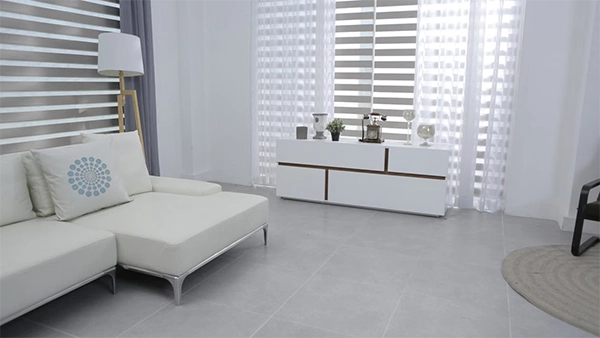
A home office needs useful daylight without a bright optical illusion across the screen. An everyday sitting room feels better when it is not closed off prematurely. A guest, meanwhile, may want privacy and a darker window at night.
This is where day/night cellular shades can be useful. They come with two fabrics on one headrail: a light-filtering section for softer daytime light and a room-obscuring or blackout section for stronger coverage. A movable rail modifies which fabric sits across the window.
During work hours, the filter panel can reduce the sharp contrast without turning the room into a cave. In the evening, the darker panel provides privacy. For overnight guests, it can limit early sunlight more powerfully than a sheer or lightly woven barrier.
Fit still matters. Blackout fabric limits light from passing through the material, but an internal shade may leave a narrow reflection around its edges. If a very dark guest room is important, greater overlap or an added curtain layer may be needed.
Desk placement can solve some glare before the shade is modified. Position the screen at a right angle to the window rather than straight in front of it or with the window directly behind it. The NIOSH guide to working from home implies placing displays perpendicular to windows and using blinds or shades to control shadows.
Test privacy at night, too. Switch on the room’s lamps, close the drapes, and check the view from outside. A light-filtering fabric that looks private during the day may showcase silhouettes once the interior is whiter than the street.
Also, explore what STR management for luxury homes really involves.
Choose Furniture That Changes Function Easily
Convertible furniture is only helpful when the procedure is simple. A sofa bed that demands moving a desk, floor lamp, and bookcase before it can open will soon become a sign of frustration.
Before buying anything, mark the fully opened space on the floor with painter’s tape. Walk around the outline, open nearby drawers, and check that the door still swings freely. Product dimensions often target the compact daytime footprint; the sleeping size is the one that specifies whether the room works.
| Furniture type | Works well when | Check before choosing |
| Sofa bed | The room is used for leisure most days | Open length, mattress comfort, and space to move the coffee table |
| Daybed | A permanent bed-sized footprint is acceptable | Mattress depth, back support, and space beneath for storage |
| Murphy bed | Clear floor space matters during the day | Wall construction, ceiling height, and safe professional installation |
| Compact desk | Work is mostly laptop-based | Legroom, screen position, and enough depth for comfortable use |
The best small-space furniture plans are not usually the smallest. A desk that is too shallow for a monitor or a chair that cannot accommodate a full workday saves floor space at the expense of well-being.
A compact desk should still allow the screen, keyboard, and mouse to sit without taking up space. If a laptop is used for long periods, a customized keyboard and raised screen can improve the setup. Avoid recognizing the sofa or bed as the main workstation simply because they are already in the room.
Think about the chair as a component of the floor plan. It needs a place to go when the bed opens. A light chair can be moved elsewhere, while a bulky working chair may need a dedicated parking space that is still clear.

Separate Work Supplies From Guest Essentials
Storage specifies whether the room feels like an office with a bed or a bedroom with paperwork stacked in the corner. Work and guest items should not share the same drawer if the transition between uses is projected to be quick.
Closed storage is specifically valuable for laptops, files, cables, and stationery. A shallow cabinet or desk with drawers can visually end the workday once its doors are shut. Daily used items should remain easy to reach; archived paperwork does not need the largest space.
Guest supplies need their own clear area. Keep bedding and towels together rather than spread them across several closets. Set up an empty drawer, basket, or section of a shelf so visitors do not have to live out of an unlocked suitcase.
Vertical storage helps when floor area is scarce, but it should not turn every wall into a storage wall. Place heavier or heavily handled items lower down. High shelves are better for spare pillows, seasonal bedding, and items used infrequently.
Furniture with built-in storage can do more than one job without looking messy. A daybed with drawers can carry linens. An ottoman can store a blanket and perform as a luggage stand. A small bedside cabinet can deliver guest storage while supporting the printer or office equipment during the week.
Create a Quick Transition Routine
The room should be prepped for a guest in roughly the time it takes to make the bed. If the process periodically takes much longer, too many objects lack a firm home.
A practical reset looks like this:
- Save work, close the laptop, and put visible paperwork into its dedicated storage.
- Move the desk chair to its planned position and open or tidy up the bed.
- Set the window down for evening privacy and place softer lighting within reach.
- Add clean bedding, towels, and an empty surface for personal items.
- Check that a charging outlet, reading lamp, and clear luggage space are prepared.
Do the routine once before a visitor arrives. This rehearsal usually presents small annoyances: the studying lamp does not reach the outlet, the sofa bed blocks a drawer, or the luggage space goes missing when the chair is moved.
Also, explore why two homes of the same size may need different water heaters.
Conclusion
At the end of the day, a multipurpose room works best when its function can be changed without taking extra stress. The storage, lighting, and furniture should all be added in such a way that everything can be used throughout the week.
Furniture need not be tiny, but it should be easy to move and should allow working with other elements of the room. This way, with some smart choices, the same room can be made in a way that it easily supports routine living and overnight guests without stress.
FAQs
How to make one room work as an office and guest room?
Use flexible furniture, better storage, and a clear transformation routine so work items can be put away easily.
How to make a guest room office feel less chaotic?
Keep work supplies in a drawer or closed cabinets and give bedding, towels and other guest belongings.
How can I control light in a multipurpose room?
Use adjustable blinds or shades that can provide comfortable daytime light, reduce screen glare, and serve privacy and darkness at night.