



Why Your AC Isn’t Cooling Properly
Based on symptoms, it is essentially difficult to figure out what the ongoing issue is in your air conditioner.
For example, an air conditioner that is on for the majority of the day and which still doesn’t make the room cool enough for a few hours after it is switched off is a problem. This could mean anything from a problem in the filter of the air conditioner to a leak in its refrigerant line.
HVAC systems of a household determine the heating or cooling requirements of a house based on its closeness to heat-prone areas.
So before looking into the equipment and house settings, one has to understand why a problem like this arose in the first place.
Why the AC Runs but the Air Stays Warm
How and why an air conditioner broke down often tells us more about the condition than warm air will ever do.
See, in an air conditioner that’s been working more than it should have often has one issue which is that while it circulates enough air to make the room cooler by a few degrees, it does not dissipate heat, which results in things like restricted airflow and a higher load than what can be handled by a dead compressor.
This is typically the main reason why even though your air conditioner works, it doesn’t produce remarkable results.
Sudden Failure Versus a Slow Slide
A cooling failure that starts suddenly is often the first indicator of a more serious problem than restricted airflow. It could mean a frozen evaporator coil, a tripped breaker, or even a part of the air conditioner that refuses to work.
That’s why it’s important to make sure whether your air conditioner actually has a faulty part that is causing the problem or if it is just a problem that’s been caused by irregular cleaning of the machine, which can result in dirty accumulation.
Hence, the best approach is to make sure that the thermostat in your house is set to the ‘cool’ mode instead of the ‘fan’ mode. Also check if one of your family members has adjusted the cooling schedule.
These low-cost checks help eliminate a variety of options regarding the faulty behaviour of the air conditioner and narrow down the problem to one or two options. This makes it easier to understand what the actual problems might be.
What Your AC Can Realistically Do on a Hot Day
It is common for a working system to have a difference of about 15 to 20 degrees between the air that is supplied and the air that is returned. For example, during a hot afternoon when the temperature goes as high as 100 degrees, the air conditioner may return the cool air only when the setpoint is 72 degrees. This varies widely depending on equipment.
Moreover, long run times on the hottest of days are not uncommon. The same behavior in mild weather is consistent with inadequate cooling that should be further investigated.
Airflow and Refrigerant Problems Inside the System
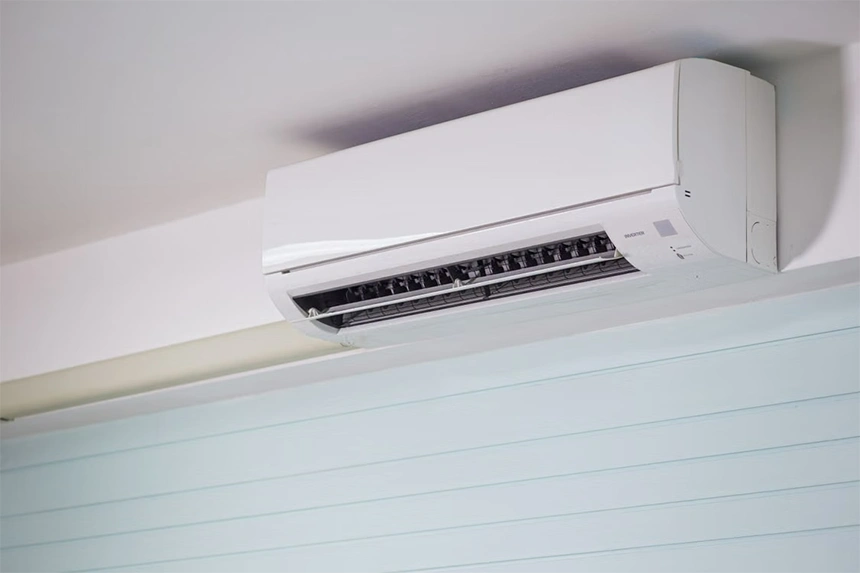
The work of an air conditioner does not simply mean that it should provide cool air; it actually means that it dissipates the heat. And this entire process depends upon the consistent movement of air within the air conditioner through its components and an appropriately charged refrigerant line, which is present in the sealed system
While the air conditioner does not fully stop working on the failure of these parts and the refrigerant line, it undoubtedly reduces the amount of its cooling capacity. Eliminating the filter, indoor coil, outdoor condenser unit, ductwork, and visible refrigerant lines can point to potential causes.
Dirty Filters, Coated Coils, and Frozen Evaporators
Dirty air filters are one of the most overlooked factors when it comes to the maintenance of an air conditioner, but they’re usually the most important. If an air filter is dirty, it restricts the blower fan from receiving adequate amounts of air, which in turn doesn’t allow airflow to pass across the evaporator coil.
Also, if the amount of warm air is too little, then condensation can freeze into a thick layer of ice that totally blocks the airflow. Some of the most widespread signs that your coil is frozen include warm vents, weak airflow, ice, and water around the indoor unit.
The best way to tackle this is to replace the filter by turning off the air conditioner and letting it thaw completely. If it is run while it is frozen, the condition will only become worse.
The coil gets another insulation layer too, as dirt on it insulates the metal from the air it needs to cool. According to ENERGY STAR’s maintenance checklist, poor equipment performance can result from neglected filters, dirty coils, blocked blower airflow, and incorrect refrigerant charges. Because access is limited and the fins are so thin, cleaning of the indoor coil is generally technician work.
Malfunctioning ductwork such as crushing, detachment, or leaks can lead to similar room-level symptoms. Cooler air can leak out in an attic or crawl space before it ever reaches that vent.
A Condenser That Cannot Dump Heat Outside
A condenser is a part of an air conditioning unit that helps cool the room by throwing the warm air inside the room outside. But this cannot happen if unwanted materials like grass clippings, cottonwood, dryer lint, and leaves cover its coils. This would make the cooling cycle longer, as the airflow would not flow as smoothly as it did earlier.
To avoid such situations, leave two feet of space empty around the cabinet from vegetation and stored items. Also, loose debris can be moved with bare hands after pulling the coil apart from the air conditioning, after which the coil can also be gently washed. A pressure washer can smash the fins, while an obstructed area above the unit could draw back hot discharge air.
Low Refrigerant Charge and Leaks
Since refrigerant is not consumed in normal operation, a low refrigerant charge indicates a leak. Indicators that you’re in trouble are poor heat dissipation, ice on the larger insulated pipe, and cooling that fades away gradually.
Even if you are able to charge the system, without locating and fixing a leak, it might just last a few weeks. The reason that leak detection, recovery, and recharging are best left with a licensed crew such as the cooling team at Gundlach’s is that refrigerants must be handled by someone who is EPA certified. The homeowner’s job, however, ends with looking at the symptoms since parts-store gauges cannot be used to judge if charge is present under real operating conditions.
When the House Is the Problem, Not the Unit
Cooling is all about the proper balance of heat flowing into the house and heat removed by the HVAC system. Even the best-functioning equipment falls behind when solar gain, air infiltration, insulation gaps, or internal activity bolster temperature too rapidly.
This balance is a common reason for one room being warmer or why the thermostat hits its setpoint at night, but not during the afternoon.
Heat Sneaking in Through Leaks and Thin Insulation
Uneven or very thinly done insulation allows heat rising to enter through the roof and into your rooms, making the room feel hotter. This warm air seeps into the attic through gaps around hatches, recessed lights, and rim joists all afternoon long. This can be prevented by utilising the methods of air sealing around the mentioned areas and installing quality insulation on roofs and attics.
West- and south-facing windows exacerbate a localized problem with hundreds of watts of solar heat gain per window. Properly fitted shading or heat-control film reduces the load and helps differentiate between an envelope problem and a supply-vent issue.
Closed Vents, Indoor Heat, and Undersized Equipment
Shutting supply vents in unused rooms does not make a neat redirect of the air you have conditioned. Instead, it raises duct pressure, reduces total airflow, and makes cooling less even. Keep all supply vents open and clear.
Measurable heat will also be produced by ovens, gaming computers, clothes dryers venting indoors, and full-house occupancy. If the thermostat only struggles under those conditions, then the additional load accounts for the difference.
System sizing only comes into play following renovations or additions. New space may not be cooled even if equipment chosen on the original floor plan operates round-the-clock. Since insulation, windows, air leakage rates, and home orientation all affect demand, the only reliable way to know if your A/C is actually undersized is with a room-by-room load calculation.
Getting Your Cooling Back on Track
Weak cooling is one of those maintenance problems that start as a minor irritant and can snowball into a mechanical failure. At this point, the sensible order still is: read hot or ice-cold temp drop, observe stat settings, service dirty filter and condenser, then move on to sealed-system or electric diagnosis.
Daily filter replacement and clearing the area surrounding your condenser or even scheduling a seasonal tune-up are all essential parts of preventive maintenance. These habits help the air conditioner to maintain airflow and expel heat before tiny obstructions become long-run cycles, frozen coils, or continuously hot sections.
FAQs
Why does my AC seem to not help at all during hot days?
During hot days, an air conditioner has a gap of about 15 to 20 degrees between the air it is supplied and the air it returns. So on a 100-degree day, the air conditioning might only be able to intake air of up to 72 degrees, thus making it feel like it’s not working.
What should I check first if my air conditioning isn’t working properly?
The two major components to check are the inside components of your air conditioning, like coils and the refrigerant line charge, which is present in a sealed system.
Are there any other things that might make the AC not working properly?
Yes, a variety of other factors can have this effect. A few things to check before you call for a maintenance check are to ensure your air conditioner is set to the ‘cool’ mode instead of the ‘fan’ mode and to check if any one of your family members has adjusted the schedule of the AC.






Energy-Efficient AC Care Practices for Sustainable Homes
[…] seasonal maintenance protects your wallet and the environment as well. Taking smart care of your home cooling system offers reliable comfort for years to […]