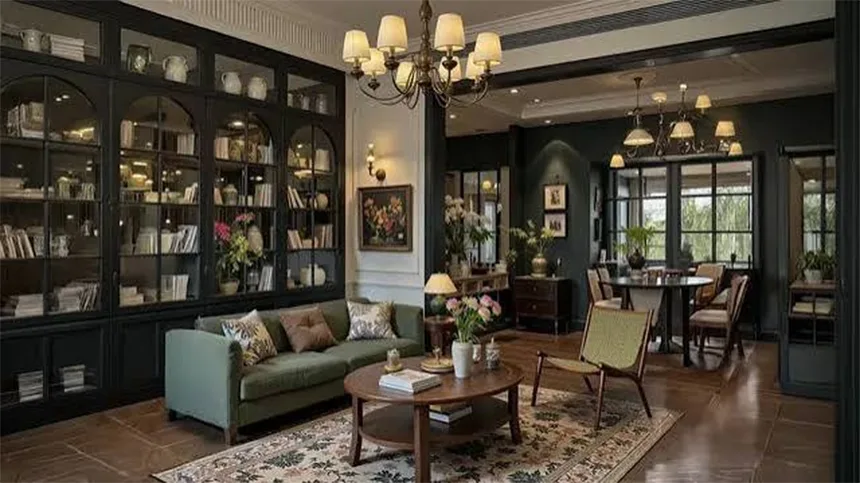
European homes look brilliant with their thick plaster walls, worn wooden beams, and rooms that feel like they’ve collected stories from a few hundred years. But your living room only has smooth drywall, a beige sofa, and a TV on the wall.
That old-wood character comes from a handful of choices about color, texture, and focal points. Here are the six ways that show you how to add that feel while keeping the room comfortable and easy to move through every day.
Way #1 – Start With a Warm, Earthy Palette
Warm and earthy tones can instantly make a room feel older and more lived-in. Start with bright whites and cool grays and move towards shades you would find in clay, stone, and aged wood.
Choose a base color for the walls and two or three supporting shades for textiles and accents:
- Warm plaster white or soft cream for walls
- Terracotta or rust for cushions and throws
- Olive or sage green for upholstery or curtains
- Deep ochre or mustard for small accents
- Dark walnut or espresso for wood tones
Paint one large sample board and move it around the room for a few days if you’re nervous about your decision. Old-world colours can look very different in morning and evening light.
Way #2 – Layer Natural Textures
Layer natural materials throughout the room because texture makes an old-world room feel real rather than themed. Rough linen, chunky wool, aged leather, stone, and wood add the sense of age that flat and smooth surfaces can not.
A limewash or textured plaster finish provides deph to a wall without a full renovation. Add linen curtains, a wool throw on the sofa, and a leather or woven footstool after completing the larger surfaces.
Rugs add warmth underfoot, but they need to stay put. A home safety handout from the University of Georgia advises that if you use rugs, you buy ones with a non-skid backing, or secure rugs without it using double-sided tape. Put a rug pad under every rug in the room, especially vintage ones with worn backs.
Way #3 – Choose One Statement Focal Piece
Every old-world living room benefits from a single statement piece that gives the eye somewhere to land. Without one, the room can feel like a collection of nice textures with no center.
Decorative armour works well in a room with dark wood and stone tones; it brings metal and history at the same time. The focal piece can be a carved wooden chest, a large antique mirror, a tapestry, or something more interesting.
If you are looking at medieval armor from Medieval Collectibles, its range includes decorative armor intended for display in the home, so you can choose a helmet on a stand or a larger piece to suit your space. Keep it in a place where it can maintain its visual appeal without being an obstacle.
Give the piece room to breathe. Keep the wall and floor around it fairly simple, so it stands out instead of competing with everything else.
Top Tip: Before you buy a statement piece, cut a piece of cardboard or tape an outline on the floor and wall at its full size. Live with it for a few days. You’ll see quickly whether it overwhelms the room, blocks a path, or sits awkwardly next to the furniture.
Way #4 – Bring in Vintage and Reclaimed Wood
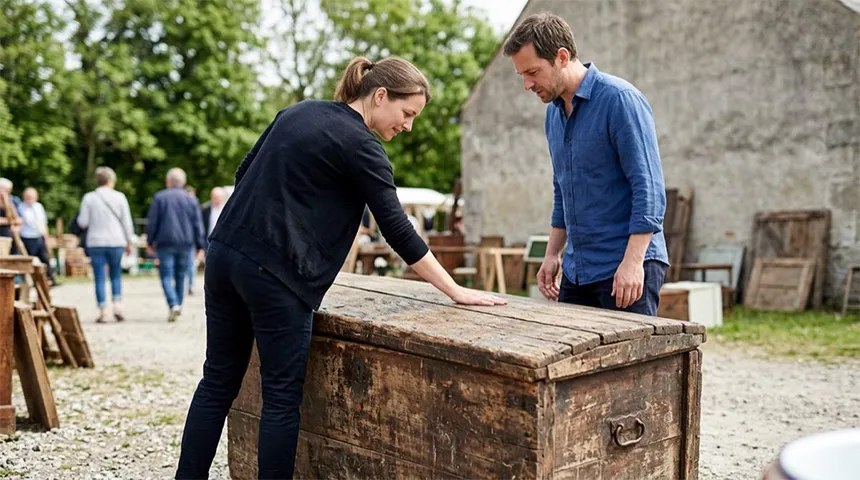
Old wood is one of the best ways to add real age to a room; its marks and patina reflect real usage. A reclaimed wood coffee table, an old trunk, or a set of chunky open shelves brings that intended character altogether.
Search flea markets, estate sales, and salvage yards for pieces with history. Check the joints and legs for wobbles before you pay.
Be careful with old paint. The EPA notes that in 1978 the federal government banned the sale of lead-based paint for use in homes. Test old painted finishes before you sand or strip them, and leave the job to a professional if the test comes back positive. Selecting paint for busy rooms and quiet spaces requires extra attention.
Way #5 – Use Warm, Layered Lighting
Harsh overhead light flattens textures and makes even the best materials look new, so plan several sources at different heights so the room glows rather than glares. Lighting can make or break an old-wood look; read the complete guide to lamps and lighting to prevent mistakes.
Soften the Overhead Light
Replace a plain ceiling fixture with a wrought iron or wooden chandelier, and fit warm white bulbs. Add a dimmer so you can turn it down in the evening.
Add Lamps at Seating Height
Table and floor lamps with linen or parchment shades provide a room for warm light. Place them near seating so people can read without switching on the overhead light.
Highlight the Details
A small picture light above artwork or a lamp near your focal piece draws attention to the textures you’ve added. It also makes the room feel layered and deliberate.
Way #6 – Arrange the Room for Easy Everyday Living
Arrange the furniture for comfort and easy movement first, as old-wood style is useless if it’s disrupting your way of living. A living room that’s hard to walk through feels cluttered regardless of how many beautiful pieces it contains.
Keep these points in mind as you arrange the room:
- Leave clear paths between doors and seating
- Keep heavy or fragile pieces out of walkways
- Place side tables within reach of every seat
- Run cords along walls, not across paths
- Leave open floor space in front of the focal piece
Step back and walk through the room with a tray of drinks. If you have to turn sideways or step around anything, move it.
Pick Your Palette and Focal Piece This Weekend
You can start this weekend by choosing your wall color and two or three supporting shades, and by deciding what your focal piece will be. Tape its outline on the wall or floor to check the size.
Add one natural texture at last, that can be a linen throw or a wool rug with a pad underneath, and swap one bulb for a warm white. These small changes will start giving your living room old-world character straight away.
Frequently Asked Questions
What colors give a living room an old-world feel?
Warm, earthy tones work best, such as plaster white, terracotta, olive green, ochre, and dark wood shades. Choose one base color for the walls and two or three supporting shades for textiles and accents.
How do I add a statement piece without crowding the room?
Choose one focal piece, such as a carved chest, an antique mirror or decorative armor, and place it against a wall or in a corner. Keep it out of the main walkway and leave the space around it fairly simple.
How can I keep an old-world living room practical?
Leave clear paths between doors and seating, put rug pads under every rug and keep cords along the walls. Place side tables within reach of each seat so the room stays easy to use every day.