Not all cases of water damage start from a flooded basement or cracked walls. In some instances, the first indicators will be an odor that won’t seem to go away, paint that peels off, or a door that won’t shut.
Underneath the surface, however, the rainwater or shifting soil could slowly exert pressure on the structure of your house. These are problems that may become even costlier if you don’t address them right away.
Knowing how groundwater flows around your home is the first step towards protecting it from any form of water damage. Effective drainage systems and regular inspections will ensure that your home is structurally sound.
How Continuous Drainage Lets You Reclaim Lower-Level Living Space
Plugging up subgrade leaks gives you the freedom to change your basement from wet to usable space. High-performance drainage systems operate automatically in the background, keeping lower levels bone-dry even during heavy downpours. Partnering with regional specialists like Precision ensures your home receives complete diagnostic evaluations and customized drainage retrofits tailored to your local soil composition. Investing in full subgrade protection converts dark, unused storage areas into clean home offices, extra bedrooms, or family entertainment rooms.
Essential Components of An Effective Basement Drainage System
- Perimeter French drains: Perforated pipe networks installed beneath the slab edge to capture incoming water right at the footing level.
- Dual sump pump setups: High-capacity pumps featuring battery backups to keep water moving out even during local power outages.
- Heavy-duty wall vapor encapsulation: Thick antimicrobial membranes that seal out ground moisture and soil gases from entering lower-level airspaces.
How Heavy Rains Trigger Clay Soil Expansion Against Foundation Walls
The soil rich in clay content behaves as a huge sponge around your foundation walls. When sudden rainstorms saturate the earth, clay particles absorb water rapidly and swell outward in every direction.
Hydrostatic pressure builds exponentially as saturated soil expands. According to testing data shared by Vesta Foundation Solutions, expansive clay soils can exert over 5,000 pounds per square foot of lateral pressure against basement walls during peak spring expansion periods.
This huge force acts in direct opposition to concrete or brickwork construction. Over time, that continuous push-and-pull cycle forces basement walls to bow inward, crack horizontally, or shift off their footings.
Why Poor Perimeter Drainage Drives Water Through Concrete Micro-Cracks
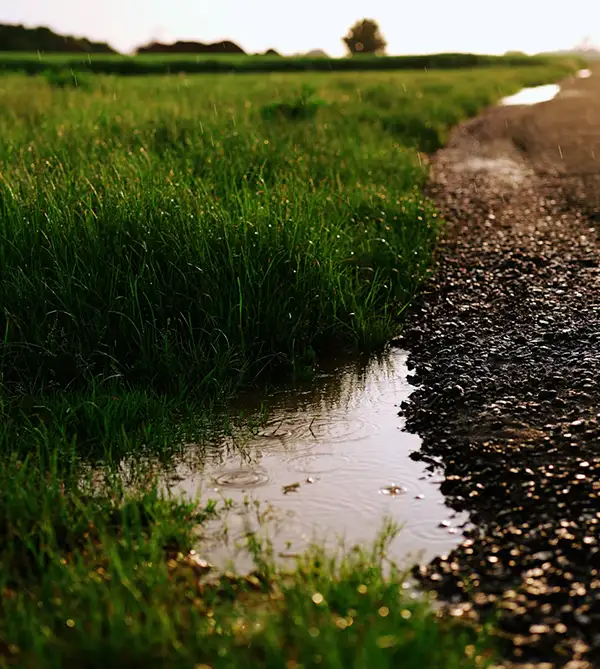
Water always finds the easiest way to move around. When surface runoff pools near your foundation due to clogged gutters or improper ground grading, gravity forces that trapped water down along your basement walls.
Concrete and mortar appear solid, but they contain millions of microscopic pores and tiny hairline fissures. Ongoing hydrostatic pressure forces moisture through these minuscule channels, slowly widening them with every rainy season.
Identifying Early Signs of Subsurface Water Penetration
Moisture infiltration will manifest itself well before your floor is flooded by water, as seen from these symptoms, which may be present on your lower level’s interior walls:
- Efflorescence buildup: White, powdery mineral deposits left behind on concrete block surfaces as migrating water evaporates.
- Flaking paint or plaster: Bubbling finishes caused by trapped moisture pushing outward from within the masonry wall.
- Musty lower-level odors: Persistent damp smells signaling mold growth hidden behind drywall panels or under flooring.
What Dynamic Soil Movement Does To Structural Stability
The soil is dynamic throughout the year. Dry summer spells pull moisture out of the earth, causing clay to shrink away from your foundation footings, while rainy seasons push that earth back out.
This continuous cycle creates void spaces beneath your slab. Without solid ground support underneath, floor slabs settle unevenly, load-bearing walls shift, and stress cracks spread upward into your main living quarters.
Modern Structural Restoration Techniques For Compromised Foundations
Fixing water intrusion requires addressing both structural strength and water flow. Modern foundation repair technology offers targeted solutions that reinforce your home without requiring complete excavation.
Polymer Crack Injections For Immediate Leak Containment
Injecting expanding liquid resins straight into foundation wall cracks seals out incoming groundwater instantly. High-pressure polyurethane foam expands up to twenty times its volume, filling every tiny void and remaining flexible enough to handle slight ground movements.
Steel Support Systems For Bowed Foundation Walls
When hydrostatic pressure forces foundation walls inward, structural engineers use heavy-duty steel I-beams or wall anchors to stabilize the structure. These mechanisms immobilize sections of the wall and slowly retract them back to where they were before.
Precision Foundation Restoration And Deep Soil Stabilization
Helical piers and push piers drive deep into stable bedrock or competent soil layers below fluctuating surface clays. Once installed, hydraulic jacks lift settling foundations back to their original elevation, locking in long-term structural integrity.
Creating A Dry, Functional Subgrade Environment
Rectifying structural cracks is only solving half the problem. You must also give incoming groundwater an easy exit route so it never builds pressure against your walls again.
Combining interior perimeter drainage channels with heavy-duty sump pump systems redirects water before it touches your lower-level floors. Modern vapor barriers lining crawl space walls keep ambient humidity low, creating a clean, controlled climate.
Why Early Foundation Diagnostics Prevent Catastrophic Failures
Neglecting hairline cracks and minor dampness will only result in more expense in the end. Research published by Basement Defender reveals that approximately 98% of basements in the United States will experience some form of water damage during their lifespan.
Catching foundation movement early allows technicians to apply targeted repairs while structural components remain intact. Regular foundation inspections help you catch small soil settlement issues long before they escalate into major structural failures.
Solving the problem with subsurface moisture makes your life comfortable and safe again inside the house. Proactive drainage upgrades lock in structural strength, lower indoor humidity, and safeguard your property’s value for decades to come.
FAQs
Why is basement drainage important for protecting a building’s foundation?
Basement drainage keeps water from flowing towards the building’s foundation wall, prevents any hydrostatic pressure, and stops leaks, cracks, and damages.
What are the first signs of a basement being flooded with water?
The first signs are musty smells, white mineral stains on concrete, cracked and bubbled paint, walls being wet, cracks, and wet areas.
What exactly is a French drain, and what does it do?
A French drain is made up of a drain line enclosed by drainage material that is designed to move underground water from weak areas near a structure’s foundation.
How do sump pumps work to keep basements dry when it rains heavily?
Sump pumps collect all the water into an area where it is pumped away from the structure. The pump should be equipped with a battery backup system to ensure its continued operation.