You don’t have to make a well-furnished, polished guest bedroom to make visitors feel welcome. If you take a small apartment, comfortable spacing often means a room with your desk, bookshelves, or everyday seating. The secret to making it comfortable is picking furniture and arranging the room so it works well both when guests arrive and after they leave.
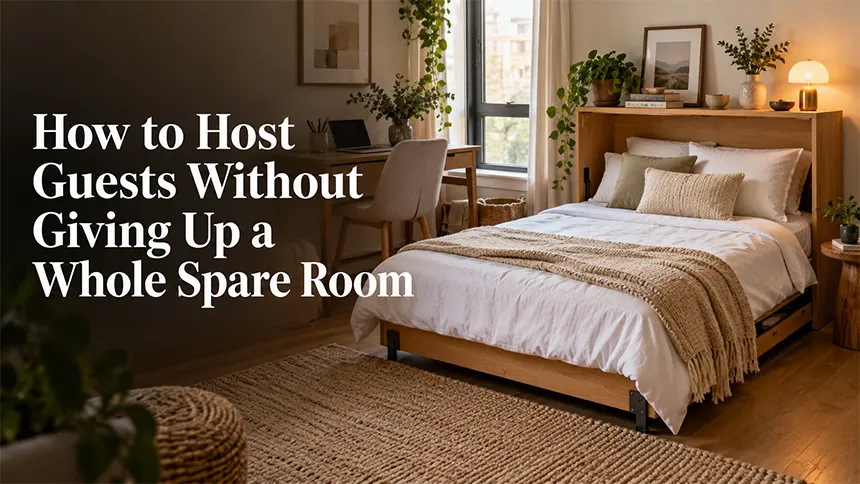
For this purpose, a bed that folds into a cabinet can help fulfill this purpose. This will help you enjoy the floor space. With a thoughtful layout and a few welcoming details, one room can handle several jobs without feeling crowded.
Start With How You Use the Room Every Day
Before planning for visitors, think about what your home requires most during an ordinary week. Maybe you work remotely and need a quiet office. Perhaps you want somewhere to exercise, read, or enjoy a hobby. Those daily activities should help in the layout.
If guests stay only a few weekends each year, building the whole room around them may leave valuable space underused. A better approach is to create a good everyday room with a clear plan for overnight stays.
For instance, keep a compact desk against one wall, use shelves for supplies, and leave a central area that can become the sleeping space. Guests get a good, comfortable place to rest, while you keep a room you often use.
Choose a Bed That Can Disappear Between Visits
A permanent bed takes up more space even when nobody is sleeping in it. Foldaway furniture changes that arrangement by letting the room return to its regular purpose.
For homeowners comparing flexible sleeping options, cabinet beds are worth considering because they fold into a furniture unit between visits. When selecting one, check its closed dimensions, its full footprint when open, and the instructions for operating it.
Consider the person who will prepare the room, too. You should feel comfortable opening and closing the bed without awkward lifting or moving multiple heavy pieces of furniture. Check mattress details, assembly needs, and any anchoring instructions for the particular model before buying.
Measure the Room With the Bed Open
A cabinet may fit cleanly against a wall, but that does not automatically mean the room will work as a bedroom. The open layout is important just as much as the closed one.
Use painter’s tape to mark the bed’s complete footprint on the floor. Then check whether someone can walk around it, open the door, reach an outlet, and get to their belongings.
Pay attention to nearby drawers, cupboard doors, and the path to the bathroom. Avoid a setup that restricts an exit or forces guests to climb over furniture during the night.
Also measure the delivery route, including narrow hallways, stair turns, and doorways. A suitable piece of furniture should still be reachable in the room.
Keep Supporting Furniture Light and Flexible
A living room changes purpose more smoothly when its smaller pieces are easy to move. A lightweight side table can serve as a coffee table during the week and a bedside surface during a visit.
Nesting tables, folding chairs, and compact stools can also be helpful, provided they have a sensible place to go when the bed opens. Avoid filling every present corner just because the furniture fits in the daytime layout.
Keep the area in front of the cabinet free from heavy storage boxes or a heavy coffee table. If preparing for guests includes rearranging half the house, the setup will soon become frustrating. Aim for a short, manageable changeover.
Store Guest Bedding Together
Guest preparation feels less stressful when everything is in one place. Keep clean sheets, pillowcases, a blanket, and towels together in a labelled container or on a dedicated shelf.
If storage is limited, think about an ottoman with an internal compartment or a suitable under-sofa container. Make sure bedding is entirely dry before putting it away, and freshen it up before visitors arrive.
Pillows need a home, too, so include them in your storage plan instead of assuming they will fit inside the bed unit. Follow the manufacturer’s guidance about what can stay inside when the furniture is closed.
A complete bedding kit saves you from searching multiple cupboards at bedtime.
Make Comfort About More Than the Bed
A welcoming guest space requires a few practical comforts beyond somewhere to sleep. Give visitors a reachable light, a stable surface for water and glasses, and access to a charging point.
A folding luggage rack or cleared shelf offers somewhere for their bag. A couple of hooks and spare hangers help them settle in without unpacking onto the floor.
Think about daylight and temperature as well. Curtains or blinds can improve sleeping conditions, while an additional blanket lets guests adjust their comfort.
Spend a few minutes sitting and lying on the prepared bed yourself. You might notice a bright hallway light, a hard-to-reach lamp, or a draught that would otherwise be missed.
Plan for Privacy and Different Routines
An office with a door can provide straightforward privacy, but a shared living area needs more thought. A curtain or folding screen can make some visual separation, although it will not prevent sound from travelling.
Talk through routines before the visit. Let guests know whether you need the space for work in the morning, where they can keep their things, and whether the bed can remain open during their stay.
If someone sleeps in the living room, move anything you need early the next day elsewhere beforehand. Small preparations help guests rest without feeling that they are disturbing the household.
Create a Simple Arrival and Reset Routine
Before guests arrive, clear the sleeping area, open the bed, make it up, and out towels. Check the walking route and show them where to find the important items.
After their stay, wash and fully dry the bedding, allow the mattress to air out, and close the unit according to its instructions. Return the smaller furniture to its real position, and the room is ready for everyday life again.
Hosting in a small home works best when the arrangement fits both your visitors and your regular routine. A flexible bed, clear floor space, and thoughtful comforts can make guests feel welcome while making every room useful throughout the week.
FAQs
What are some tips to host guests effectively?
To host guests effectively, prepare the guest room, stock basic amenities, and do proper cleaning.
What are the qualities of a good guest room?
The qualities of a good guest room are fresh bedding, clear mirrors, and awelcoming mirror.
What color makes a room feel cosy?
Warm, earthy, and saturated tones make a room feel cosy.