


One mistake that most people make during their home servicing for equipment is that they do not check their conditions or refrigerants well before time.
This means that when the actual season change occurs and temperature starts rising, their equipment has not been serviced or checked for any failures of parts and so if such a situation arises, the house is put at severe stress because the house gets hot and getting a hold of professional help becomes difficult during peak season.
A long period of hot weather can actually put more work load on your gadgets then what they were designed for and this can result in minor failures of the equipment. If these failures are not taken care of quickly, they can turn into huge inconveniences which may take a longer period of time and extra money to repair.
This is why you should pay attention to the subtle shifts which occur in seasons so that you can have your gadget checked before it becomes a necessity.

How Should You Balance DIY Upkeep with Professional Repairs?
Homeowner habits play a significant role in keeping routine maintenance easy and predictable. Looking at filters consistently and clearing leaves or yard debris around the outdoor cabinet is beneficial in letting your system breathe without straining its elements.
Knowing where your DIY limits end is just as significant as picking up a replacement filter. When you notice electrical smells, tripped breakers, or frost on copper lines, booking professional air conditioner repair services safeguards both your safety and your wallet.
A trained professional uses calibrated manifold gauges and electrical meters to observe the source cause instead of masking symptoms with temporary fixes. Catching a failing capacitor or low refrigerant charge early avoids a domino effect that could burn out your compressor motor. Taking quick action also spares you from peak-season wait times when local HVAC bookings fill up during extreme heat waves.
What Simple Upkeep Can You Handle Safely?
Simple visual checks and routine filter care fit simply into a seasonal home checklist. Always keep power off at the breaker or disconnect box previous to opening panels or cleaning around moving parts.
Ambrose Air advises replacing air filters at least every 1 to 3 months depending on how frequently you run the system and your indoor air quality. Fresh filters keep dust off sensitive parts and support conditioned air to reach every room evenly.
Safe DIY Tasks Before Calling a Pro
There are certain tasks which you should carry out before a professional steps into your house because these are the things which will make his job easier and will allow you to turn the work into the direction that you want.
- Clear outdoor debris: Cut back grass, shrubs, and branches so air moves without any disturbance around the condenser cabinet.
- Rinse exterior fins gently: Utilise a low-pressure garden hose from the inside out when the power is switched off to clear away dirt.
- Verify condensate drainage: See around the indoor pan and get rid of outlet dirt for damp spots or slow drips.
What Early Warning Signs Point to Cooling Inefficiency?
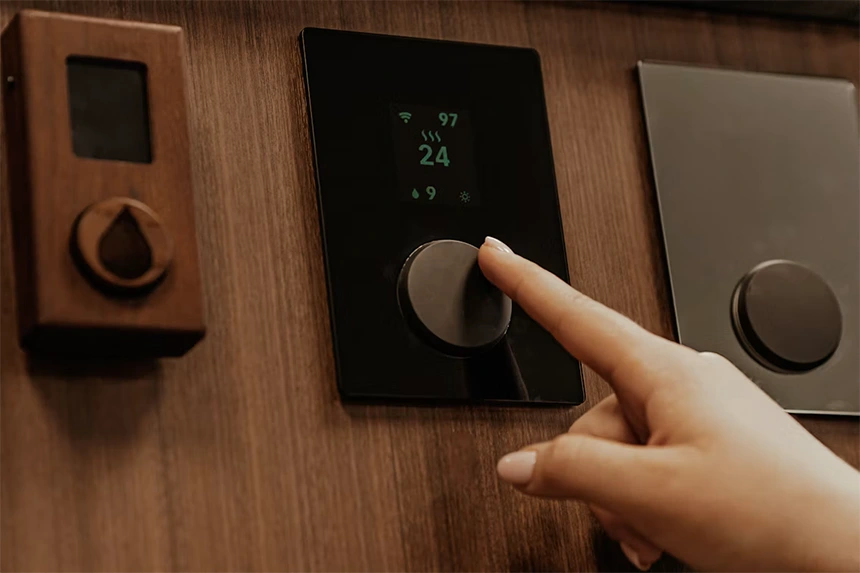
Your air conditioner often gives you silent hints long before it stops blowing cold air. When rooms feel incomparably cool, or your system runs longer cycles than regular, air is likely finding it difficult to move across the coil or escape through the drain line.
Ice collecting on refrigerant lines and water pooling near the indoor handler are two signs you should never take lightly. A blocked condensate line backs up moisture inside your home, while frozen coils point to limited airflow or low refrigerant that urges the system to work overtime.
How Do Rising Power Bills Tie to Airflow?
Keep a check of your monthly utility statements during warmer weeks for unexplained spikes in electricity utilisation. When static pressure is created in your ductwork or air passes slowly over dirty coils, your blower motor and compressor work longer to reach the thermostat setting.
Quality Heating, Cooling & Plumbing notes that replacing or cleaning your air filter every 60 to 90 days helps in attaining steady airflow and cleaner indoor air. A simple filter replacement removes a common bottleneck before it drags down efficiency across your entire house.
When Does Short-Cycling Signal Deeper Trouble?
Short-cycling occurs when your cooling unit turns on and off in rapid bursts rather than completing a full cooling cycle. Regular starts and stops wear down moving parts fast and leave indoor humidity high.
- Check thermostat placement: Store lamps, direct sun, and heat sources away from the wall sensor so it takes room air accurately.
- Inspect supply registers: Ensure that furniture, rugs, and drapes do not restrict floor or wall vents in key rooms.
- Listen for click cycles: Book a technician if the outdoor unit clicks on and off every few minutes without cooling the house.
Why Do Electrical and Refrigerant Faults Need a Licensed Tech?
Capacitors keep high voltage even after you flip a wall switch, and managing refrigerant needs specialized gauges and federal certification. Guessing at wiring faults or topping off charge without fixing a leak can ruin the compressor or void manufacturer coverage.
Licensed professionals check electrical draw under load, measure temperature splits across the coil, and pinpoint exact mechanical flaws. Allowing a qualified pro to manage technical diagnostics keeps your warranty intact and avoids repeat breakdowns during heat waves.
Small cooling hiccups are a sign to check your airflow, clear obstructions, and schedule for help before minor issues turn into a major failure. Staying ahead of routine filter changes and scheduling timely service when symptoms arrive keeps your home steady and cool all season long.
FAQS
When should I call for professional help?
Knowing when to call for professional help and when to fix the work yourself is the entire difference between a job gone wrong and one that feels perfect. This is why you always look at the damaged part yourself and then see if you can fix it yourself. If not, call for a professional and do the preparation for it, like clearing the debris around the pipeline yourself.
What are some of the things that I should do myself?
There are certain tasks that you can do yourself and that you do not need a professional’s help for. These can be clearing the debris around the pipeline, changing air filters every 3 months, and getting rid of dirt and dust stuck in the ventilators.
Why is my electricity bill high if I haven’t used the water heater?
This is a common question that most homeowners ask themselves and the answer is more simple than they assume. Usually during warm seasons air has a difficulty flowing through doubts because of clogging or dirt accumulated there. This can increase the overall bill of your house.