


| Common Name | Red Valerian, Jupiter’s beard, Fox’s brush, Keys of Heaven | Maintenance | Low to moderate |
|---|---|---|---|
| Native Region | Southern Europe, Northern Africa, and Turkey | Average Height | 1.5 to 3 feet |
| Plant Type | Herbaceous perennial | Average Width | 1 to 3 feet |
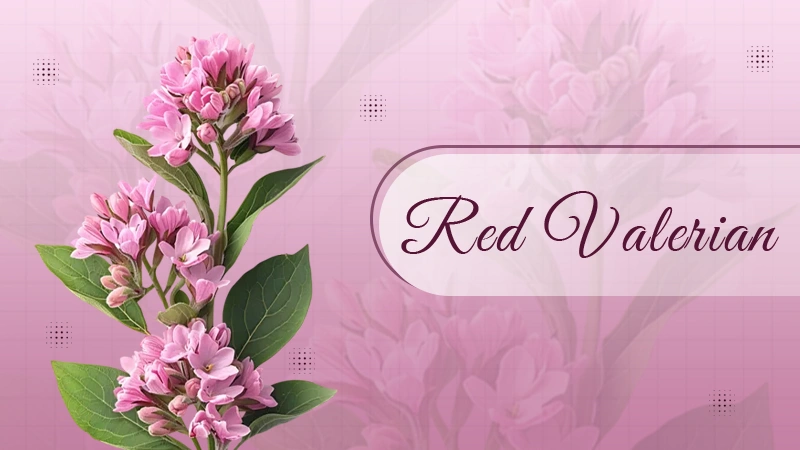
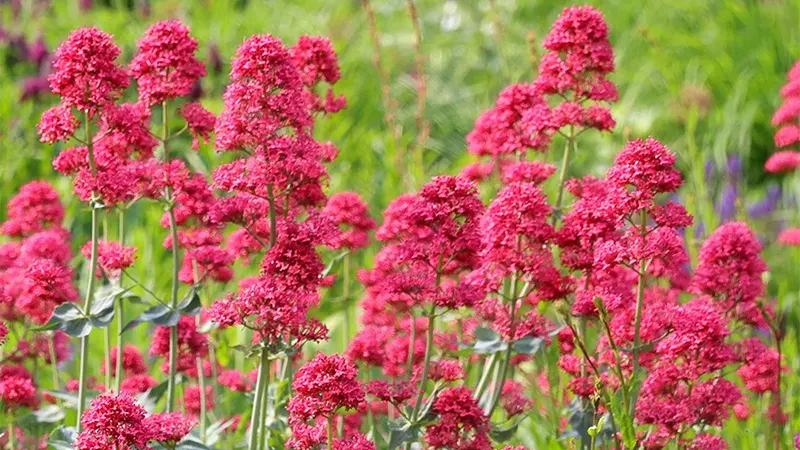
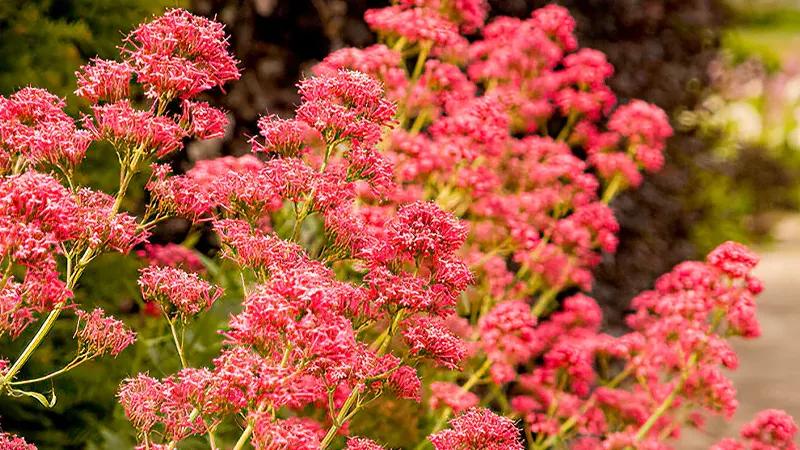
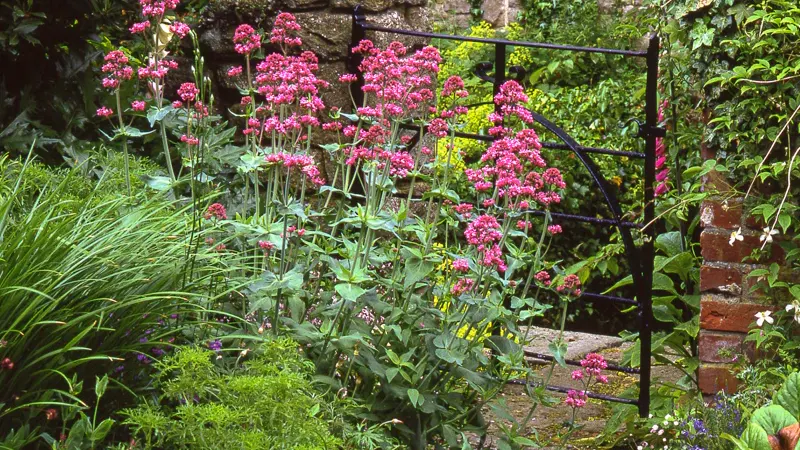
Red Valerian Centranthus is a hardy and drought-tolerant ornamental perennial, native to the Mediterranean region. It features long-blooming flowers that transform into the colours of red, pink, and white from spring to fall. Due to its woody-based habit with green and gray foliage, it is a premier selection for all garden enthusiasts.
Key Features and Benefits of Red Valerian
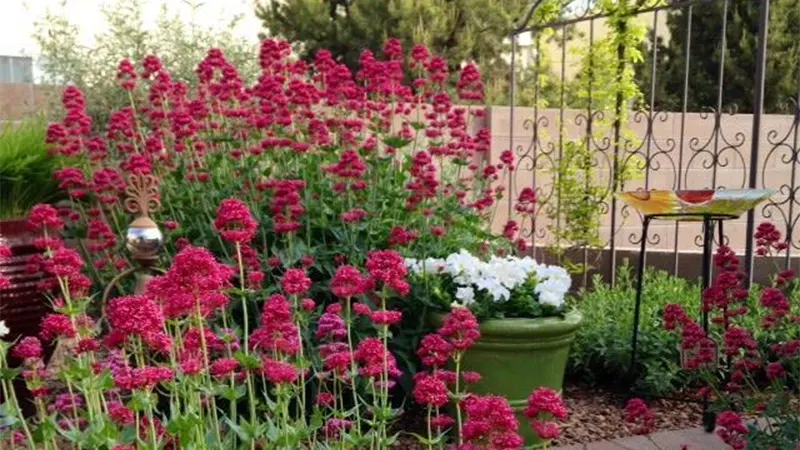
- Thanks to being extremely drought-tolerant, it can be used in hot, dry, and sunny spots, for example, a cottage garden, rockeries, mass plantings, flower beds, and borders.
- Jupiter’s Beard Red Valerian historically had medical usage as a sedative to aid with sleep and anxiety.
- Typically blooms from the late spring to early autumn (June to October), with the peak blooms in early to mid-summer.
- As Centranthus ruber Red Valerian thrives best in poor, well-draining, and gravelly soil, it doesn’t need much fertilizer. Over-fertilizing can cause excessive foliage and fewer blooms.
Care Guide, Advantages, and Disadvantages of Red Valerian
- Growing Zone: USDA 5-8
- Sunlight Exposure: More than 6 hours of direct sunlight is needed for maximum blooms, but it can tolerate partial shade.
- Water Needs: Highly drought-tolerant once established, but prefers deep watering during the dry spells.
- Soil Type: Can thrive well in well-drained, alkaline, or poor soil, for instance, gravel, rocky, or sandy substrates
Advantages
- The robust, fibrous root structure firmly anchors the soil and helps control soil erosion.
- Leaves are eaten raw in salads or cooked, and the roots are used in the preparation of soups.
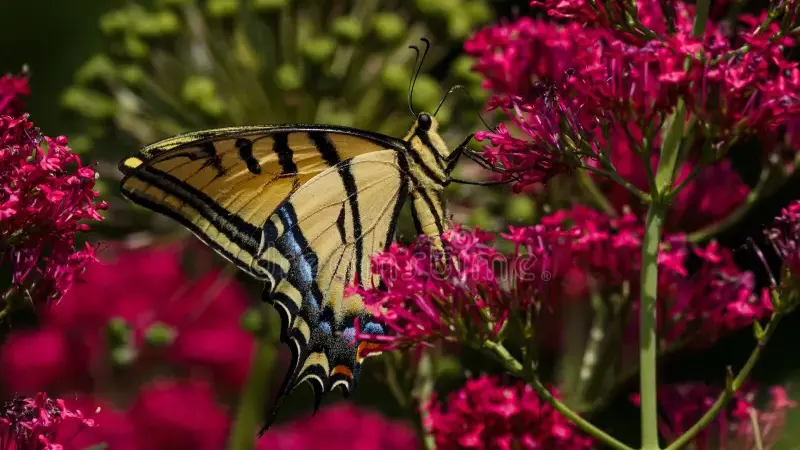
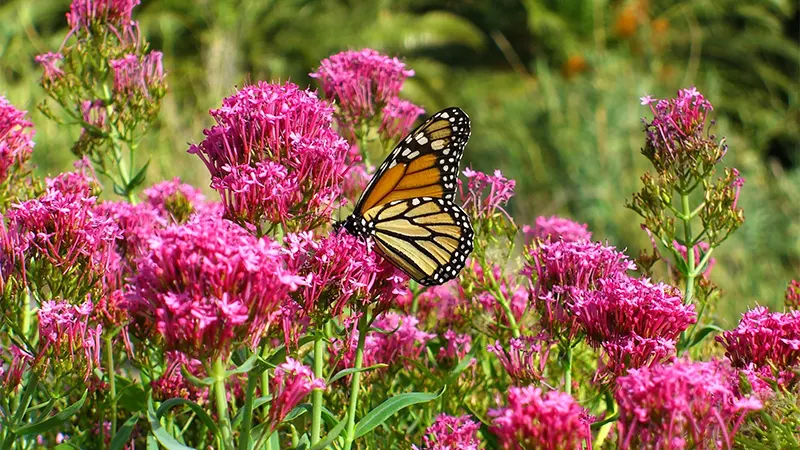
- Acts as a pollinator powerhouse due to nectar-rich flowers that attract bees, butterflies, and hummingbirds.
- Found to be resistant to deer and rabbits.
Disadvantages
- While attractive to pollinators, the scent is considered “sweaty” and unappealing by humans.
- Being a Prolific self seeder, it can be invasive and crowd out the other native plants.
- Susceptible to root rot and occasional infestations of aphids, spider mites, or whiteflies.
- A strong-smelling root can attract cats and rats.

Emilia Blake –
The low-maintenance plant is perfect to add a romantic, wildflower-like flair to the garden because of its attractive multi-coloured blooms.
Sam Robertson –
I gifted this plant to my sister 2 years ago. I am impressed to see its rapid growth and the attractive display of distinct colours that enhance the beauty of the yard.
Mackenzie Brooke –
I have planted it in a large container on the balcony. The plant requires minimal care and is generally ignored by the rabbits and deer.
Sarah Wood –
The ornamental perennial has the potential to elevate the aesthetics of versatile landscapes with the vibrant clusters of flowers in red, pink and white colours, contrasted with green foliage.
Andrew –
I ordered Red Valerian from YourHomify to add some brighter color to my garden, and I’m really happy with it. The plant arrived healthy and in good condition. I’m excited to see the flowers once it gets settled.
Bob –
The Red Valerian was a nice find for my garden. It arrived safely and looked fresh right away. I planted it near some other flowering plants, and I think the contrast is going to look really nice once everything blooms.