A well-known botanist, Luther Burbank (1849 – 1926), said that,“Flowers always make people better, happier, and more helpful; they are sunshine, food, and medicine to the mind.”
Agreeing with the saying, I feel like flowers and plants radiate a positive vibe and happiness, along with mesmerizing fragrance, and draw all good things towards you.
Bacopa plants are one of my favorites that I grow in my garden area. Planting them not only enhances the beauty and aesthetics of my balcony garden, but it also has various medical and nutritional properties.
In this article, I will share my experience, benefits, characteristics, and care guide regarding the Bacopa Plant.
History, Overview, and Key Features of Bacopa Plants
Bacopa monnieri, commonly known as Brahmi, is an ancient herb that has over 3000 years of history in Ayurveda. It is native to the wetlands of Sri Lanka, Southern India, Southeast Asia, and Australia.
Its name, “Brahmi,” is derived from the name of the Hindu God of Creation and supreme intelligence, “Brahma,” which highlights its image as a brain tonic or memory enhancer.
These are also known as water hyssopand are found in moist, tropical environments. It is a genus of 60 aquatic or water plants that belong to the Plantaginaceae family.
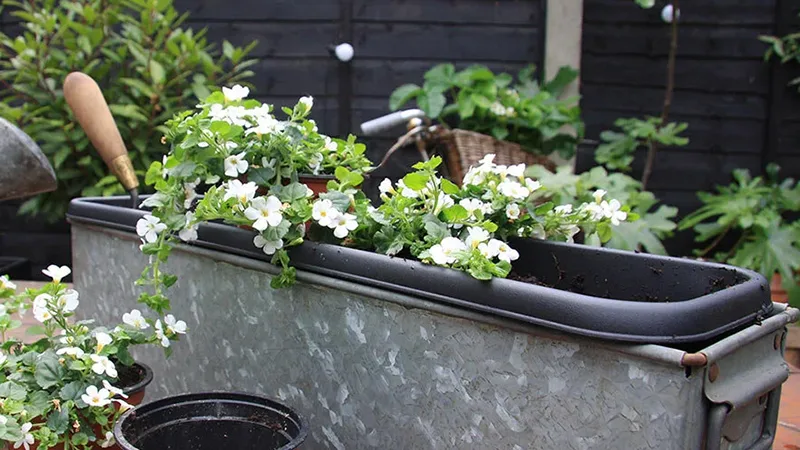
This is a fast-growing plant that grows in containers, as a groundcover, and can also be planted in balconies and baskets as hanging plants due to its trailing properties.
Key Features of Bacopa Plants
In Ayurveda, Bacopa is called ‘medhya rasayana,’ i.e., a rejuvenating herb that enhances concentration, memory, and intelligence. It also supports the nervous system and reduces anxiety.
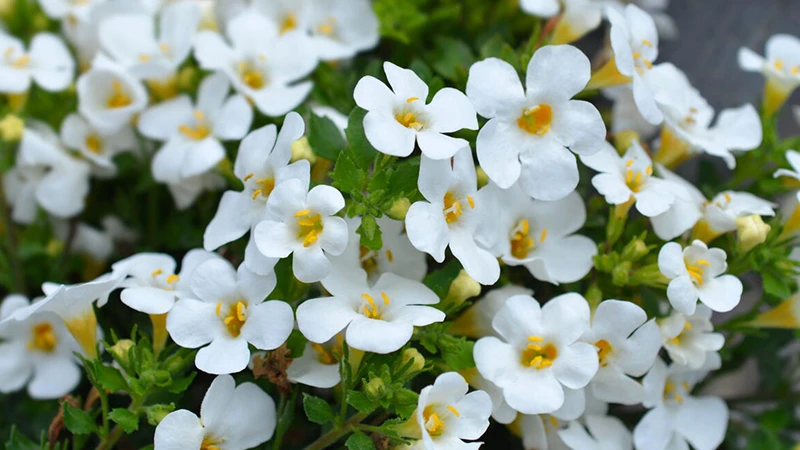
Bacopa is very popular in gardening as well as in aquatic environments due to its trailing nature, succulent leaves, and white & purple-colored flowers.
This medicinal plant is called Cognitive “Doctrine of Signatures” because of its traditional use in enhancing cognitive function and memory. The branching tendrils of bacopa plants spread in a way that resembles the neural network of the brain.
It is a powerful stress-relieving adaptogenic herb. Studies suggest that it can be very useful in managing anxiety.
Botanical Classification and Morphology of the Bacopa Plant
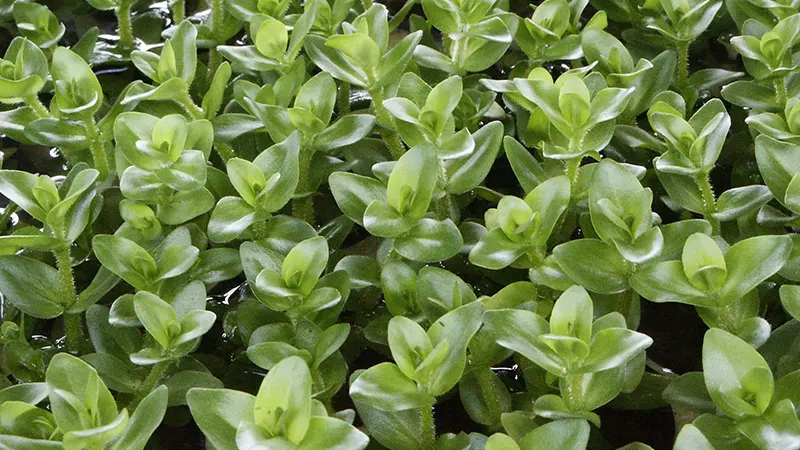
Bacopa is recognized by its small, fleshy leaves, which are arranged oppositely to one another, and its white or purple flowers that grow on wet soil or marshy banks in tropical or subtropical regions.
Botanical Classification of Bacopa Plant/Monnieri:
Kingdom
Plantae
Clade
Tracheophytes
Angiosperms
Eudicots
Asterids
Order
Lamiales
Family
Plantaginaceae (formerly Scrophulariaceae)
Genus
Bacopa Aubl
Species
Bacopa Monnieri (L.) Pennell
Morphological Characteristics of the Bacopa Plant
Habit
Creeping
Glabrous or smooth
Mat-forming herb
Roots arising at nodes
Thrives in marshy environments
Stem
Long
Slender
Branched
Succulent
Leaves
Opposite to one another
Oblong
Sessile
Fleshy
Around 1-1.5 cm in length
Flowers
Small
Solitary
White or purple in color
Axillary
Reproductive Parts
Flowers are actinomorphic
Has 4-5 stamens
Consists of a capsule-like fruit that is ovoid and contains numerous
Root Systems
In a moist environment, often forms roots at every node.
Where can I Grow Bacopa Plants?
Bacopa plants are quite versatile, having a trailing nature, and can flourish in both full and partial sunlight. The ideal locations to grow these plants include containers, hanging baskets, tanks, gardens, or places with moist or well-drained soil. It require regular watering and do best in the temperature range of 18-25 degrees Celsius.
Check out the best growing locations I preferred for bacopa plants:
Hanging baskets are ideal for displaying the trailing habit of these plants.
Ceramic planters and window boxes are an excellent choice for a cascading effect.
For a dense and flowering groundcover, garden beds are a great choice.
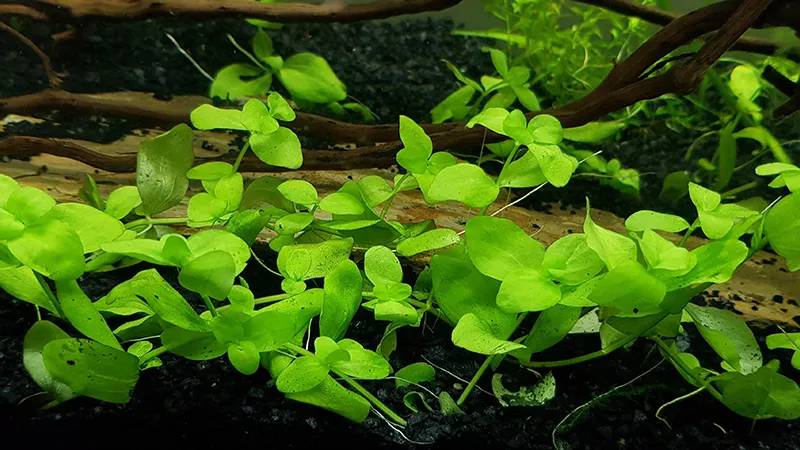
Bacopa is an aquarium plant. Tanks or ponds are also a good choice, as it is a water-loving plant, making it ideal for aquatic environments.
These plants thrive best in full sun, but can also adapt to partial sun or afternoon shade.
It requires rich, moist, and well-drained soil to grow, and can also grow in boggy areas that consist of constant moisture.
How are Bacopa Plants Grown? Care Tips that I Follow
Bacopa plants grow best in moist, marshy, well-drained soil and slightly acidic soil with a pH of 5.0-6.5. These plants require full sun to partial shade, as they need warm temperatures and humidity to thrive. Some of the practices I followed are outlined below:
Cultivation and Growing Practices
The easiest propagation method for Bacopa plants is by softwood cuttings (10 to 15 cm long) during the spring season.
The roots can also be cut easily in the water or moist soil within a week.
Can also grow easily using Bacopa seeds. The seeds of this genus are small and can be sown around mid-February, as they require light for germination and a temperature of about 20-24°C
The plant requires space as they spread rapidly.
They thrive in waterside areas such as ponds, tanks, or consistently damp containers, and they require constant moisture and can’t be allowed to dry up.
They need balanced liquid fertilizers (e.g., NPK 10-10-10) every 2-3 weeks for optimal growth and blooming.
Maintenance
Although Bacopa plants are usually self-cleaning, pinching the tips of the stems once in a while makes them bushier and more compact.
They can be harvested 3-4 months from planting by cutting the stems.
They cannot adapt to cold weather conditions and will die in freezing temperatures. Therefore, in cold places, they are either grown annually or indoors.
Common Issues
Bacopa plants are quite low-maintenance, but if the soil is too stagnant, it can result in rotting the roots.
They have a very fast-growing rate, which results in them getting very bushy in a very short period of time if not maintained properly.
Care Tips that I Follow
Water them consistently, as these plants require constant moisture, and the roots shouldn’t be allowed to dry up.
Plant them around 8-12 inches apart to provide them space to spread.
Trimming them occasionally to keep them tidy and organized.
Give liquid fertilizer every 2 or 3 weeks to keep the soil fertile and nutrient-rich, so that they can grow and bloom properly.
Will Bacopa Come Back Every Year?
Bacopa plants may or may not come back, depending on the weather or the climatic conditions in which they are grown or planted.
In cold climates or zones 8 and below, these plants are killed by the first frost, so they need to be replanted every spring.
In warm climates or zone 9+, these plants act as perennials and keep coming back every spring.
What are the Benefits of Bacopa Plants?
Bacopa plants are known as adaptogens, as this entire plant has been used for traditional Ayurvedic medicines for centuries. Their active ingredients are a mixture of “bacosides”, which protect the nerve cells and also improve memory and learning.
The list of benefits claimed for bacopa includes:
Helps in improving memory.
This plant treats hypertension, anxiety, neurosis, leprosy, asthma, tuberculosis, and various skin diseases.
Bacopa speeds up the processing of visual information.
Certain Side Effects of Bacopa
Along with its vast list of benefits, It also has some side effects if it is consumed inappropriately or in excessive amounts, such as upset stomach, nausea, diarrhoea, and fatigue. There is certain evidence that shows excessive consumption of bacopa may lead to:
Slowing down the heart rate, which can be a problem if your heart rate is already slow.
Slowing down the transit in the intestines, which can be dangerous for people with blockages.
Increasing the secretions in the stomach and intestines can worsen ulcers.
Increase in levels of thyroid hormone.
Nutritional Properties of the Bacopa Plant
Bacopa is a vast reservoir of nutritional properties that enhances the intellect, memory, nervous function, and mental clarity. The presence of bacoside facilitates cognitive functions and repairs damaged neurons, promoting kinase activity in the brain.
Nutritional Composition of Bacopa
Moisture
88.4 g/100 g
Carbohydrates
5.9 g/100 g
Minerals or Ash
~1.9 g
Protein
10.54 mg/100 g
Crude fiber
~0.6 g
Fat (lipids)
1.05 g/100 g
Vitamin C (ascorbic acid)
~63 mg/100g
Phosphorus
~16 mg/100g
Iron
~7.8 mg/100g
Calories
230 Kcal/100g
Calcium
~202 mg/100 g
Bacosides
Bacoside A3
0.14% – 0.85%
Bacoside II
0.12% – 0.69%
Bacopasaponin C
0.3% – 0.6%
Total Bacosides
Up to 6%
Various Types of Bacopa Plant
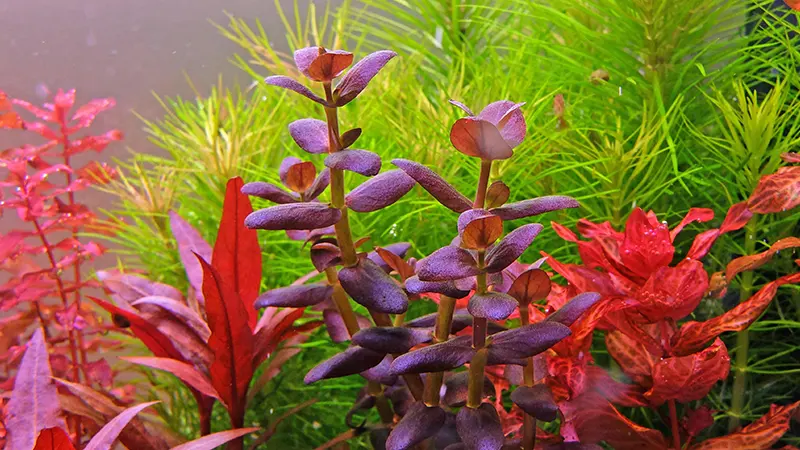
Bacopa plants consist of a versatile group of aquatic and semi-aquatic plants, which include bacopa caroliniana (smells like lemon), the vibrant bacopa salmannii, the flowering bacopa cabana, and bacopa australis, which enhances the aesthetics of aquariums.
Bacopa Cabana
Origin
Bacopa Cabana originated for the 2001 Nintendo Pikmin game launch by the cultivar of Chaenostoma cordatum.
Appearance
Trailing in nature, and generally evergreen.
Consists of small, five-petaled flowers.
Care requirements
Needs full sun, but can also tolerate partial shade.
Requires moist and slightly acidic soil.
Habitat
Ideal for containers, hanging baskets, or garden beds.
Blooms in the early summer to the autumn.
Maintenance
Self-cleaning and deadheading are not required.
Can rot if overwatered.
Availability
Very famous and widely promoted in 2002.
Now it’s rare and difficult to find.
Some reports suggest that it is nearly extinct.
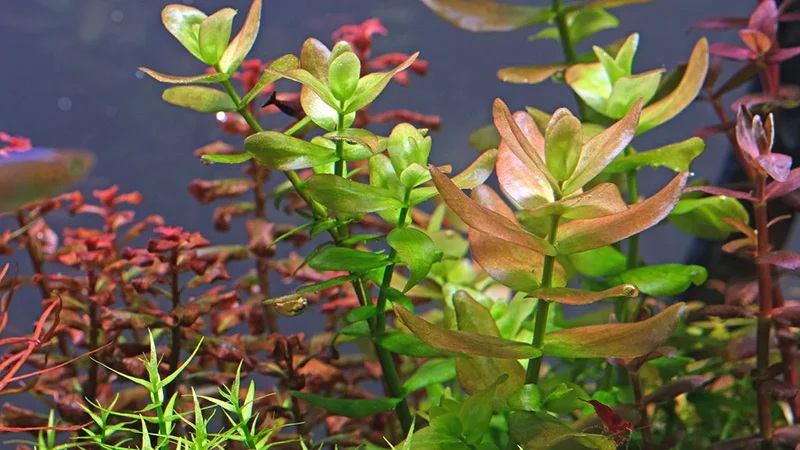
Bacopa Caroliniana or Lemon Bacopa
Origin
Bacopa Caroliana is native to the southeastern region of the US, i.e., from Virginia to Florida and west to Texas, and also Cuba.
Appearance
Greenish-yellow to copper brown.
Thick and succulent leaves.
Stems are generally 10-50 cm long.
Care Requirements
Requires a temperature of 64–82°F and a pH of 6.0 – 7.5.
Use fertilizers consisting of nitrogen, phosphorus, and potassium.
Habitat
Grown submerged or immersed in water such as ponds, tanks, and aquariums.
Maintenance
Needs stable water parameters.
Requires slightly alkaline pH.
CO2 is beneficial for faster growth.
Availability
Readily available as a freshwater aquarium plant.
People can buy them online as well as from retail stores.
Bacopa Australis
Origin
South America (Argentina and Brazil)
Appearance
Small, bright green, elongated leaves that can turn reddish in strong light.
Dense and bushy growth.
Grows 10-30 cm tall
Care Requirement
Low to medium lighting; temperature should be between 18-28°C (64-82°F).
Required is between 5 and 8.
Habitat
Freshwater aquariums, foreground or midground placements.
Maintenance
Regular trimming to prevent the lower stems from rotting and to maintain shape.
Needs regular liquid fertilizers.
Availability
Easily available in online aquarium stores or even in local pet shops.
Bacopa Salzmannii or Bacopa Purple
Origin
Originated from Central and South America (Argentina, Brazil, Paraguay, Mexico, and Uruguay)
Appearance
Small, lance-shaped leaves.
Leaves turn intense purple or maroon under moonlight.
Care Requirements
Highlighting is required to achieve its deep purple hues.
Injection of CO2 is required for its proper growth and color intensity.
Temperature: 22–28°C (72–82°F).
pH: 5.5 – 7.0
Habitat
Grows semi-emersed in pond edges, marshy areas, and riverbanks.
Maintenance
Regular trimming is required.
Can be propagated easily by stem cuttings.
Regular doses of liquid fertilizers are required.
Availability
Available in various online retail shops.
Also sold as Tissue Culture (TC) cups.
Often sold as small potted or submerged plants.
Did You Know?
Bacopa Salzmannii often gets confused with Bacopa Caroliniana “Colorata”. But the difference between these two is that Bacopa Salzmannii has a more intense and true purple hue compared to Bacopa Caroliniana “Colorata”, even in the less optimal situations.
Fun Facts or Lesser-Known Details about Bacopa Plants
Bacopa doesn’t only grow in wet soil, but can also grow underwater, which makes it a popular plant for freshwater aquariums. This gives them the title of “Double Agent”.
The name “Brahmi” can get confusing sometimes, as it is used for two different plants, i.e., Bacopa monnieri (more common in South India), and Centella Asiatica (more common in North India). Even though both these plants are famous for their memory-enhancing properties, they are botanically completely different.
It is known as a potential “wonder drug” for aquatic life.
It also helps to manage aquatic pollution. It can accumulate heavy metals like copper, arsenic, and lead.
The plant is considered a “calming cognitive booster.”
Bacopa monnieri is a creeping, medicinal aquatic plant that is highly reputed in traditional Ayurveda. It is regarded as “Medhya Rasayana” for its ability to boost memory, intellect, and cognitive function. It consists of adaptogens and neuroprotective constituents, which reduce neuroinflammation, helping the body to deal with stress and anxiety.
To get the optimal results from this herb, it is necessary to be consistent in its use, but in the required amount.
FAQs
Can you eat Bacopa Plants?
Yes, Bacopa monnieri is edible. Its leaves are used in salads, cooked as potherb, and also in traditional medicines.
Is bacopa annual or perennial?
It is mostly grown as an annual plant.
During winters, can I bring my bacopa indoors?
Yes, Bacopa can be brought indoors during winters to extend its life. But it usually doesn’t bloom in winter.
What causes bacopa to stop flowering?
High heat, dry soil, or lack of fertilizer can cause bacopa to stop blooming.
What types of tanks are required to grow bacopa?
It does not require any sort of specialized tank to grow. It can grow in tanks of any shape and size, including nano tanks.
Does Bacopa grow in freshwater or saltwater?
Bacopa usually grows in freshwater, but due to its versatile nature, it can also grow in slightly salty water.