


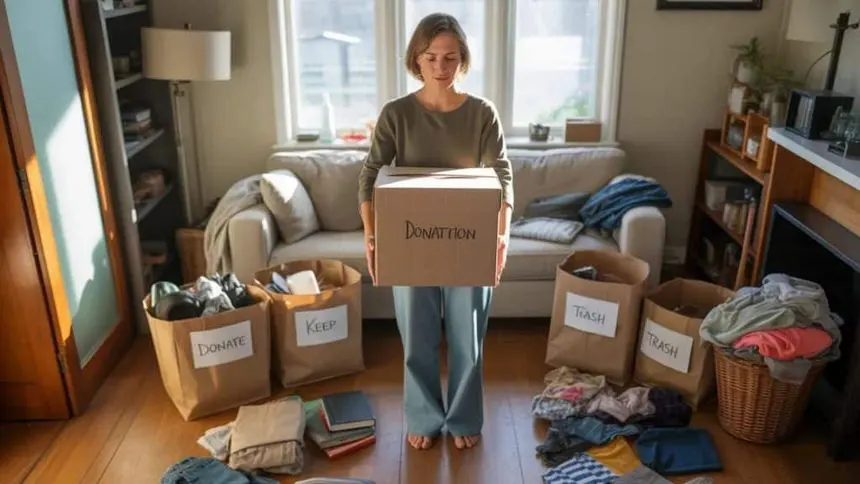
When cleaning the house, there is only a single issue: you stop thinking about where to start or where the extra stuff needs to be managed, at which corner.
Reused things are kept in the place where they were placed before. Things are arranged based on availability. All efforts are wasted because nothing changes after everything is assumed to be fixed in its original place.
To start with the outer space, where you can keep things categorized. Specify a drawer where things are kept either for reuse or for donations. Most places where things are placed don’t have a purpose. Clarify it first.
The aim is to clean the house and keep only what’s there for a reason.
Start with the Exit
Before arranging the things, keep in mind what you want to achieve with the stuff that you reshuffle. Remember this:
- To start structuring small items, decide what you have to do with the unwanted things.
- Provide space for donation boxes, recycling items, or waste accordingly.
- Fix the time when you want to complete shuffling to optimize time wasted on undesirable things.
Initially correct the order: fix the storage area where the things should be kept with the required time you calculated. This replicates the uncluttered stuff to a single point without mess. To avoid stress released by unfinished work.
Choose an appropriate pattern: things are to be donated, regular pickup for small waste, and if a lot of garbage is collected, then on-demand dumpster rental to dispose of the scrap arranged. A dumpster operated by Celina TX dumpster rental still handles the garbage more smoothly than a car trunk does.
Debris is removed immediately; if it remains for days, then you may change your mind to reuse the things you disposed of earlier.
The Rooms Where Things Arrive and Stay
You also agree on this that some rooms are the gateway to both the outdoors and the indoors. They usually contain things that were brought and kept for months in the same place, and they never moved inside the house.
The Entryway
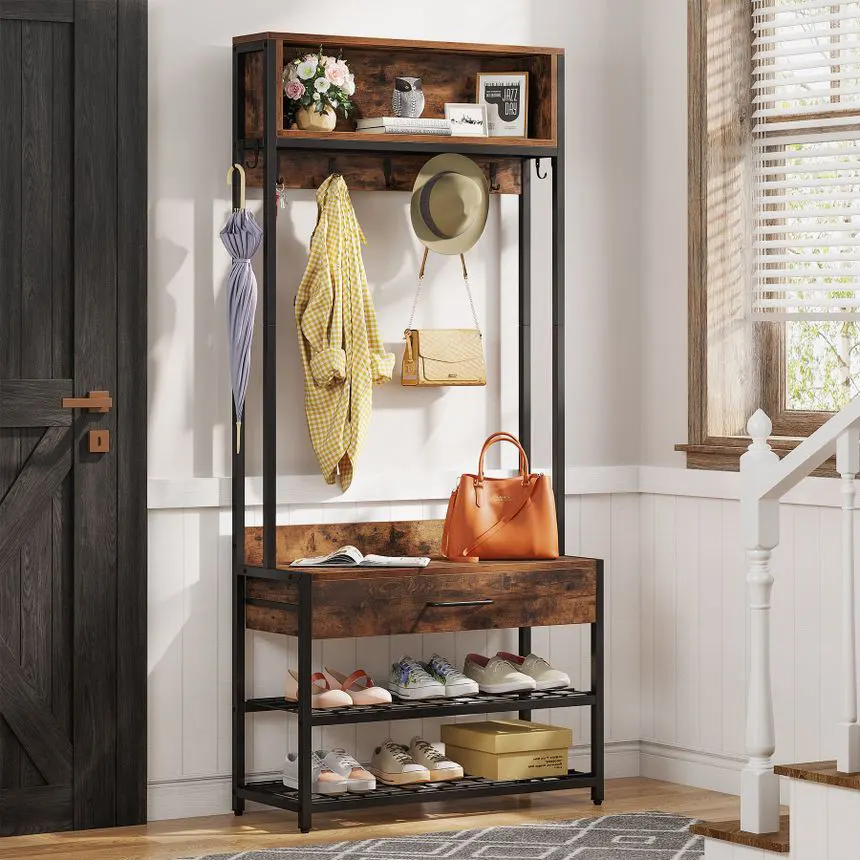
Most things come through entryways, like shoes, mail, bags, or small boxes. These are reusable when required. At the entryway, you should fix the space or shelf to specify that items that are not used for a month are to be kept in their original places.
This rule is adopted by all members to avoid storage issues.
The Garage
A garage is the place where you dump the least-used things, and it becomes the place where all the clutter is disposed of in the crowded garage with minimal interaction.
Things like utility boxes that are relocated from place to place should be kept fixed. All possible substances like dangerous chemicals, paints, disposal, discarded batteries, and components related to engines are not to be put directly in dumpers or in trash.
Maintain the garage area in such a way that you don’t confuse it with things that have decisive control over others. Focus first on one wall and then on others.
All flammable materials are kept safely, and they are handled individually to prevent any hazardous situations from occurring.
The Rooms Where Storage Hides the Problem
The cabinet and the closets are the places where most things are cluttered. Extra shelves, rails, and space are holding more stuff that you usually ignore. The reason is that everything seems to be normal from the outside. But the main objective is not to create an extra storage area but to arrange what you need or what you don’t.
The Kitchen
Empty the cluttered shelf in the kitchen. Clean the area carefully and put things that you actually used in recent months. Replace the duplicate gadgets unless you use them daily.
Keep things distributed by purpose. First, clean and then rearrange them. Don’t mix the steps; this is a slower process. Every shelf has its purpose; list the usage and then attempt to fix them accordingly.
Closets and Dressers
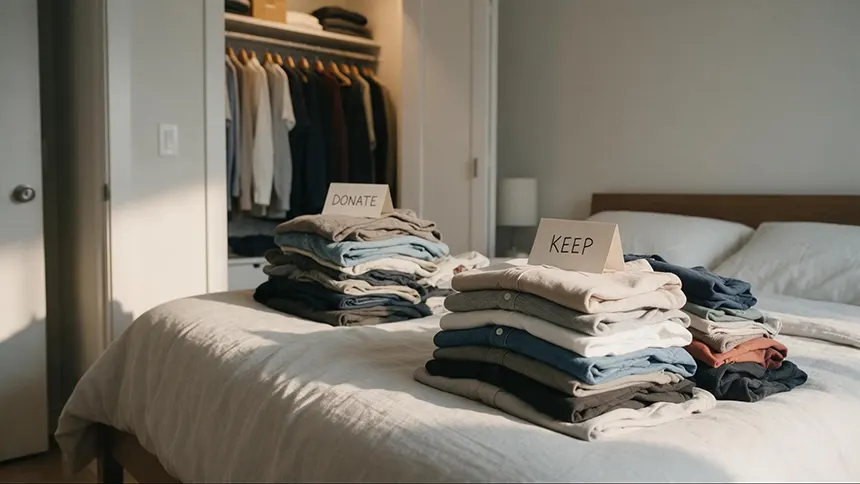
Donating the extra clothes is a better idea instead of disposing of them. This habit is decent when someone needs help with clothes to wear.
In 2018, EPA reported that only one ton of textiles is recycled out of seven tons of waste, while 11 tons are discarded in landfills.
These data are shocking. You should pay attention to how old clothes are handled intelligently and organized. Reusable textiles are donated to the thrift shop, and worn-out fabric is passed on to the textile factory that recycles it. Most of them usually do these practices with goodwill and to improve society.
The Rooms That Are Really Someone Else’s
The room with someone’s stuff is decluttered on their own. You can’t do it on their behalf; this will create an argument between both.
Kids’ Rooms
When kids usually play with the stuff, no matter how long they do it, you cannot make a decision without knowing their habits and ignoring them.
Ask them about the things that matter to them before replacement. Discuss your interest with their choice. Place the things together and give them the option to select the stuff that is usually hard to detach from. Make them feel confident with toys that they are not ready to leave.
Do not decide alone; you must communicate with them, let them take the final steps, support their thoughts, and accept what’s necessary.
What Is the Spare Room Actually For?
Spare rooms are the place where most of the things are dumped altogether, unless you decide their fixed place to reside, whether in storage, an office area, or the guest rooms.
Make the appropriate time to declutter them afterwards. Good furniture doesn’t waste its purpose and fulfills its intended purpose. Habitat for Humanity ReStores offer services for large pickup facilities with furniture, appliances, and building materials. Check their schedules before placing orders.
The Bottom Line
The steps you need to consider first are the entryways, then the kitchen cabinets. All this starts not with everything all at once. Keep the space visible where you arrange them accordingly. Don’t busy your weekends with this abandoned project.
Try not to finalize things in a single day. Every day, small changes make your home a cleaner and better place to live. Proper management looks cooler even if you misplace the obvious things.
FAQ
How long should a whole-house declutter take?
Plan some tasks to be managed over a weekend, not to attempt in a single day. Every day, little movement gives you confidence and a more manageable and cleaner space.
Which room should I start with?
Entryways are the places where you have to work, as they’re important areas where most clutter accumulates. The most noticeable place should have more care.
Do I need a dumpster, or will normal pickups cover it?
If you assemble all garbage from a single room, then it is sufficient to carry out with regular pickup. Full house cleanouts, garage, and heavy furniture need different disposal plans.
What do I do with things that are broken but sentimental?
For memorable objects, capture moments in a photo. Don’t try to keep the garbage for too long. Sentiments are made from the memory they have, not from the things.
Is it worth paying someone to do this?
For sorting and selecting the things, you don’t need to pay; instead, you pay for moving things that you already arranged or decide to discard.
- Bless’er House, Ultimate Whole House Deep Cleaning checklist
- US EPA, Facts and Figures: textiles material-specific data, 2018
- Habitat for Humanity ReStore, donating goods




How to Clean and Sanitize Your House: Complete Guide
[…] seem like a daunting task, but with the right approach, it can be an enjoyable experience. Start by decluttering your space by following these six rules. Remove any items that are no longer in use or don’t belong in the […]