I want to admire the fresh flowers in my living room and balcony garden for longer, but often either they do not come with flower food, or it is not available because they are harvested from the home garden.
The latter is a common problem that I struggle with a lot, and hence I researched and learnt the very easy DIY recipes of making plant food at home that might not be as precise as the commercial ones, but have been the best care tips for flowers since I have used them on my cut blooms.
If you are an anthophile and want to save your buds from wilting earlier than expected, then dive in and learn to make flower food for fresh flowers using easy ingredients.
5 Easy Flower Food Recipes To Try at Home
Flower food for cut flowers contains three main elements: sugar as a source of energy, citric acid for balancing the pH, and an antibacterial agent to keep the water clean.
If you are still confused as to how to make flower food for fresh cut flowers, I have listed down 5 easy homemade flower food recipes that have worked for me every time:
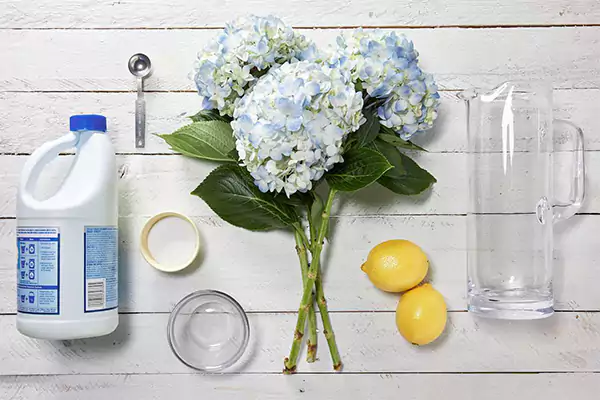
Recipe 1: Sugar, Lemon Juice, and Bleach (Most Recommended)
- In a vase, add 1 part sugar, 1 part bleach, 1 part lukewarm water, and 2 parts lemon juice.
- Mix it all well and add flowers to the vase.
- This is the classic and most used flower food recipe for flowers.
Recipe 2: Water, Soda, and Bleach
- Take ¼ cup of clear soda and mix it well with a pinch of bleach and 4 cups of lukewarm water.
- This solution can be less effective due to the absence of sugar, which is the main ingredient to provide energy to the flowers.
Recipe 3: White Vinegar and Sugar
- Clean your flower vase and add 4 cups of lukewarm water to it.
- Add 1 tablespoon of white vinegar and 1 tablespoon of sugar to the water.
- Mix it well and add your cut flowers to the vase.
- The white vinegar acts as a better antibacterial agent than lemon juice, hence this solution is also popular to make flower food.
- You can also use Apple Cider vinegar instead of white vinegar if available.
Recipe 4: Vodka, Sugar and Bleach
Ever thought vodka and bleach would do wonders together? Well, for your flowers, they will!
- Add a few drops of vodka to 1 tablespoon of sugar and 4 cups of lukewarm water.
- Mix the solution well. The vodka here hinders the effects of ethylene and extends the lifespan of the cut flowers.
Recipe 5: Copper Pennies and Sugar
I like to call it the ancient flower food recipe because the older the copper penny, the better.
- Place 2 copper coins in your flower vase filled with 1 litre of lukewarm water and 1 tablespoon of sugar.
- The copper coin helps in balancing the pH of the water and preventing bacterial growth.
Additional Tip
- Cut half an inch off the stem frequently to ensure water is absorbed properly.
- Clean the water regularly, even when the vinegar is added to prevent bacterial growth, vase water should be cleaned as soon as it turns cloudy.
What is Flower Food for Fresh Flowers and Why is it Beneficial?
Flower food is a mixture specially formulated to extend the bloom period of fresh cut flowers as they are removed from their natural growing environment. Homemade flower food is a blend of sugar, vinegar, and antibacterial agents that is used to provide cut flowers with adequate nutrients for prolonged freshness.
Ideally, flower food is provided with the bouquet by the florist, but in some situations, like home planting, it is convenient and cost-effective to make flower food at home. This not only gives the cut flowers the required nutrients but also helps in retaining their freshness for a much longer time. Whether it is a white rose or a campanula, flower food will enhance the bloom period of all your flowers.
4 Things to Avoid While Making Flower Food for Fresh Flowers
An excess of flower food can make your flowers die faster. As easy as it is to make a homemade flower food for fresh cut flowers, certain mistakes should be avoided while making one. Read and find out:
- Do not use cold water while preparing the mixture, as it can shock the stems and cause premature wilting.
- Overdosing on flower food will shorten the lifespan of the fresh flowers.
- Avoid using brown sugar instead of white, as it can help in accelerating the growth of bacteria.
- Only add a pinch of bleach to the flower food solution, as too much bleach can cause wilting, eventually killing the flowers.
Homemade Flower Food vs Commercial Flower Food: Which is better?
Commercial flower food is preferred over DIY solutions, and the main reason being precision of the content. However, it does come with its own set of disadvantages.
As someone who has used both alternatives, here is what I think is the main difference between the commercial and homemade flower food solutions:
Commercial Flower Food 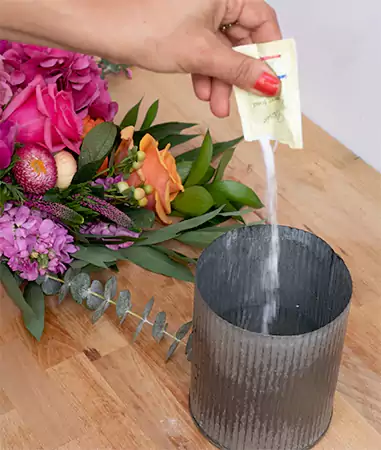 | Homemade Flower Food 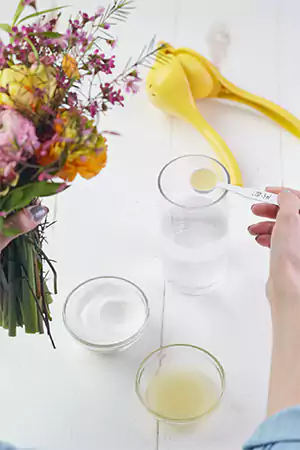 |
|
|
Conclusively, both have their own set of pros and cons, but as per the research of Floral Life, the commercial flower food is much more reliable than homemade flower food.
5 Tips to Keep Flowers Fresh for Longer: Tried and Tested
If you are wondering how long do flowers last and what are the tips to make them bloom for longer, here are a few additional suggestions for the same that I swear by as an anthophile.
- Clean the flower vase and the water in it regularly; cloudy water leads to bacterial buildup and makes the flowers look dull and lifeless.
- Remove any leaves that are submerged in water to avoid bacteria from impacting the life of the plant.
- Deadhead the damaged parts of the flower for healthy blooming and a clean look.
- Add flower food to the vase as they are removed from the soil and need adequate nutrients to survive.
- Keep the fresh flower vase away from direct sunlight. Shade is the best friend of cut flowers; direct sun exposure leads to scorched petals.
Wrapping Up
I like to grow spring flowers and harvest them to have a colourful indoor space and gift it to loved ones. My concern regarding flower food for fresh flowers has been sorted out ever since I learned the easy DIY recipes with ingredients that are always on the kitchen shelves.
My reason for prioritising homemade flower food over the commercial ones is convenience. I can easily customise the quantity of flower food as per requirements, which makes care and maintaining my bold and beautiful blooms a lot easier.
What is the best homemade recipe for flower food for fresh flowers?
The sugar, lemon juice and bleach solution is the most recommended and efficient flower food recipe, as it is balanced with all the nutrients that cut flowers need.
Can I use brown sugar instead of white in flower food?
No, it is not advised to use brown sugar instead of white sugar, as the former makes the water more cloudy, which can lead to more bacterial growth.
What will excessive bleach do to my flowers?
Excessive bleach in the flower food can burn the flower; a few drops of bleach will be perfect for flowers.
Can I use cold water in homemade flower food for fresh flowers?
No, flower food is a mixture created using lukewarm water, as cold water can shock the plant and cause wilting.