A house can have great bones and still feel a little flat. What usually closes that gap is not more furniture, but the softer, more personal layers on top of it.
Textiles and fresh flowers do more of this work than almost anything else in a room. Both add warmth, texture, and a sense that someone actually lives there, rather than just decorated it once and left.
Why Texture and Color Matter More Than You Think
A room built entirely from hard surfaces, think polished floors, glass tables, and bare walls, tends to feel cold no matter how expensive the furniture is. Texture softens that effect almost instantly, giving the eye somewhere gentler to land.
Color plays a similar role, especially when it shifts slightly with the seasons. A space that only ever looks the same year-round can start to feel static, even if nothing about it is actually wrong.
Layering Textiles for Warmth and Character
Textiles are one of the easiest ways to change how a room feels without touching the furniture layout or repainting a single wall. A few well-chosen pieces can shift a space from sparse to genuinely inviting in an afternoon.
Why Handmade Quilts Add Something Store-Bought Pieces Can’t
Mass-produced throws and blankets are fine, but they rarely carry the same character as something made by hand, whether by you or someone else. A quilt in particular tends to become a focal point rather than just a functional layer, since the pattern and stitching are genuinely unique to that piece.
If you are interested in making your own, it is worth taking the time to browse quilt kits designed for different skill levels, since a pre-cut kit removes a lot of the intimidation that keeps people from starting. Cozy Corner Quilts is one Australian supplier offering kits with the fabric already prepared, so the actual sewing is the main task rather than sourcing and cutting materials from scratch.
Beyond the finished result, working on a quilt is also a genuinely enjoyable slow project, the kind that gives a home something with real history behind it rather than a piece bought off a shelf last weekend.
Where to Place Textiles for Maximum Impact
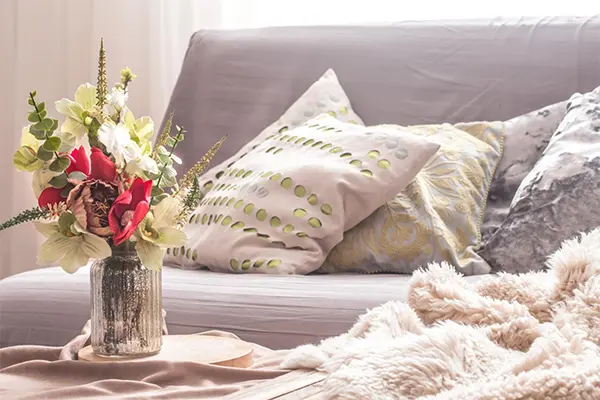
Layering works best when it happens in a few concentrated spots rather than scattered evenly across every surface in a room. A sofa with two or three well-chosen throws and cushions reads as intentional, while the same pieces spread thin across multiple rooms can end up looking incidental instead.
Beds are another natural place for a statement textile, since a quilt folded at the foot of the bed or laid across the top adds visual weight to a piece of furniture that otherwise dominates the room without much personality of its own.
Mixing textures within the same color family, like a chunky knit throw next to a smoother cotton quilt, tends to look more considered than matching everything exactly. Slight variation is what makes a layered look feel collected over time rather than purchased all at once from a single catalogue.
Bringing Life Into a Room With Fresh Flowers
Where textiles add warmth through texture, flowers add it through color and scent, and they change more often than almost anything else in a home. A single fresh arrangement can shift the entire feel of a room within minutes.
Our earlier piece on warm and festive home styling ideas touches on how fresh flowers and seasonal foliage can echo the outdoors inside a space, particularly during colder months when a home can otherwise start to feel closed off.
Choosing a Florist Who Understands Seasonal Arrangements
Working with a florist who genuinely understands seasonal availability tends to produce far better results than picking whatever looks appealing in a photo online. Flowers that are in season not only last longer, they also tend to look more natural in an arrangement than something forced or imported out of its usual time of year.
If you are in Melbourne’s inner north, it is worth taking the time to browse the best flower shop near Fitzroy before your next arrangement. In Full Bloom is one established Fitzroy florist with decades of experience creating seasonal designs suited to both special occasions and simple weekly refreshes at home.
Combining Textiles and Flowers for a Cohesive Look
The most inviting homes tend to treat textiles and flowers as part of the same seasonal rhythm rather than separate decisions made at different times. A deep, cozy palette of quilts and throws in winter pairs naturally with richer floral tones, while lighter cottons and brighter blooms suit the warmer months.
Repeating a color or two across both elements, even loosely, helps a room feel styled rather than simply decorated. A quilt with a soft rust tone next to a vase of matching dahlias reads as considered, even if the pairing only took a moment to notice while shopping.
Common Styling Mistakes to Avoid
Overcommitting to a single trend, whether in fabric pattern or floral style, tends to date a room faster than choosing pieces with a bit more staying power. Trend-driven choices can still work, but they age better when balanced against simpler, more neutral elements elsewhere in the room.
Letting flowers wilt before replacing them is a smaller but surprisingly common issue, since tired blooms undercut an otherwise well-styled space more than an empty vase would. A regular refresh matters just as much as the initial arrangement itself.
Conclusion
A home starts to feel genuinely warm and inviting once the personal layers are in place, not just the furniture underneath them. Textiles bring texture and history into a room, while fresh flowers bring color and life that shifts naturally with the seasons.
Together, the two do more to make a house feel lived-in than almost any single piece of furniture ever could.
Frequently Asked Questions
How many textiles are too many in one room?
There is no fixed number, but two or three, though, makes sense. Remove extras that make the space aesthetically cluttered.
How often should fresh flowers be replaced at home?
Most fresh flower arrangements last for around a week. So change them weekly, and give them proper care for the entire week.
Is making a quilt a realistic project for a beginner?
Yes, particularly with a pre-cut kit intended for beginners, since most of the preparation work is already done and the closing steps are simple to follow with basic sewing skills.
Do textiles and flowers need to match exactly to look coordinated?
No, and matching too strictly often looks less natural. Sharing a loose color palette or a uniform tone tends to create a more cautious, collected feel than an exact match.