


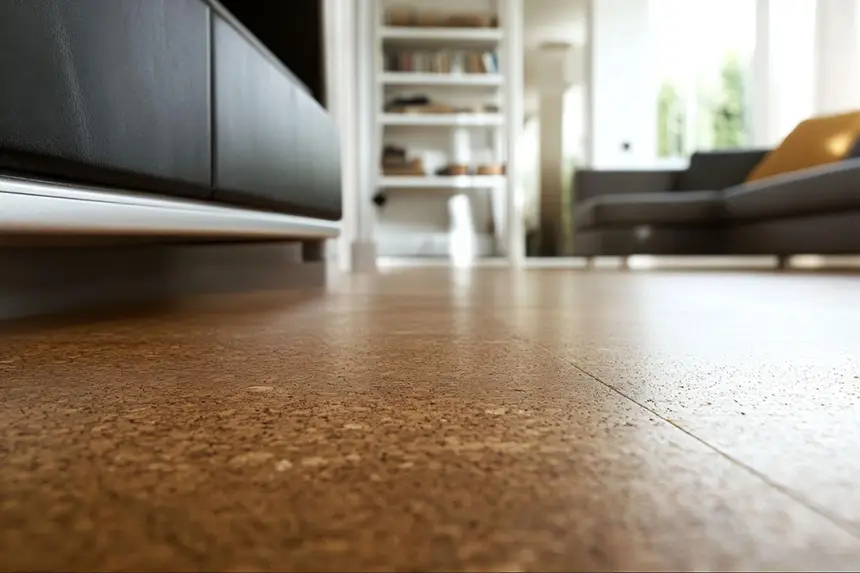
Cork flooring can be cleaned by using a vacuum or brooming loose debris on a daily basis and mopping the floors weekly. This daily maintenance is necessary because loose dirt, sand, and grit can damage the protective layer of your floor. It is best not to use a lot of water, since cork is a natural material that is porous in texture, and excessive water can cause the planks to swell or warp.
In this article, I’ll discuss how to clean cork flooring, different types of tiles and cleaning products, and mistakes to avoid, along with some basic maintenance tips.
Quick Answer:
To clean cork floors, vacuum or sweep daily. Weekly, mop with a pH-neutral cleaner using a microfiber mop, wringing out excess water. Dry immediately with a soft towel to prevent moisture damage. Avoid harsh chemicals, steam mops, and excessive water.
How to Clean Cork Floors Safely? (Step-by-Step Guide)
Cleaning cork floors involves steps such as sweeping or vacuuming, preparing a cleaning solution, mopping the floor, and drying immediately afterwards. Sweeping and vacuuming are often enough for daily cleaning, but for a weekly cleaning routine, you should use a more elaborate method by brooming first, followed by dipping your mop into your choice of cleaning agents, squeezing out excess water, and mopping the floor in sections. Finish the cleaning by drying the floor with a soft towel.
Let me explain the aforementioned steps in detail to make cleaning easier.
Step 1: Sweep/Vacuum the Floor
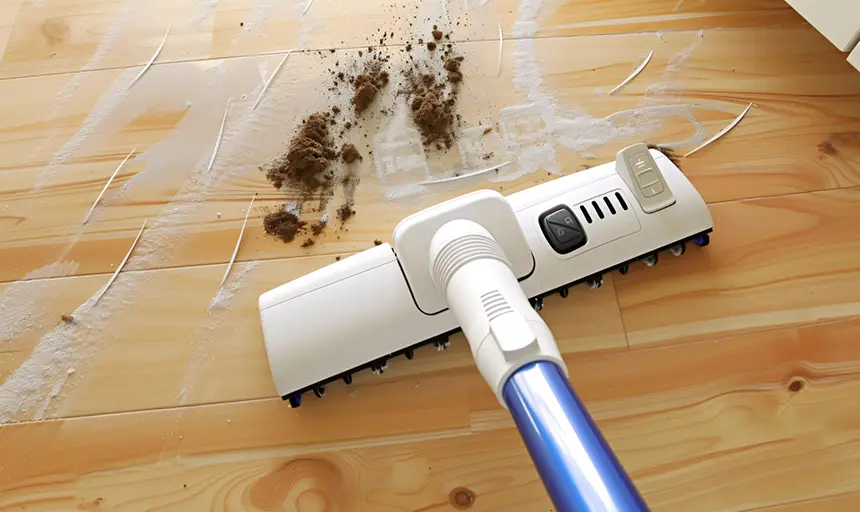
You could use a broom with soft bristles or a hardwood vacuum with its brush roll setting turned off to get rid of loose sand, dirt, and grit from your floor. This is to prevent scratches on the natural material of the floor.
Step 2: Prepare a Cleaning Solution
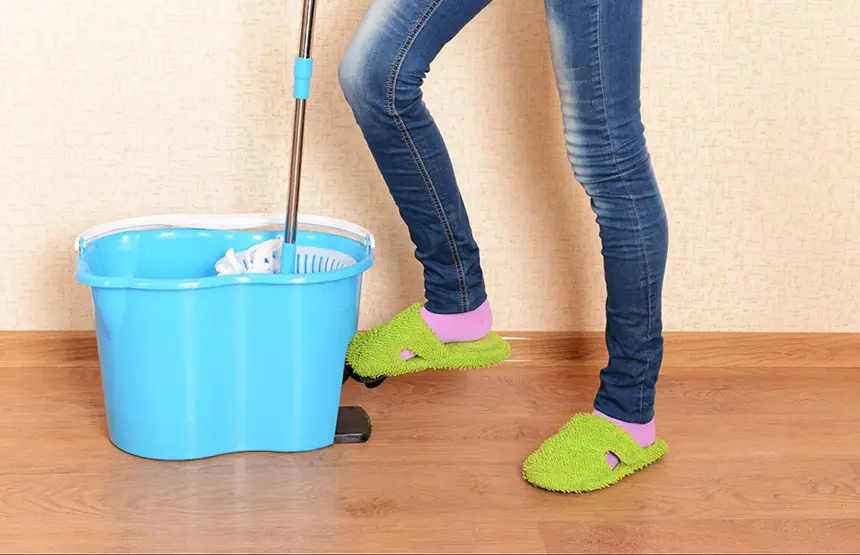
Use diluted soap with warm water, or a mildly balanced cleaning solution with a pH between 6.5 and 7.5. Cork flooring cannot handle harsh chemicals on its surface, so to prevent damage, you could also use more natural ingredients such as diluted vinegar, about a fourth cup in lukewarm water, and an essential oil of your choice.
Step 3: Mop the Floor
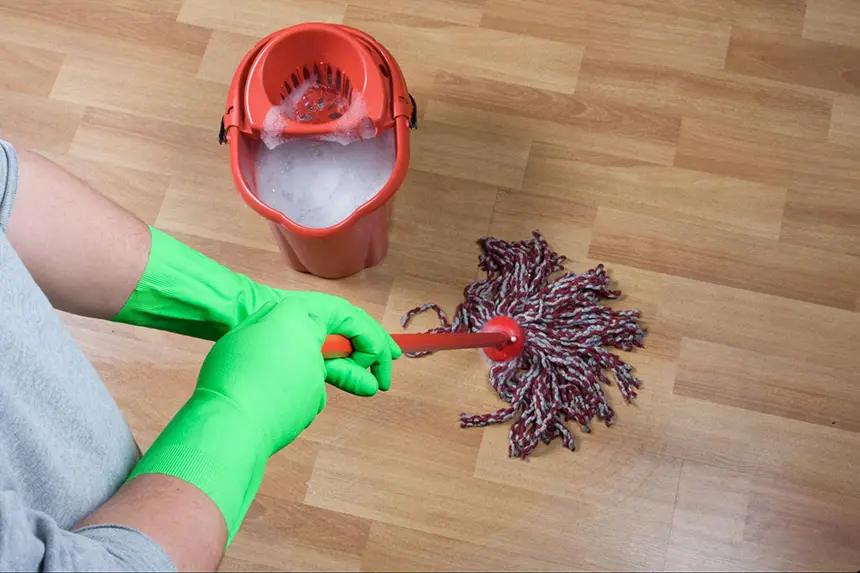
Use a microfiber mop to clean your floor. Dip it into the cleaning solution and wring it properly before using it in sections across the room. Avoid too much scrubbing or a lot of water since both of them damage the surface and can cause decay inside as well.
Step 4: Dry the Floor
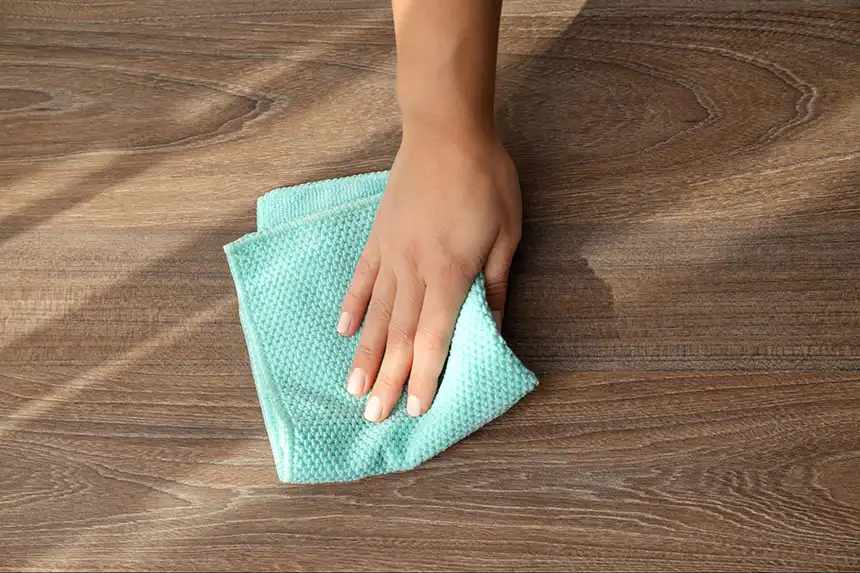
Use a soft towel to dry the floor immediately after mopping. This is to ensure that no moisture gets trapped, which usually leads to mold and poses irreversible damage to the floor. Air-drying the room is a good option too, in case you don’t have a towel at hand.
Types of Cork Floors and How to Clean Them
Cork flooring comes in various types, such as glue-down tiles, floating planks, cork sheets and rolls, rubber cork composites, and mosaic. Cork floors require periodic brooming and mopping with mild cleaning agents and a damp cloth. Glue-down and floating planks are the two main installation types, while the others are alternative formats.
Now I’ll discuss various types of cork floors and how to clean each of them in detail.
1. Glue-down Tiles
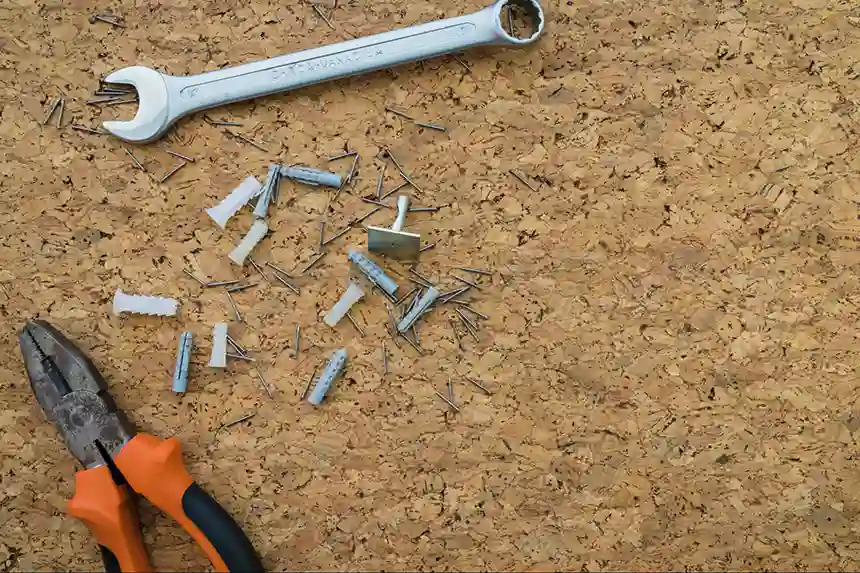
Glue-down tiles are semi-smooth and have a natural texture. They are available in different installation styles and typically last 25-40 years. The first and second installation types are unfinished and stained, which require 3-4 coats of low-satin urethane. The third and fourth types are pre-finished and come with a vinyl that is sealed with an acrylic lacquer to prevent moisture build-up and therefore swelling or warping of the tiles.
Before installation, the tiles need to get accustomed to the room’s temperature and humidity. An adhesive has to be applied to the floor before laying down the tiles and set with a heavy roller.
Glue-down tiles should be swept or vacuumed routinely with a pH-neutral cleaning agent that falls somewhere between 6.5 and 7.5. Wipe it dry if necessary, avoid flooding the floor while cleaning, and be attentive to any kinds of cracks or damage so the water won’t penetrate.
2. Floating Planks
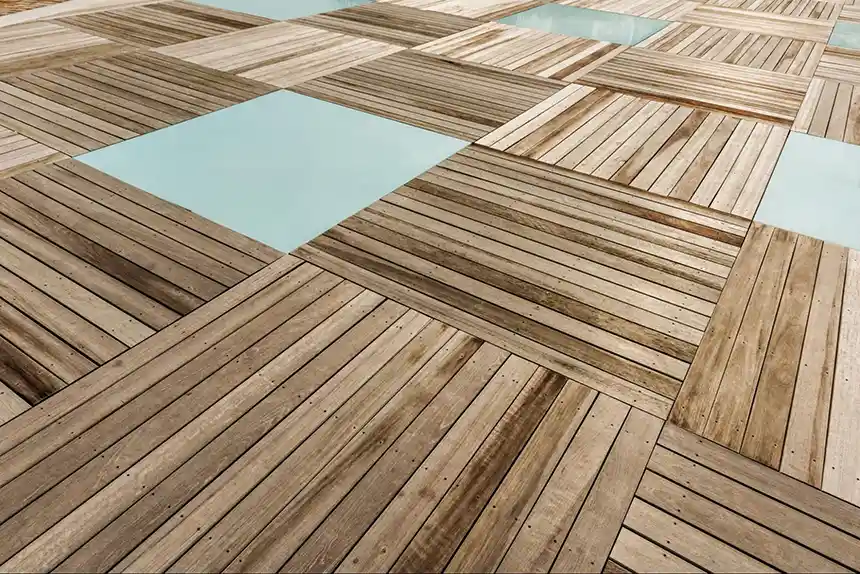
Floating planks comprise interlocking planks that are not directly fixed to the subfloor. Instead, they give an illusion of “floating” above it. This gives room for expansion and contraction due to temperature changes or differences in humidity. They come with a tongue-and-groove joint that enables you to link one plank with the next. To keep them in place, glue should be applied to the groove and the ends of the plank, pushing them together with a knocking block. A floating plank will last for about 10-30 years with proper maintenance.
Minimal water is required to clean floating planks to avoid moisture from entering joints and causing swelling or separation. Avoid steam mops to prevent mold or mildew overgrowth.
3. Cork Sheets and Rolls

Cork sheets and rolls are a versatile option, as the rolls can be utilized in larger spaces, such as a commercial space or gymnasium, since they provide extended, unbroken material that can be customized, while the sheets can be used for smaller projects. Unrolled cork is usually curled and should be laid flat under weights for 24-48 hours before installation, and can last for about 25-40 years if it is of good quality. Their installation method is similar to glue-down tiles, and since they have fewer seams, cleaning is relatively straightforward; it is crucial not to damage the adhesive.
4. Rubber Cork Composites
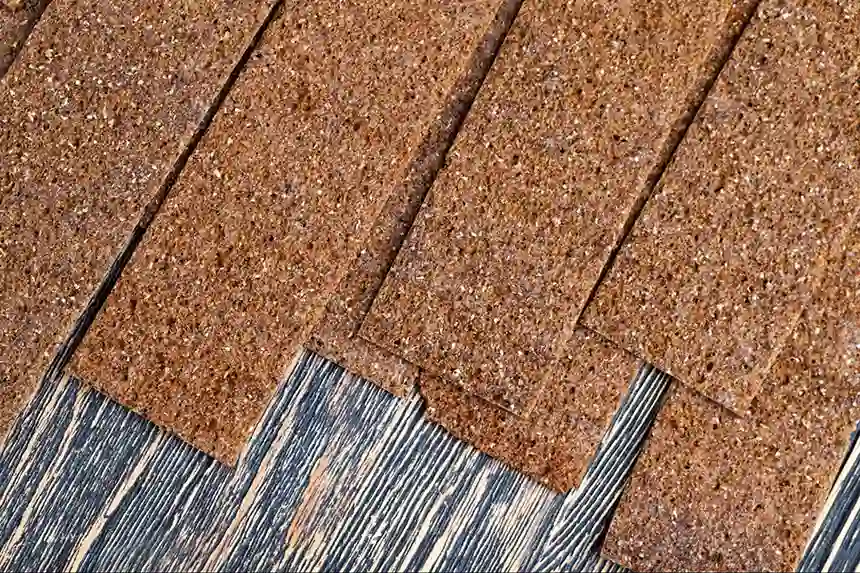
As per NCBI, rubber-cork composites mainly use natural cork granules with synthetic elastomers like NBR, neoprene, and silicone under high heat and pressure. They are a high-performance material that balances compression and is lightweight. It is a good option for sound control, provides insulation, is durable, and is slip-resistant. It is installed by rolling the rubber cork over a subfloor with an adhesive. Under proper care, cork sheets and rolls have a lifespan of 25-40 years.
It is recommended not to use petroleum-based cleaners, similar chemicals, or any abrasive products that might potentially damage the surface.
5. Cork Mosaic Flooring
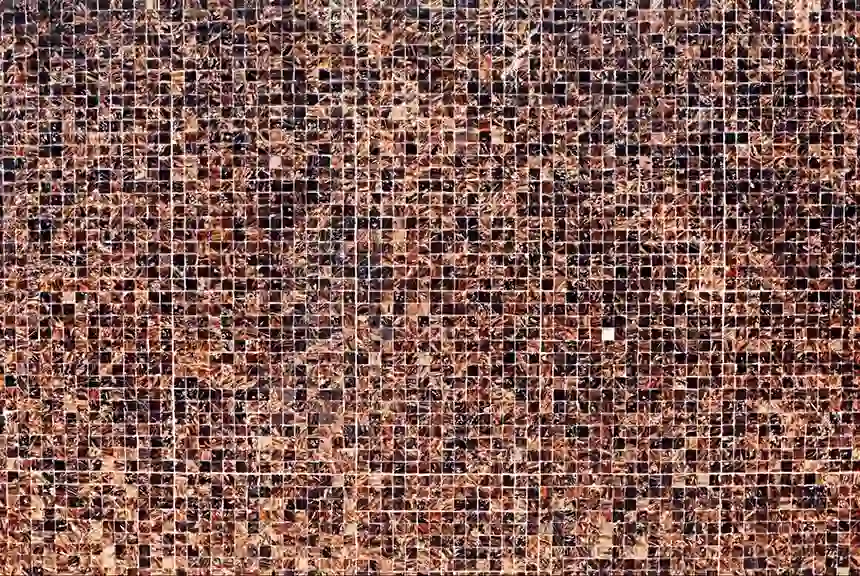
Cork mosaic flooring is made from small pieces or chips that are arranged in decorative patterns, then bonded together, and is installed in a similar way to glue-down tiles. It is important to plan alignment for geometric or decorative mosaics, and the joints are generally filled with grout and given a protective finish. Commercial-grade rubber cork mosaic blends can last up to 40 years.
These types of tiles require gentle brushing mostly, and unless approved professionally for that specific flooring, abrasive scrubbing, steaming, or any chemicals are not advisable.
What Products to Use for Cork Cleaning?
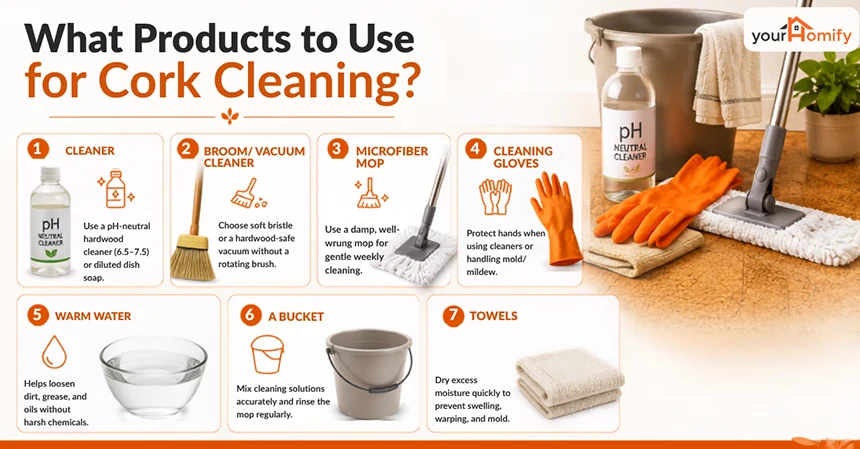
Cleaning supplies for cork flooring include a pH-neutral cleaner, a broom or vacuum cleaner, a microfiber mop, cleaning gloves, warm water, a bucket, and towels to keep them fresh and damage-free.
Now let me take you through all the cleaning supplies in detail and how to use them effectively.
1. Cleaner
Cork floors require a hardwood cleaner that is mildly balanced, so a pH ranging between 6.5 and 7.5 is good. Using diluted dish soap is another great option, but if you prefer more natural ingredients, then mix a fourth cup of white vinegar with lukewarm water and add an essential oil of your choice for good fragrance.
2. Broom/Vacuum Cleaner
For daily cleaning, use a soft-bristle broom or a vacuum designed for hardwood floors that lets you turn off the rotating beater bar setting, also known as the brush roll, which is gentle enough to prevent scratches and remove dust, dirt, and grit.
3. Microfiber Mop
A damp microfiber mop is appropriate for weekly cleaning. It helps maintain the cork’s finish. Wring out excess water and mop in sections, and never flood the floor with water, or it will affect the adhesive glue and damage the tiles.
4. Cleaning Gloves
To protect the skin and maintain hygiene while managing detergents with various chemicals, warm water, or when dealing with mold-mildew, often found on natural flooring, cleaning gloves are a strict requirement.
5. Warm Water
Warm water is a gentle solvent that breaks down oils, grease, and trapped dirt without using damaging chemicals that are harsh enough to penetrate through the natural material of the cork. It also helps activate the cleaning agents in soaps.
6. A Bucket
A bucket provides functionality while cleaning the floors. It helps you mark the ratios of soap and warm water correctly so the solution isn’t too aggressive. Rinsing the mop frequently prevents dirt from accumulating in the bristles and getting dragged across the surface.
7. Towels
If the room lacks proper ventilation, a towel should be used to dry the floor after using a mop so there is no moisture build-up. Standing water can cause the seam to swell, warp, or permanently distort its surface. The dampness also creates a breeding ground for mold.
Mistakes to Avoid While Cleaning Cork Floors
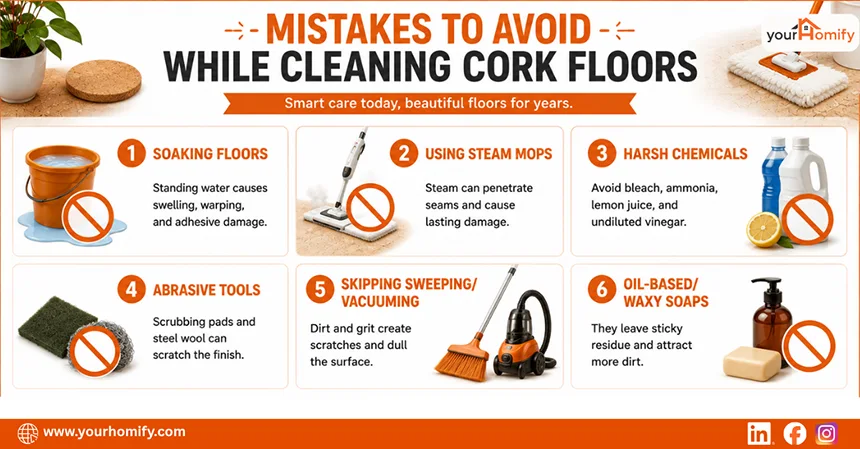
To clean cork floors, avoid soaking the floors with water, using steam mops, applying harsh chemicals, using abrasive tools, skipping vacuuming or brooming, and using any oil-based or waxy soaps.
Let me walk you through the consequences of using the aforementioned tools in detail, since cork floors are made of natural material and therefore sensitive to numerous materials.
1. Soaking the Floors
A bucket of water should only be used as a means of functionality to rinse the floors and not wet the entire floor with it, because standing water is hard to clean from between the seams, often causing swelling or warping. Cork is a porous material and absorbs moisture quickly, ruining the adhesive and also potentially welcoming bacteria to harm your home.
2. Steam Mops
Steam mops create pressurized vapor that passes through the seams and affects the material, which never dries. The damage can only be noticed weeks later in the form of raised edges, which is irreversible damage.
3. Applying Harsh Chemicals
Harsh chemicals like ammonia, bleach, undiluted vinegar, and lemon juice should be avoided at all costs. Ammonia and bleach damage and strip away the protective sealant over the floor, polyurethane, which in turn wears out the flooring and makes it more vulnerable to stains. Undiluted vinegar and lemon juice etch the finish and dissolve wax.
4. Using Abrasive Tools
Scrubbing pads, steel wool, and abrasive powders dull the finish and sometimes even cut through it immediately. This is why using a soft-bristle broom, microfiber mops, and hardware vacuum attachments is perfect for cleaning the floors.
5. Skipping Daily/Weekly Sweeping and Vacuuming
Loose dust, dirt, and grit act like sandpaper, and these abrasive particles grind against the cork material, causing deep scratches that allow water to seep deep into the surface, dulling the surface shine and aging the seal faster.
6. Using Oil-based or Waxy Soaps
Using oil and waxy soaps on polyurethane leaves a film that blocks any scope for future recoating, making the floor sticky and attracting more dirt over time. It can only be used if professionally suggested, in cases where the cork flooring was finished with natural oils, or to gently clean dirt off the floor.
Care Tips to Maintain Cork Flooring
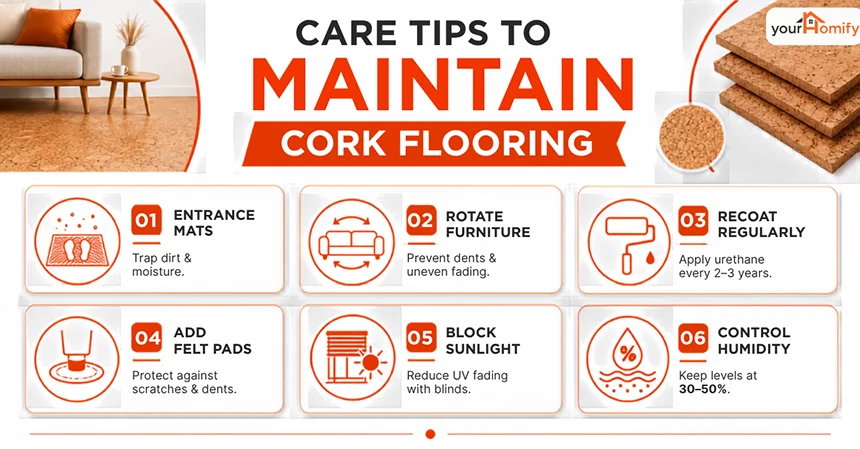
Cork floors can be maintained in the long run by installing entrance carpets, rotating furniture periodically, applying urethane, using felt adhesive, and being attentive to sunlight exposure and humidity levels.
Take a look at all of these tips in detail so you can make the most of your cork floors.
- Entrance Carpets: Entryway carpets ensure that all the dirt and residue on people’s feet and shoes do not get transferred onto the floor. Avoid rubber and latex materials to prevent staining the floor, and clean underneath them regularly. Carpets are also a good way to keep moisture at bay, but remove them as soon as they get saturated with water to avoid damage to the floor.
- Rotating Furniture: Move your furnishings and coverings regularly to prevent discoloration and avoid indentations caused by furniture legs. Leaving furniture and rugs in the same place for a long time causes the cork floor underneath them to stay dark, while the color in the rest of the areas becomes uneven due to direct sunlight, creating a patchy visual.
- Apply Urethane: Applying water-based polyurethane every 2-3 years eliminates micro-scratches because it fills the gaps and creates an even surface. It is water-resistant and acts as a shield from foot traffic. Use a clean synthetic brush to apply it with a thin, uniform coat across the room to prevent thick spots, bubbles, and overlapping marks.
- Felt Adhesive: Using water-based contact cement or an acrylic dispersion adhesive under your furniture legs guarantees that your cork flooring does not get creased or damaged. The felt pad protects the soft surface of the material and reduces friction caused by moving furniture.
- Avoid Direct Sunlight: Use blinds and curtains to block the harsh rays of the sun to maintain uniformity in color. Natural materials like cork tend to lighten if exposed to the sun for too long. The flooring could fade, yellow over time, or bleach as the ultraviolet rays of the sun break down the cellular pigments of the material.
- Humidity Levels: Standardized humidity levels for cork tiles, as suggested by the National Wood Flooring Association, are between 30-50%. When it is too high, the cork flooring will curl up or buckle, and if it’s too low, small cracks will show up. Humidifiers and dehumidifiers help in such cases. Another thing to keep in mind is to maintain temperatures between 60-80℉ to ensure that you don’t face such issues.
YourHomify Insights
Always blot the spills right away with a soft and dry microfiber cloth for instant cleanup, and avoid using non-breathable rugs like rubber to prevent moisture trapping.
Final Thoughts
Cork flooring is fairly easy to clean. By maintaining a good daily and weekly cleaning schedule, cork flooring will last you a long time. You just need proper knowledge about the types of floors available and which cleaning method suits them best.
Be sure to use soft brooms and hardware attachment vacuums. Avoid water retention on and around the floor for too long. Do not apply harsh chemicals, and use gloves and towels while on cleaning duty. Therefore, with proper precautions and upkeep, it is possible to sustain cork flooring for a long time and enjoy its unique material.
FAQs
What is the best way to clean a cork floor?
The best way to clean cork floors is by using a broom and vacuuming them regularly. A microfiber mop with a neutral-pH-balanced solution helps get rid of loose dirt and keeps excess moisture away.
What are the disadvantages of cork flooring?
Being a natural material, cork flooring tends to fall on the softer side, making it more susceptible to dents, scratches, damage from humid weather, and direct exposure to sunlight for long periods of time.
Can you restore cork flooring?
Yes, cork flooring can be restored. It depends on what type of floor you have: glue-down or floating plank, and what the thickness of the floor is. The former is typically resanded and sealed again, while the latter gets a topcoat.
What are some good cleaning products for cork floors?
Diluted dish soap, or a fourth cup of white vinegar with warm water, along with an essential oil (optional) like lavender, can be used as a natural disinfectant to clean your floors. Commercial options include cleaning agents with a pH range between 6.5 and 7.5 for safer and gentler cleansing.
Is cork flooring long-lasting?
If you follow all the cleaning and caring tips diligently, a standard cork floor will last you somewhere between 10 and 30 years. It is vulnerable to water, and the softness of the cork makes it easy for scratches and dents to occur; attention needs to be paid in such cases. The sealant needs to be applied every 2-3 years, too.






How to Clean Soapstone Countertops: Easy Care Guide
[…] General Maintenance How to Clean Cork Flooring: Types, Products, Tips & Mistakes to Avoid […]