For a cooking enthusiast like me, cilantro has been a crucial ingredient for most of my dishes. The last touch of garnishing with cilantro just makes it even more presentable and aromatic.
I prefer to use my homegrown ingredients for cooking, and compromising on the freshness of cilantro makes its use worthless. Learning how to grow cilantro made me learn and value this natural herb even more.
Whether it is fresh leaves or dried seeds, growing cilantro is incredibly easy, and it can be grown all year long with the right care.
Explore everything about this ancient herb and how you can make the best out of it.
What is Cilantro? Introduction, Nutritional Value and Taxonomic Details
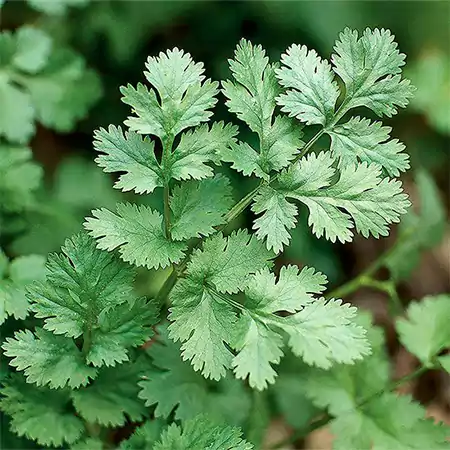
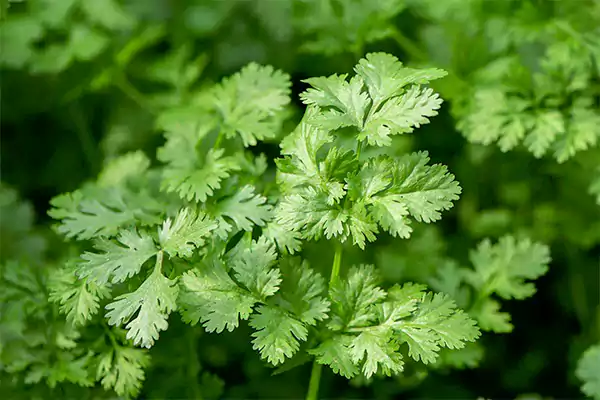
Cilantro is an ancient herb known for its citrusy flavour, used for garnishing food items like curries and salsas. Being a member of the Apiaceae family, the leaves and stems of the Coriandrum sativum plant are referred to as cilantro, and the dried seeds as coriander.
However, in the Asian part of the world, both the leaves and seeds are referred to as coriander. Both these terms are used interchangeably. One of the major producers of cilantro includes India, Mexico, China, South America, and Central America.
Take a look at the scientific classification of Cilantro:
 | |
|---|---|
| Botanical Name | Coriandrum sativum L. |
| Kingdom | Plantae |
| Division | Mangliophyta |
| Class | Mangliopsida |
| Order | Apiales |
| Family | Apiaceae Lindl |
| Genus | Coriandrum L. |
| Species | Coriandrum sativum L. |
Here are the nutritional values of cilantro and its seeds that will help you in mindful consumption:
| Nutrient | Cilantro | Coriander Seeds |
| Fibre | 4.66 g | 44.8 g |
| Protein | 3.5 g | 10.6 g |
| Carbohydrate | 1.9 g | 12.9 g |
| Iron | 5.3 mg | 17.3 mg |
| Magnesium | 72.6 mg | 343 mg |
| Potassium | 546 mg | 1473 mg |
| Calcium | 146 mg | 718 mg |
What are the Best Growing Conditions for Cilantro?
Cilantro thrives in cool temperatures, but complete shade is not appropriate.
While growing the cilantro plant along with maintaining the balance between shade and sunlight, these are the things that I keep in mind, and you should too:
- When to Plant Cilantro:
Cilantro is best grown in cool weather. So, early spring or late fall is the perfect time to plant the seeds.
- Soil Requirements
It grows in loose, loamy, well-draining soil with an acidic pH(6.2 – 6.8).
The roots of cilantro have a high risk of getting damaged in soggy, waterlogged soil.
Hence, a well-draining soil is a must for healthy growth.
- Sunlight
The cilantro plant should receive 6 hours of direct sunlight, but make sure that it is not exposed to direct afternoon sunlight, as this causes the plant to bolt too early.
Either place it in partial shade or in a container that could be moved indoors.
Personal takeaway
I grew cilantro in pots so that I could move them indoors whenever required.
- Temperature
Cilantro prefers a temperature between 60-70 degrees Fahrenheit. Hot weather conditions can cause it to bolt easily.
Although they grow best in cool temperatures, they cannot resist frost.
Keep them covered or move them indoors in an extremely cold climate.
- Water Requirements
Cilantro grows best in well-draining, moist soil. Watering it 1 inch per week is perfect for its growth.
After the Cilantro seedlings have appeared, they do not require frequent watering, but make sure the soil is moist at all times and look out for waterlogging.
How do I Plant Cilantro at Home?
Planting cilantro seeds is the best and most common way to grow cilantro. It has delicate leaves and roots that could get damaged while planting through plugs.
Here is how to grow cilantro seeds for the best results:
- Choose the site that has loose and well-draining soil, and sow the cilantro seeds.
- Sow them at least ¼ inch deep and 6 inches apart to ensure good airflow.
- Make sure they are not planted near a tall tree that blocks the sun’s rays.
- Water it enough to keep the soil moist, avoiding waterlogging that could lead to root rot.
Personal Tip
I used to thin my cilantro plant when the seedlings grew up to 2 inches tall. This would give them better access to sunlight and water.
How to Harvest Cilantro After Growing?
My favourite part about growing cilantro is that it takes only 3-4 weeks to grow completely for use. In about a month, it grows up to 6 inches tall and is ready to harvest.
Steps to harvest Cilantro:
- Identify the leaves that look green and healthy; they are usually the most flavourful ones.
- Using pruning shears or scissors, snip out ⅓ of the stems towards the base of the plant.
- Leave out the smaller leaves and avoid cutting more than ⅓ of the individual branches towards the base, allowing the plant to regrow.
- Cilantro can ideally be harvested every week until fresh growth.
How to Dry the Cilantro Seeds?

Yes, letting the seeds dry out on the cilantro plants is the way to obtain the coriander seeds.
Here is how you identify and pick dry seeds from the plant:
- During extremely hot weather, the plant will bolt. That means it will produce white flowers that will be followed by small seeds.
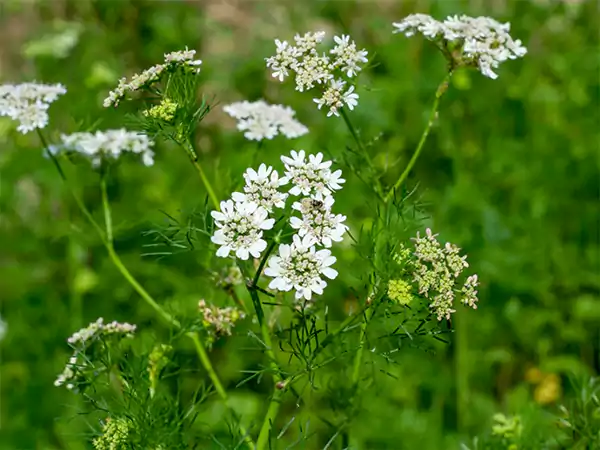
- Pick the seed heads and store them in a ventilated space to finish drying.
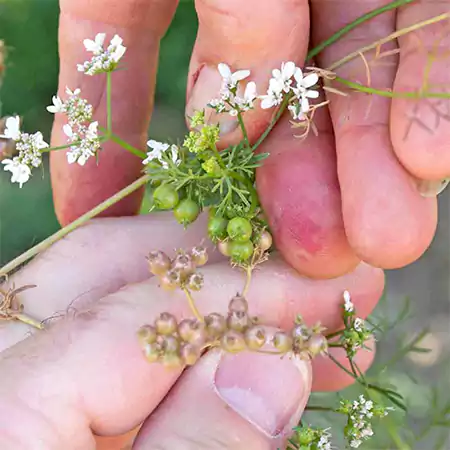
- Store them in an air-tight container. Make sure they are completely dry to prevent mould.
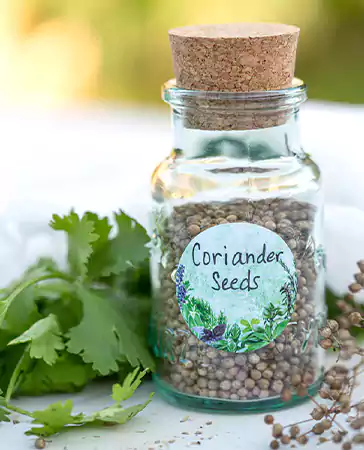
Drying cilantro seeds is the best way to preserve and use them for a longer time. The leaves are fresh, but they dry out quickly. However, dry cilantro seeds can be used as a spice in cooking, enhancing the taste and aroma of the food.
How Should I Propagate Cilantro?
Cilantro is best propagated using seeds, as it yields better results compared to leaves.
I propagate cilantro during early fall for a continuous supply throughout the harsh winter months.
Propagating them is hassle-free; just follow the following steps:
- Split the whole seeds in half or soak them in water overnight to help them germinate.
- Sow the seeds ½ inch deep in a moist, well-draining soil.
- Plant them 4 inches apart to avoid overcrowding.
- Water it gently, keep the soil moist, and in a few weeks, the cilantro seedlings will appear.
Best Cilantro Companion Plants
It is important to consider the plant choices around your garden.
Cilantro is a smart choice for your garden because of its pest management ability.
Growing cilantro around certain plants helps create a healthy garden. These are the plants that I plant with cilantro every year:
| Plant Name | Image | Benefits |
| Chervil | 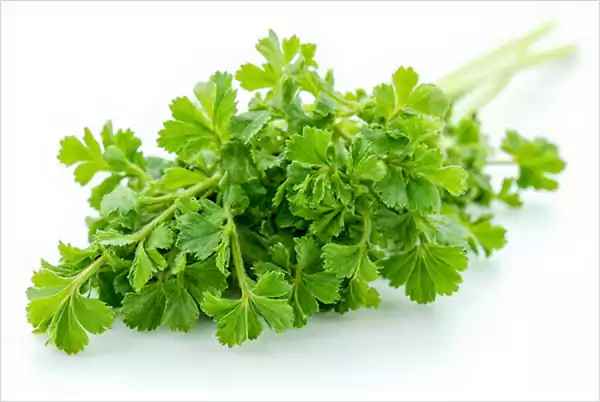 |
|
| Lettuce | 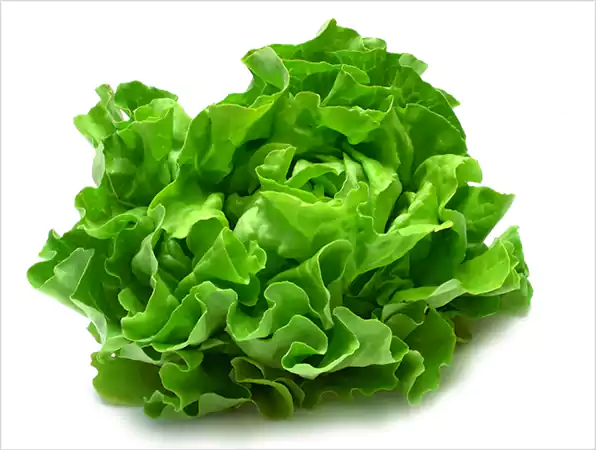 |
|
| Parsley | 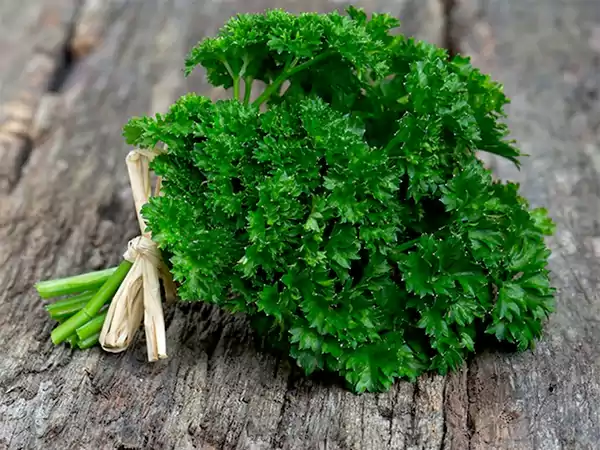 |
|
| Tomatoes | 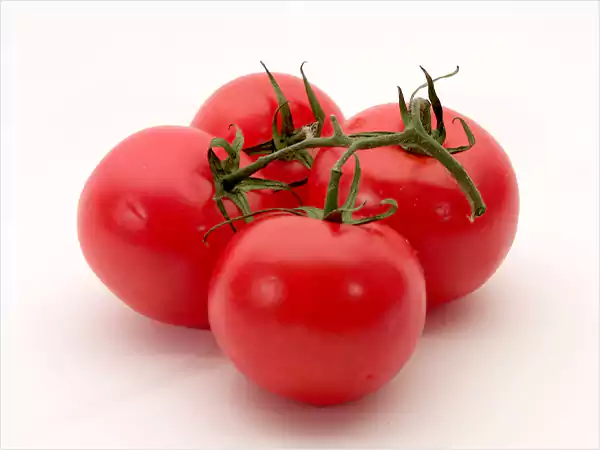 |
|
| Onion | 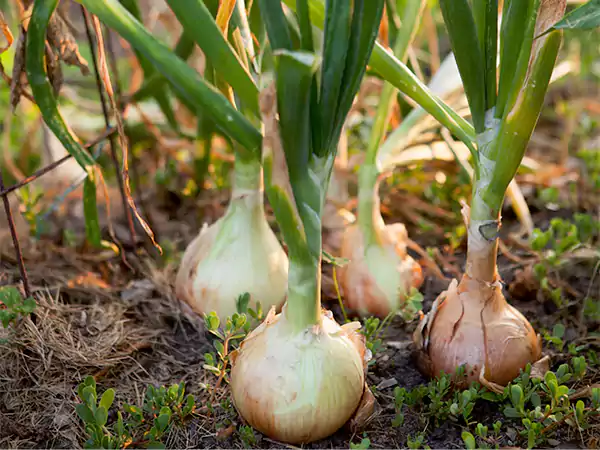 |
|
| Peas | 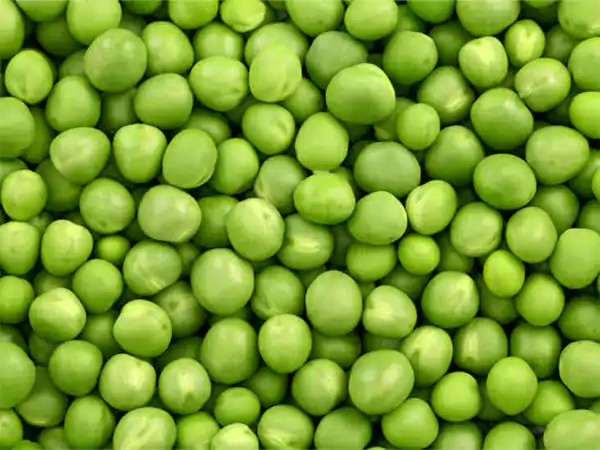 |
|
| Carrots | 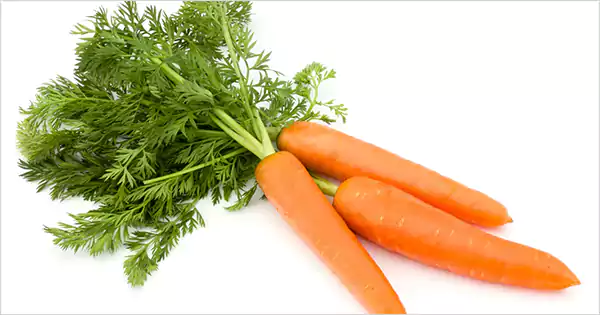 |
|
Are Cilantro and Coriander the Same?
Both cilantro and coriander come from the same plant, Coriandrum Sativum. However, there has always been confusion regarding whether they are the same or not.
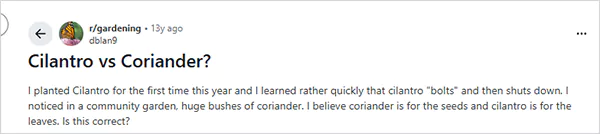
The answer to this question varies for different parts of the world:
- In the United States, the leaves of the plant are called Cilantro, and the seeds are referred to as coriander seeds.
- In other parts of the world, both the leaves and the seeds are called coriander and coriander seeds, respectively.
- The cilantro or coriander leaves have a fresh citrusy flavour, whereas the seeds have a warm and nutty flavour.
- The leaves and the seeds are used for different purposes:
Leaves: Mainly for garnishing at the end of cooking.
Seeds: Added as a spice for a warm and nutty flavour to the food.
Both words can be used interchangeably, so ensure you understand the purpose of cilantro(whether as leaves or seeds) while following a recipe.
What does Research Say About Cilantro?
Cilantro also has several health benefits other than being a natural herb used for enhancing the flavour of food items.
The claims of these health benefits are backed by research. Read more to find out what research has to say about cilantro:
Research Summary Box 1
Study Year: 2012
Sample- alloxan-induced diabetic rats
Key Finding: The cilantro extract in these diabetic rats lowered the blood sugar levels.
The extract could protect liver function and manage diabetes.
Source: National Centre of Biotechnology Information
Research Summary Box 2
Study Year: 2012
Sample- Cardiotoxicity model induced in male Wistar rats
Key Finding: Rich polyphonic extract of Cilantro has cardio-protective effects.
The methanolic effect of cilantro can help prevent a heart attack.
Source: National Centre of Biotechnology Information
Research Summary Box 3
Study Year: 2014
Sample- NHDF( cell of a healthy human skin) and hairless mice exposed to UVB radiation.
Key Finding: CSE( Coriandrum sativum extracts) treated mice had lower MPP-I levels and higher procollagen type-I levels.
Result: Cilantro extracts have the potential to prevent photo-aging.
Source: Journal of Medicinal Food
Final Remarks
Learning how to grow cilantro has been one of the smartest decisions I have made, both in my gardening and cooking journey.
Whether it is garnishing my curries with cilantro leaves or adding a pinch of coriander seeds while cooking to add that warm, citrusy flavour, you can never go wrong with a natural herb like cilantro.
Right from witnessing the process of how cilantro grows to its health benefits, planting it in my balcony garden has never been a waste.
If you want something versatile and beneficial, both for your garden and your health, Cilantro is the perfect choice.
FAQs
Are Cilantro and coriander the same?
Cilantro and Coriander are part of the same plant, Coriandrum sativum. However, in the U.S, Cilantro refers to the leaves and coriander to the seeds of the plant.
In other parts of the world, like Asia, Coriander is referred to both the leaves and the seeds.
What is the trick to growing cilantro?
The only trick to growing cilantro is to provide to plant it in a cooler temperature, provide it with afternoon shade and keep the soil moist.
Does Cilantro grow all year long?
Although it is a cool-season plant that bolts in extreme weather conditions. The tip for having a year-long supply is growing cilantro indoors.
This prevents them from extreme temperatures like heat or frost.
How to cut a cilantro plant so it keeps growing?
While cutting the leaves, remove the old leaves first and cut about 1 inch above the base.
Leave the central stem and the small leaves to promote new growth.
- Cilantro, a Unique Culinary Herb – PennState Extension
- Coriander (cilantro): A most divisive herb– ScienceDirect