A lounge stops feeling inviting for reasons you can smell before you can see them.
Which is why the usual fix, a couple of new cushions and a throw, buys you about a fortnight. The room looks different. It still smells the same.
The problem is almost always in the soft surfaces, and soft surfaces need routine, not a shopping trip.
So this one is about upkeep instead of decor: what the weekly round should cover, what each method does and doesn’t shift, and when paying somebody else is the sensible answer.
Why Your Lounge Stops Feeling Inviting
According to the Environmental Protection Agency, some indoor pollutants are ranked at two to five times what outdoor pollutants are. This is a common misconception that most people have, which is that indoor air is safer than outdoor air, but most of the time indoor air is actually worse.
And this indoor air affects a lounge area the most because this is the area that holds the most number of soft surfaces in the house and the least one to get the air in winters.
The only reason for this is the fabric. Since a lounge is already filled with various sources of fabric like sofa, rugs, and curtains, it is very easy to get this area dirty quickly. All of these, if not cleaned properly, work as a slow filter and catch all the dust and dirt. For example, they catch pet dander and grease in between their surface and then release it back into the room every time somebody sits down heavily.
Nothing about that is visible. That’s what makes it annoying.
The Weekly Twenty Minutes
Twenty minutes, once a week, is more than a full Saturday does four times a year.
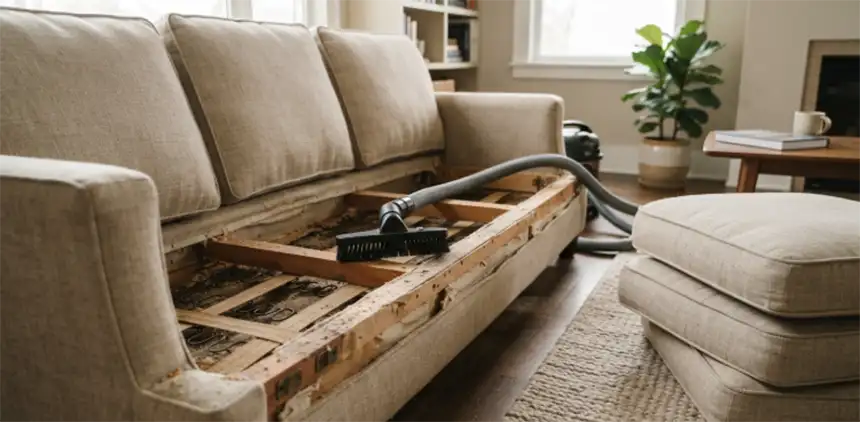
Most people assume that just because they vacuum the floor around the sofa, the lounge is clean. It’s not. It is always advised to use the soft brush attachment that comes with the vacuum to clean the sofa because the dirt and grit left in it work like fine sandpaper every time someone sits on it or shifts their position. This wears the fabric from the inside out long before it looks worn. So, to increase its life, this step is a must.
It is also advised to always wipe the hard surfaces in the lounge using a microfiber rather than a cotton cloth. This is because a microfiber cloth has fabric that runs 3 to 5 microns across, and it is thin enough to generate enough Van Der Waals force of attraction when millions of its fibres are grouped. This helps in actually lifting dirt off a surface instead of just pushing it around like the usual cotton cloth. Good microfibre clothes keep on improving their quality until the first seventy-five washes.
Did You Know?
Nobody is actually allergic to dust mites. The allergic reaction is to their droppings, which is why a room can be spotless and still set someone off, and why dry vacuuming alone barely touches the problem.
Also, dusting and vacuuming push the dirt back into the air, and if there is not an open source in the house for this dirt to get out from then it just settles back on the same sofa. So while cleaning a lounge, always make sure to open a window.
What Each Cleaning Method Actually Removes
| Method | Surface dust | Embedded grit | Dust mites | Odor |
|---|---|---|---|---|
| Dry vacuum, standard bag | Yes | Some | No | No |
| Vacuum with HEPA filter | Yes | Most | Partly | No |
| Damp microfiber wipe | Yes | No | No | Slightly |
| Hot water extraction | Yes | Yes | Yes, heat kills them | Yes |
The gap in that third column is the one worth sitting with. A standard paper bag can let fine particles straight back out through the vents, so a vacuum without a decent filter redistributes about as much as it collects.
Even though dry suction is considered a good option to clean a lounge and remove dirt, it will never work for situations like pulling a mite out of a weave. Only heat-based cleaners can do that; it’s the whole argument for steam. This is exactly why most professionals go the extra mile to carry a boiler around for deep cleaning.
The Seasonal Reset
Four times a year, do the things that are too tedious to do weekly and too important to skip.
Always take out the covers and wash them. Most of the time, the dirt is just accumulated on the outside, so cleaning the covers actually makes the room smell and look nicer. Also rotate and flip every cushion so that the foam wears evenly on all sides instead of pushing in too low on one side and looking brand new on the other.
Also, while doing a deep clean, remember to pull out the big furniture and vacuum under it. Most people forget this step, but this can make a huge difference between a successful clean and one that’s only done for namesake. While you’re at it, also wash or shake the curtains because most of the dust that you pull from the sofa or behind the furniture gets stuck to these.
Then check the humidity, because it decides whether any of this holds. Dust mites do well above fifty percent and badly in dry air, and the recommended comfort range for indoor humidity sits between thirty and sixty. A cheap hygrometer settles the argument in a minute.
One more thing that makes a huge difference in making a lounge feel like one is the light. If a lounge is only ever lit through the ceiling, it often feels more like the waiting room of a hospital than a space where you can relax. To fix that, place multiple light sources like lamps at different heights to make the room feel more relaxing. This will do more for the feel of the room than a new rug ever will.
When to Hand It to Someone Else
Upholstery has a floor that home equipment can’t get under. And most body oils get collected in the fibres over years, and a vacuum cannot fix that. Vacuum cleaners only take care of what is sitting on top, but they leave what has already soaked in as is.
Hot water extraction is the method that reaches it. The machines push water in far hotter than anything you have at home and pull it straight back out, which lifts the oils and kills the mites in the same pass. After that, you should let the lounge rest for a few days and avoid using it altogether.
Such experienced cleaning often comes with a price, and while most people assume that cleaning is priced by the hour, it’s not. Pricing actually runs on the number of seats in your furniture, and that’s why it’s easy to quote the price for the specialist and for you to compare it before you book any service.
This level of deep cleaning doesn’t have to occur frequently. Every two to three years is enough for most households to actually clean the lounge and get rid of all the dirt and grit. More often if there are pets, or if someone in the house has asthma and the room is where they sit.
A Room You Actually Want to Sit In
While cleaning does help in maintaining a lounge, the majority part of the job is done by the furniture underneath. For example, if a sofa is built on a soft frame and cheap foam, it’s never going to last because it wasn’t designed for that purpose. Thus, while cleaning can make a room feel better, it’s the furniture and light that make it feel like a place worth relaxing in.
But assuming the bones are decent, this is unglamorous work with a good return. Twenty minutes a week, a proper reset each season, and a professional every couple of years.
I’d still buy the throw pillow. Just stop expecting it to do the job.
FAQs
How many times should I vacuum a sofa?
Once every week is enough to clean a sofa well. Make sure to use the soft brush attachment to get inside the crevices instead of just cleaning it for namesake.
Does a leather sofa also need the same care as a fabric sofa? Does a leather sofa need the same routine?
No, the sofa usually requires way less effort to clean. A fabric sofa usually collects all the dust and dirt as it settles in the fibres of the sofa; however, the same problem hardly comes with a leather sofa. So in most cases, a wipe down is enough for cleaning a leather sofa.
Will an air purifier fix a stale lounge?
It helps with what’s airborne and does nothing about what’s in the fabric. Deal with the soft surfaces first, then decide if you still need one.
Is steam cleaning safe on all upholstery?
No. Check the manufacturer’s cleaning code first, since some fabrics are solvent-only and water will mark them permanently.
How do I make my lounge smell better?
Opening the windows and letting fresh air into the room can do more for a room’s smell than an air purifier.
- United States Environmental Protection Agency, “Reference Guide for Indoor Air Quality in Schools” — EPA, indoor pollutant levels against outdoor levels and the 30-60% indoor humidity comfort range
- NewYork-Presbyterian Health Library, “Controlling Dust, Dust Mites, and Other Allergens in Your Home” — hidden dust mites, allergy to droppings rather than the mites, the 50% humidity threshold, HEPA and paper-bag filtration, and steam heat killing mites
- Explain That Stuff, “Microfiber Cloths” — microfiber cloths, fiber diameter, van der Waals attraction against cotton, and performance across wash cycles
- A1 Carpet Cleaning, “Couch Cleaning” — having a lounge professionally cleaned, truck-mounted hot water extraction, per-seat quoting, and the few-hour drying window afterwards
- YourHomify, “How to Select a Durable Sofa Brand That Stays Comfortable for Years” — choosing a sofa that stays comfortable for years, frame and foam quality, weekly vacuuming with a brush attachment, and cushion rotation