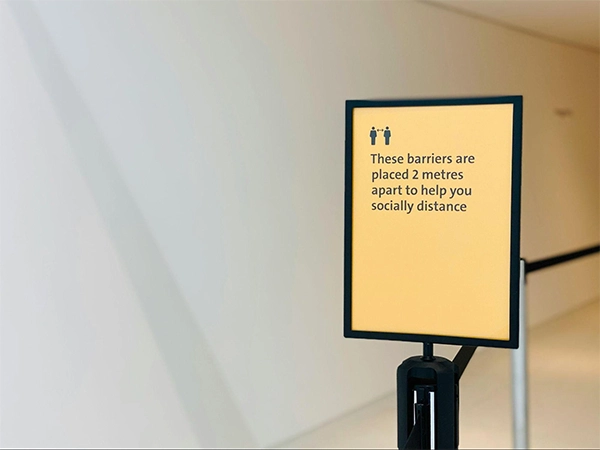
People are busier than ever, so only some amazing visuals can grab their attention. Research also says that we process visuals 60,000 times faster than text, helping explain why effective signage plays such a powerful role in customer communication.
The demand for display solutions that are easy to update, cost-effective, and professional-looking is naturally rising. That growing demand for flexible signage has made front-loading poster systems increasingly popular.
Among the most practical options available is the snap frame, a simple yet highly effective display solution now found in everything from shopping centres to public institutions. This guide explores how clip frames work, available styles and sizes, and why they continue to be a reliable choice for organisations that rely on clear, frequently updated messaging.
KEY TAKEAWAYS
- Snap frames use a front-loading design that allows posters to be replaced quickly without removing the frame.
- Available in standard sizes and profile widths, they suit everything from menus to large promotional displays.
- Indoor and outdoor versions are built differently to handle varying environmental conditions.
- Their durability and reusability make snap frames a cost-effective long-term signage solution.
What Is a Snap Frame?
A snap frame is a poster display system built around four hinged aluminium edges that securely snap into place with spring-loaded pressure.
When the hinges close, the poster is held firmly in place beneath a clear protective cover, creating a flat and professional finish.
These frames are also known as snap-lock frames, snapper frames, clip frames, grip frames, or flip-up frames, depending on the supplier.
Despite the different names, the underlying mechanism and purpose remain the same across the market.
How Snap Frames Work
One of the biggest advantages of click frames is their tool-free operation. Once opened, the user can lift the protective cover, place a new poster against the backing board, and snap the sides shut to secure everything in seconds:
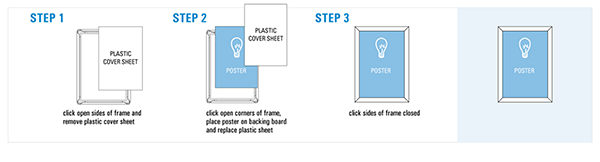
This front-loading design is one of the biggest reasons retailers prefer snap frames over traditional rear-loading or screw-down displays.
The frame can stay mounted to the wall permanently, while only the poster inside is swapped out as needed.
A typical snap frame includes:
- Aluminium frame
- Rigid backing board
- Clear protective overlay
- Installation and mounting hardware
The backing board is usually made of styrene or a similar rigid material that keeps the poster flat and supported.
The protective overlay is generally a UV-stabilised, anti-glare PVC sheet that shields the printed material from dust, fingerprints, and light damage. Together, these layers ensure that posters look crisp and clean throughout their display life.
Common Sizes and Profiles
Using internationally recognised paper standards removes guesswork and makes poster replacement far easier.
So any poster printed to a common paper size will fit a matching frame without trimming or adjustment.
Prominent wall displays, exhibitions, and high-impact promotional campaigns require larger sizes (A0 and A1). Smaller formats such as A3, A4, and A5 are more often used for countertop signage, menus, notices, and point-of-sale messaging.
The profile refers to the thickness of the aluminium moulding that surrounds the poster on each side.
Standard profiles are commonly 25mm wide, while heavy-duty versions extend to 32mm for greater rigidity and durability in high-traffic environments.
Wider profiles offer a more prominent visual border and tend to perform better in larger sizes where additional structural strength is needed.
Slim profiles, by contrast, deliver a more subtle and modern appearance suited to minimalist interiors.
Frame Styles and Finishes
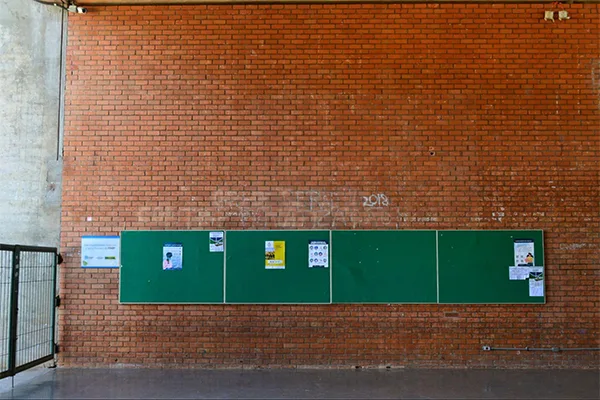
Snap frames come in a variety of styles and finishes, allowing businesses to choose options that balance visual appeal, durability, and suitability for different environments.
Corner Types
Mitred corners are the most common style and are formed by joining two pieces of aluminium cut at a 45-degree angle to create a clean 90-degree square corner.
This classic look mirrors traditional picture framing and works well in most retail and office environments.
Radius corners feature softly rounded edges instead of sharp points, which makes them a safer option for high-traffic public spaces, schools, lifts, and other areas where children are present.
The choice between the two often comes down to a balance of aesthetics and safety.
Colour and Finish Options
Silver anodised aluminium is the most popular finish, since it complements a wide range of interior styles without overpowering the poster artwork itself.
Black, gold, and other coloured finishes are also available for brands that want their frames to align with specific design schemes.
The anodised process protects the aluminium surface from scratches and corrosion while preserving its appearance over many years of use.
This added durability is one of the reasons aluminium has become the material of choice for professional display frames.
Lockable and Security Versions
Some snap frames are designed with concealed locks or security features that prevent unauthorised opening of the hinges.
These models are particularly useful in:
- Public areas
- Building lobbies
- Transport stations
Any other locations where tampering is a genuine concern.
Security versions usually require a special key or tool to release the frame, which protects both the poster and the underlying display structure from misuse.
This added layer of protection helps businesses safeguard high-value or time-sensitive content from interference.
Indoor vs Outdoor Snap Frames
Although they may look similar at first glance, indoor and outdoor models are built differently for specific environments.
Standard clip frames are designed primarily for indoor environments where they are protected from rain, wind, and direct sunlight.
They work well in retail interiors, restaurants, lobbies, classrooms, and corporate offices where conditions remain consistent.
Outdoor snap frames are engineered differently, featuring rubber gasket seals around the inside edge of the frame to prevent water from reaching the poster.
Many outdoor models also use powder-coated aluminium for additional UV and corrosion resistance, along with optional locks to deter tampering.
Common Applications
Their adaptability is one of the main reasons click frames remain so widely used in retail stores, supermarkets, shopping centres, cinemas, hotels, restaurants, gyms, and transport hubs.
They are equally common in schools, universities, hospitals, council offices, libraries, and other public institutions where notices need frequent updating.
Businesses, government agencies, and even military organisations rely on these frames for signs, marketing materials, recruitment posters, and important compliance notices.
Their flexibility makes them versatile in any setting where information should be neatly visible and often changed.
Why Snap Frames Are a Smart Investment
Time savings alone can deliver significant value for businesses running regular promotions or seasonal campaigns.
Cost effectiveness is another major advantage, since a single frame can be reused indefinitely across countless campaigns over many years.
Aluminium also does not rust, and when a frame eventually reaches the end of its useful life, it can be recycled through standard metal recycling streams.
Clip frames are also widely available in stock sizes, which means most users do not need to invest in custom manufacturing to get the dimensions they require.
Quick dispatch from established Australian suppliers further reduces the lead time involved in setting up new signage across one or many locations.
Conclusion
Snap frames continue to prove that effective business tools do not need to be complicated. They also offer durable construction and unmatched ease of use.
Whether displayed in a small café, a busy shopping centre, or a quiet office corridor, they help organisations keep their printed messaging fresh, professional, and visible.
For any business weighing up the cost, convenience, and long-term value of a display solution, snap frames consistently come out as one of the most practical choices on the market.
Choosing the right size, profile, and finish for the environment will ensure many years of reliable and stylish service.
FAQs
What makes click frames different from traditional poster frames?
They use spring-loaded edges that open from the front, allowing posters to be replaced quickly without taking the frame off the wall.
Are clip frames suitable for outdoor use?
Yes. Outdoor ones include weather-resistant features such as gasket seals, protective coatings, and optional locking mechanisms.
Which snap frame size should businesses choose?
The ideal size depends on the intended use. Larger formats like A0 or A1 suit promotional displays, while A3 or A4 work well for menus and notices.
How long do aluminium click frames typically last?
High-quality aluminium ones can last for many years with minimal maintenance due to their corrosion resistance and durable construction.