Selecting a bed for your room is much more than just finding a design that suits your bedroom. It is influenced by certain factors, such as how much storage is available, how easy the room is to clean, and whether the furniture feels comfortable within the overall layout. It’s possible that a style that looks good in a showroom might not be the best pick for a tiny apartment, a shared bedroom, or a home where storage space is limited.
That’s why, before settling on a design, a quick comparison helps you decide according to everyday needs. A bed frame with open space underneath can make a room easier to organize, while an upholstered model can introduce softness, and a wooden design can create a more natural atmosphere.
Storage Space Can Change How a Bedroom Functions
Storage is usually one of the first practical considerations when choosing bedroom furniture. In a smaller home, the area beneath the bed can offer useful space for luggage, seasonal clothing, spare bedding, and other things that do not need to remain within easy reach every day. A frame with enough clearance underneath can help you use this area without adding an extra cabinet to the room.
However, available space is only helpful when it is easy to access. Measure the height beneath the frame and compare it with the storage boxes or containers you want to use. Leave enough room to slide them in and out without scraping the floor or moving nearby furniture. If you use a vacuum cleaner periodically, check whether its height and cleaning head can fit underneath.
Open Storage Versus Built-In Compartments
An open frame generally provides flexibility because storage containers can be moved or replaced as household needs change. It may also make routine cleaning easier, provided there is enough clearance for a vacuum or mop. The trade-off is that visible boxes can make the room look messier if they differ in color or are left partially exposed.
Frames with built-in drawers or enclosed storage can create a tidier appearance, but they require enough space for drawers to open fully. Before selecting this style, consider the distance between the bed and the wall, wardrobe, or bedside table. A storage feature is most useful when it remains easy to use instead of becoming blocked by the room’s layout.
Upholstery Brings Texture and a Softer Appearance
Upholstered bed frames are usually chosen for their padded headboards and fabric-covered surfaces. These features can make the bed feel more inviting and offer the bedroom a softer appearance than metal or exposed wood. Upholstery also offers an opportunity to introduce texture without relying on heavily patterned bedding or decorative accessories.
The fabric and color influence how the frame works with the rest of the room. Neutral upholstery can blend with varied wall colors and bedding styles, while a deeper shade may create a stronger focal point. Velvet, linen-look fabric, and corduroy each have a different visual character, so it is worth considering how the material will look in both daylight and artificial lighting.
Maintenance is another part of the comparison. Fabric surfaces can gather dust, hair, and occasional spills, which means cleaning needs should match the household’s routine. Homes with pets or young children may benefit from checking the manufacturer’s care instructions before choosing a particular upholstery. A frame that looks attractive but needs more upkeep than expected may not be the most convenient long-term choice.
Simple Wood Designs Work With Changing Decor
Wooden bed frames appeal to people who want natural-looking furniture and a style that can adapt as the bedroom changes. Grain patterns, warm finishes, and straightforward shapes can create a sense of familiarity without requiring much extra decoration. Wood can work in traditional rooms, contemporary spaces, and bedrooms that combine multiple furniture styles.
A simple wooden frame can also make future decorating easier. If the bedding changes from white to muted colors or the walls are repainted, a restrained frame design is less likely to clash with the new palette. This can be helpful for people who enjoy refreshing their rooms without replacing large pieces of furniture.
When checking wooden designs, pay attention to the finish, construction, support system, and care instructions instead of judging the frame by appearance alone. A natural finish may show grain and variation, while a painted surface creates a more uniform look. Think about the weight and dimensions of the frame as well, particularly if the living room is upstairs or the furniture will need to be moved through narrow doorways.
Where Novilla’s Vibe Metal Bed Frame Fits In
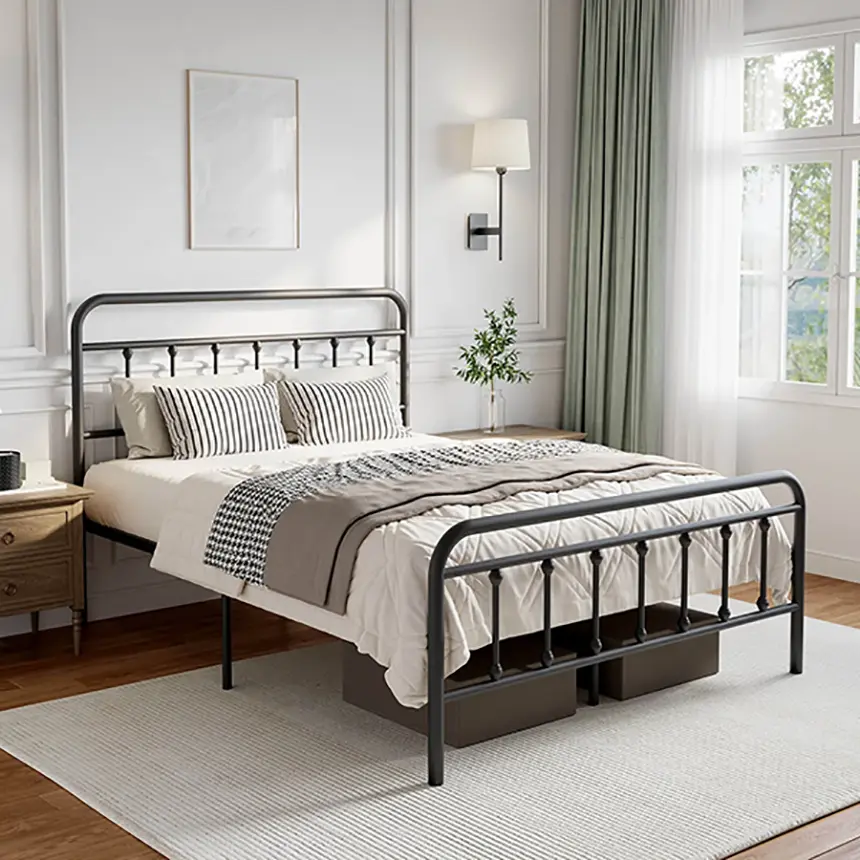
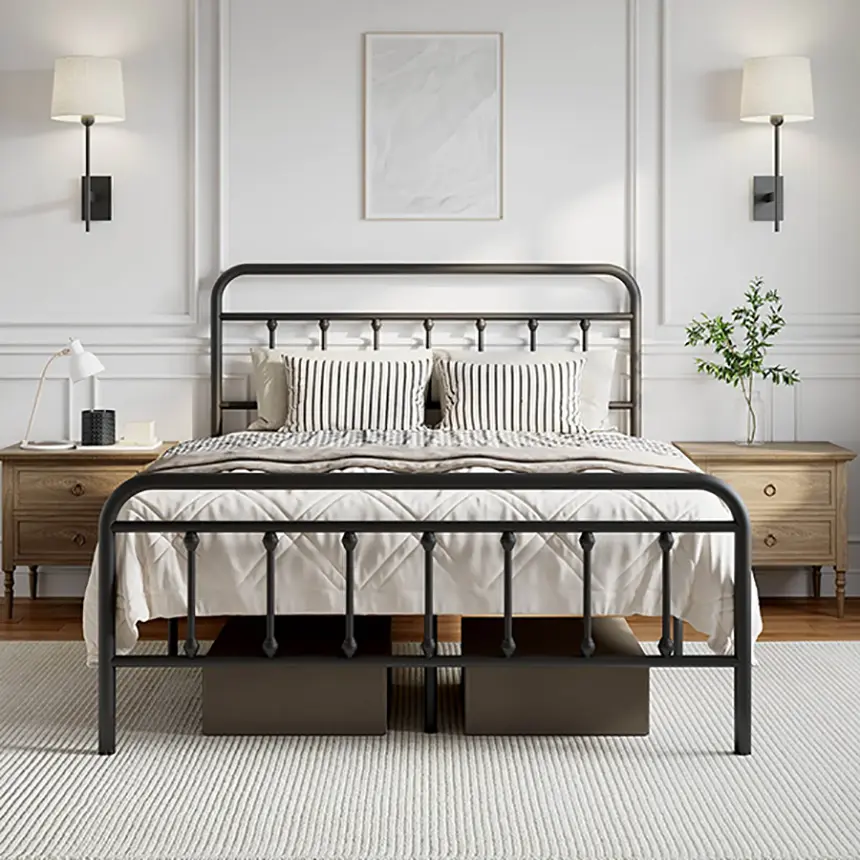
The Novilla Vibe Metal Bed Frame provides a different option for people who value a straightforward structure and practical use of bedroom space. Its steel construction, reinforced support slats, and simple design give it a functional appearance that can match both contemporary and more traditional interiors. The model is provided in black and white, allowing the frame to work with different bedding colors and room palettes.
One notable characteristic is the space beneath the frame, which is designed to accommodate storage containers and make access for cleaning easier. The product information also explains an anti-squeak design intended to help with quieter use. These details may appeal to people who want a relatively uncomplicated frame without the bulk of a big upholstered headboard or built-in storage unit.
The Vibe is worth thinking about when comparing open metal designs with fabric-covered or wooden alternatives. Its appearance is more structured than upholstery and less organic in character than wood, but its simple lines can make it easy to coordinate with existing furniture. As with any frame, check the available size, measurements, mattress needs, and assembly instructions to confirm that it fits the room and intended use.
How to Match a Frame to Your Daily Routine
The right frame relies partly on what happens in the bedroom beyond sleeping. Someone who keeps extra linens nearby might value under-bed storage, while a reader who sits against the headboard regularly may prefer a padded design. A person who moves often or expects to rearrange the room might prioritize an easy structure that is easier to coordinate with different furniture.
This is where comparing Novilla bed frames by function can be more helpful than comparing them by appearance alone. Consider the time you spend cleaning, how much storage you want, and whether you prefer a soft or more defined furniture style. These everyday factors usually matter longer than a temporary decorating trend.
It is also useful to think about who uses the room. A guest bedroom may need a versatile design that suits different visitors, while a main bedroom might justify more attention to upholstery, bedside access, and the overall feel of the furniture. For a child’s room or a frequently rearranged space, durability, accessible storage, and ease of cleaning might carry more weight.
Measure the Room Before Making a Final Choice
Even a well-designed frame can make a bedroom uncomfortable if it leaves too little space to move. Calculate the length and width of the available space, then account for the frame’s full dimensions instead of the mattress alone. Headboards, footboards, and decorative side rails can extend beyond the mattress measurements.
Check the positions of doors, wardrobes, drawers, windows, and electrical outlets. A frame that fits on paper may still obstruct a cupboard or make it hard to reach a wall socket. If possible, mark the intended footprint on the floor with removable tape. This simple step can help show whether the arrangement leaves enough walking space before furniture is moved.
Also take into account the height of the completed bed. The mattress thickness, frame height, and any extra foundation affect how easy it is to get in and out of bed. Make sure the mattress is compatible with the frame’s support system and follow the manufacturer’s instructions for assembly and weight limits.
Choose for Function First, Then Finish
Storage-focused, upholstered, wooden, and metal frames each solve different issues. Open designs can help make use of the space below the bed, upholstered models bring softness and texture, and wooden frames provide a natural look that can work across changing decor styles. The most suitable choice relies on the room’s dimensions, maintenance needs, storage requirements, and preferred appearance.
A useful comparison begins with measurements and daily habits, then moves to materials, finishes, and decorative details. By thinking about how the frame will function throughout the year—not just how it looks on the day it arrives—you can select bedroom furniture that feels appropriate, stays practical, and works comfortably with the rest of the home.
FAQs
What are the types of bed frames?
Ans. The types of bed frames are solid wood, engineered wood, metal, and upholstered.
What are the common storage and design options?
Ans. The common storage and design options are platform beds and hydraulic beds.
How can one match a bed frame with a daily routine?
Ans. The right frame relies partly on what happens in the bedroom beyond sleeping. Someone who keeps extra linens nearby might value under-bed storage, while a reader who sits against the headboard regularly may prefer a padded design.