“The glory of gardening: hands in the dirt, head in the sun, heart with nature.”
— Alfred Austin (Poet)
Artistic landscaping can transform an ordinary yard into a space that feels personal, inviting, and full of character. But before you start sketching winding pathways or picking out statement plants, it’s important to understand what makes a landscape design truly work.
Many homeowners jump straight into aesthetics and end up with a lawn that looks impressive at first but feels disconnected over time. The most successful landscapes blend creativity with the natural characteristics of the space. Understanding a few core principles before you begin can help you avoid costly mistakes and create a garden that feels both beautiful and intentional.
KEY TAKEAWAYS
- Work with your yard’s natural sunlight, drainage, and terrain instead of trying to fight them.
- Choose a strong focal point to guide the overall design and create visual interest.
- Use repetition in plants, materials, and shapes to achieve a cohesive landscape.
- Balance hardscape and planting elements while planning for beauty throughout all seasons.
Every Garden Has Natural Flow
When redesigning a lawn, don’t make the mistake of thinking you control every detail. You draw the borders you want. You line up plants like a checklist. But a garden already has its own movement. It’s not random. It follows light. It has a unique slope. If you slow down, you might even notice its natural drainage patterns. It’s not all up to you.
Artistic landscaping works when you follow this natural flow. Walk your yard. Notice where sunlight pools. And where water collects after rain. Those spots already hint at how the space wants to behave. Use that. Place taller plants where the eye naturally lifts. Let open areas stay open. Basically, shape the yard with the land.
The prettiest landscaping happens when you respect how the space wants to live. Ignore that, and you may end up dealing with soggy corners. Struggling plants. Bad drainage. So, observe and listen to what your garden says it needs.
Focal Points Should Guide the Design
Artistic gardens need focal points. The eye needs to land somewhere. If it doesn’t, the yard might feel unfinished. Even when you have the most beautiful plants.
A strong focal point acts like an anchor for the entire landscape. It can be:
- A pond and waterfall that draws you in with sound.
- A charming bench under a tree.
- Large decorative boulders for that rock feel.
Once you choose it, everything else should support it. Plant taller greenery behind it to frame it. Keep surrounding plants slightly simpler. That way, it stands out. The garden will have a “main character” that anchors it.
Repetition is Good for Cohesive Design
One of the most common landscaping mistakes is introducing too many unrelated colors, textures, and plant varieties. You want everything in the mix. But this can make the yard look visually noisy.
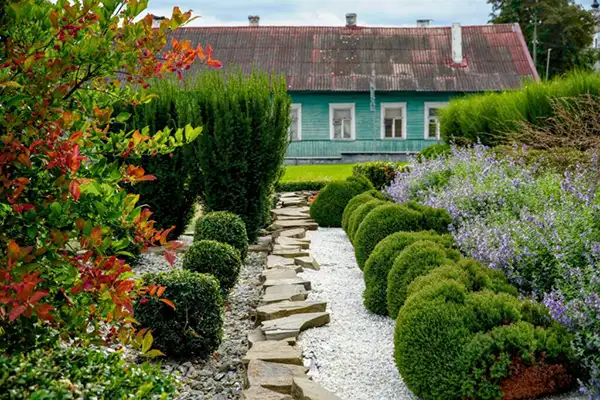
Repetition pulls it back together. Use the same lavender variety in three different zones instead of five different flowering plants. Repeat river stone mulch in multiple beds. That way, the ground ties together. Echo shapes, too. If you use rounded shrubs near the entrance, repeat that shape near the patio. The goal is subtle recognition as you move through the space. This makes your garden more unified with a harmonious design.
70-30 RULE
The principle dictates that 70% of a lawn’s aesthetic should consist of a dominant, unifying element (e.g., green foliage or a single material), while only 30% is for accents, contrasting textures, or focal points.
Pathways Shape Movement
Pathways do more than connect one area to another. They control how the garden feels emotionally. Many still use outdated garden path styles, such as boring straight paths or too-narrow ones. A straight line to the back gate makes everything seem quick and functional. Too narrow, and people rush through without noticing anything. This limits how people experience your outdoor space.
Gently curve a gravel path around a planting bed. That way, you focus only on that plant when you pass by, or widen a stone walkway near a seating area. So, people can naturally pause and sit. With thoughtful paths, your yard will be more intentional.
Hardscape Should Balance Soft Planting
Plants bring life and color to a garden, but hardscape elements provide the structure that holds everything together. It gives the yard edges. Surfaces to move around in. A way to connect the outdoors to your house.
Plants bring life and color to a garden, but hardscape elements provide the structure that holds everything together. It gives the yard edges, surfaces to move around in, and a way to connect the outdoors to your house. Before you lay a single stone, though, keep in mind that tearing out old concrete, pavers, or overgrown beds can generate a surprising amount of debris — which is why many homeowners planning a major redesign look into a roll off dumpster rental in Littleton, CO to keep the worksite clean and the project on schedule. Think concrete curbing that creates crisp outlines around a flower bed, or a gravel seating patio under shade. The key is contrast, not competition. Hard surfaces should frame the softness and never overpower it.
Think concrete curbing that creates crisp outlines around a flower bed. Or a gravel seating patio under shade. The key is contrast. N competition. Hard surfaces should frame the softness. Never overpower it.
Experienced designers can bring that balance. Tussey Landscaping is known for combining structured hardscape with flowing plant design. So, stone paths, garden walls, and greenery feel like one connected scene. Not separate parts. It’s worth working with them so the hard and soft parts look cohesive.
Gardens Change with the Seasons
A great landscape is designed with all four seasons in mind. Spring brings soft new growth that fills empty gaps. Summer thickens everything. It makes colors look bold. Fall turns plants into warm, fading tones. And finally, winter strips things back. Understand what each season brings to a garden. This allows you to envision landscaping that looks beautiful year-round.
Mix plants that peak during different seasons. That way, the lawn never looks empty for too long. Keep evergreens for structure during colder months. Add flowers that bloom at different times.
Maintenance matters too. Late-winter pruning shapes plants before spring growth. Summer deadheading prevents wasted energy. So, plants transition more smoothly into fall. When you stay on top of seasonal maintenance, you create a garden that stays beautiful. Even when it’s past peak bloom season.
Conclusion
Artistic landscaping isn’t about copying a picture-perfect yard from a magazine. Keep the above points in mind while you daydream about your new garden. Remember, lawns already have flow. Paths guide movement. Focal points hold attention.
Know these by heart. Everything else will be more manageable. Even the boldest ideas stop feeling scary. Then, you can actually enjoy getting as expressive and creative as possible with your landscaping.
FAQs
What is artistic landscaping?
Artistic landscaping is the practice of designing outdoor spaces with a focus on aesthetics, creativity, and visual harmony while still considering practical factors such as drainage, sunlight, and maintenance.
How do I choose a focal point for my garden?
Look for a feature that naturally attracts attention, like a fountain, specimen tree, sculpture, seating area, or decorative stone arrangement. It should complement the size and yard style.
Why is repetition important in landscape design?
Repetition creates visual consistency and helps connect different areas of the garden. Repeating plants, materials, or shapes makes the overall design feel more organized and intentional.
How can I make my lawn attractive year-round?
Incorporate a mix of evergreen plants, seasonal blooms, ornamental grasses, and foliage with varying colors and textures. Regular maintenance also helps keep it looking its best throughout the year.