




| Common Name | Jane Magnolia, Little Girl Hybrid Magnolia | Maintenance | Low to moderate |
|---|---|---|---|
| Native Region | Hybrid (Part of the National Arboretum’s “Little Girl” series) | Average Height | 10–15 feet |
| Plant Type | Deciduous shrub or small tree | Average Width | 8–12 feet |
Jane Magnolia, scientifically known as Magnolia ‘Jane’, is found to offer many medicinal benefits, such as improving nausea and indigestion and reducing inflammation and allergies.
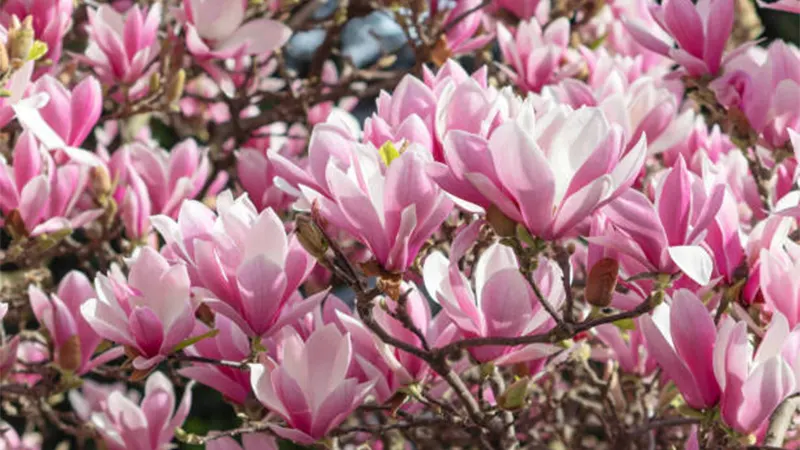
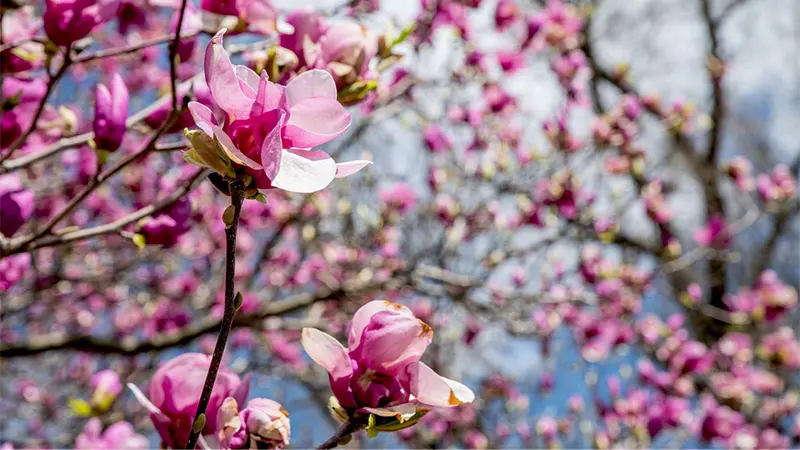
Unlike other varieties, the Jane Magnolia tree explodes with exotic tulip-shaped flowers in late spring to prevent frost damage.
Key Features and Benefits of Jane Magnolia
- Along with the fragrant cup-shaped flowers, the Jane Magnolia trees are celebrated for their dark green foliage that turns bronze-yellow during the fall.
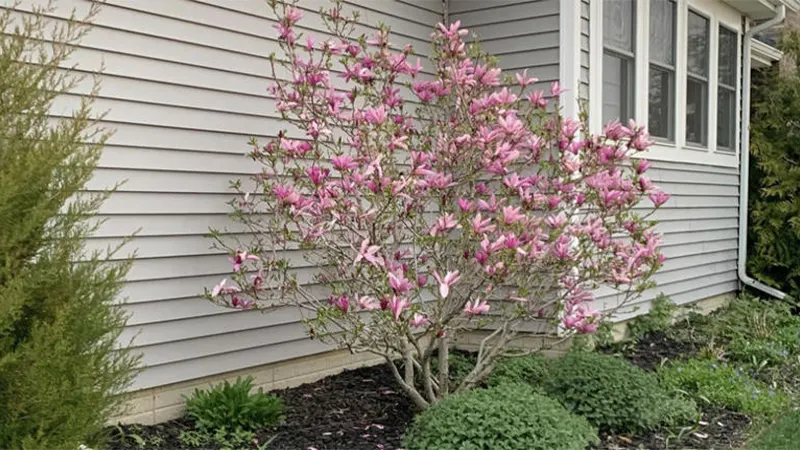
- The growth rate of Jane Magnolia ranges from 1 to 2 feet a year, making it a perfect choice as a compact multi-trunk ornamental shrub.
- For improved flowering and health, Jane Magnolia tulip tree needs balanced, slow-release fertilizers in the spring before the new growth starts.
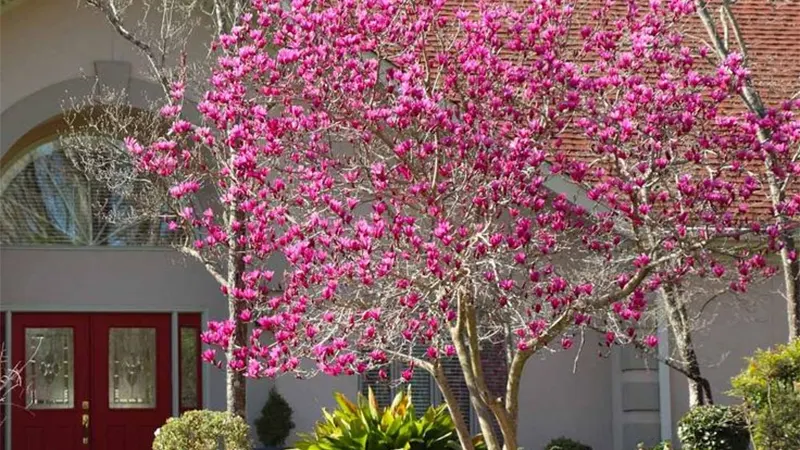
- Thanks to its stunning aesthetics, the full grown Jane Magnolia is perfect to uplift the vibe of privacy screens, gardens, and patios.
Care Guide, Advantages, and Disadvantages of Jane Magnolia
- Growing Zone : USDA 4-8
- Light Exposure : 6 to 8 hours of direct sun exposure is essential to get maximized blooms and optimal growth.
- Water Needs : Requires regular watering (preferably twice a week) during the first 3-5 weeks and periods of dry spell.
- Soil Type : Well-drained loamy soil with neutral to acidic pH.
Advantages
- Due to its late blooming habit compared to other Magnolias, it protects its flowers from frost damage.
- Once established, it requires minimal pruning and is easy to care for.
- It is extremely robust and cold-hardy, tolerating temperatures of up to -40°F.
- At maturity, it is smaller than other Magnolias, becoming well-suited for compact spaces like small yards and foundations.
Disadvantages
- Susceptible to pests and disease risks, including scales, thrips, powdery mildew, and leaf spots.
- Can create a mess in the landscape as it sheds leaves and flowers during the fall.
- Does not tolerate root disturbance and has a shallow fleshy root system that can get damaged easily.
- Although it blooms later than other varieties, the frost can still damage the flowers, ruining the spring display.




Charles Brown –
My wife planted this tree some years back. In springs, the tree is draped with stunning burgundy flowers, amplifying the overall greenery.
Simone Clark –
I have both Magnolia Ann and Jane in my garden. While Ann blooms first with reddish purple small flowers, Jane blooms in later spring with larger purple pink flowers with white interiors.
Kenneth Cooper –
The plant can be easily taken care of even in a busy schedule because of being low maintenance. It doesn’t even require regular pruning.~
Derek Wilson –
In addition to the beautiful multi coloured flowers, I can’t stop myself from praising the dark green foliage, which turns yellowish-bronze in the autumn.
Andrew –
I’ve wanted a Jane Magnolia for a while, so I was excited to finally get one. It arrived healthy and well-packed from YourHomify. I’m especially looking forward to seeing those beautiful blooms when the season comes around.
Bob Rogers –
The Jane Magnolia is such a lovely tree. Mine arrived in good shape and has already settled nicely into the garden. I chose it mainly for the flowers, and I can’t wait to see it bloom for the first time.