

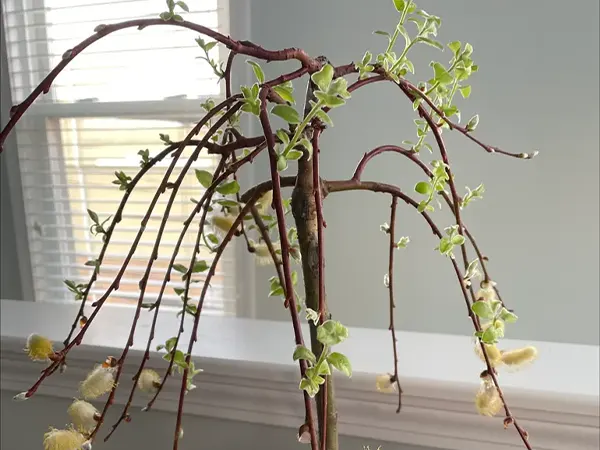
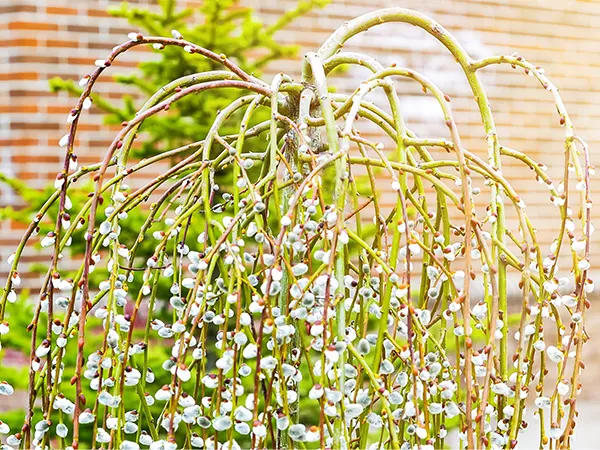
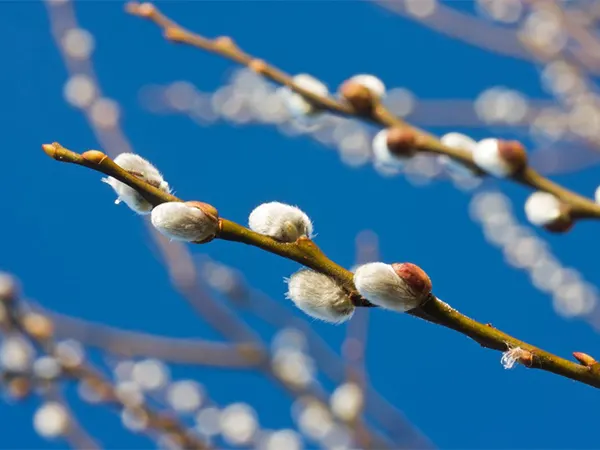
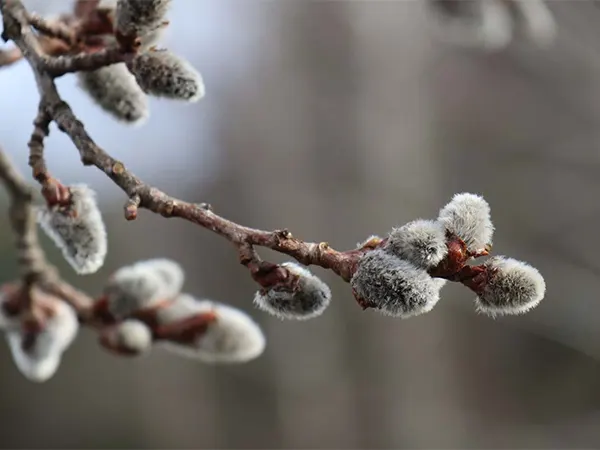
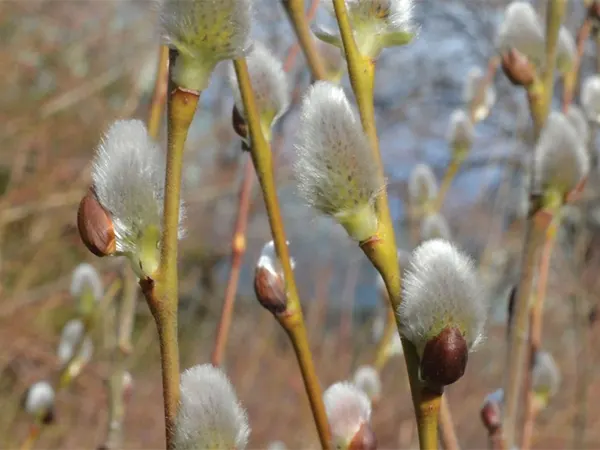
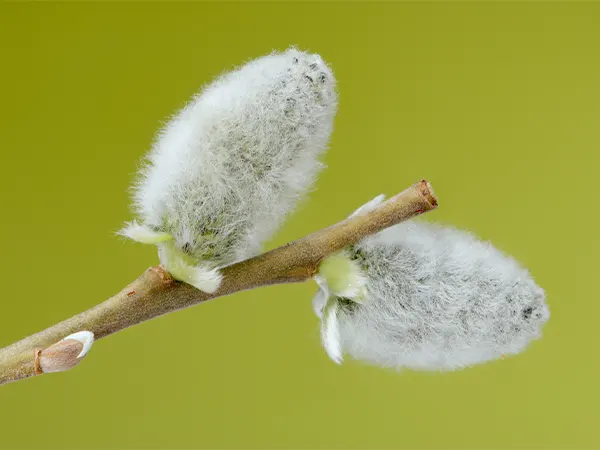


Native to the northern parts of North America, the Pussy Willow plant is also known as Weeping Pussy Willow, Catkins, and Salix Discolor. Some of the most recognizable cultivars of this furry flower are also commonly grown in Europe and Asia. The furry catkins that appear on the stems of the tree are cotton-like flowers that blossom before the leaves come.
Moving further, let us discover some more amazing facts and the taxonomic overview of the Pussy Willow tree.
Pussy Willow Plant: A Brief Overview of the Wonder Shrub
Pussy Willow is a short-lived but fast-growing plant. Speaking of the physical appearance, it is a small bushy tree having dark green leaves and white/gray cotton-like catkins. The furry flowers are called catkins, as they look almost similar to the paws of cats.
Being a great host plant for butterflies, the Pussy Willows are water-loving plants, and some species have drooping branches also.
Read till the end to explore some cool facts about this weeping plant.
General Facts and Taxonomic Summary
Pussywillow flowers are a lovely reminder that even trees enjoy a little coziness during winter, all while getting ready for the arrival of spring! This strange creation of nature is like a visual treat and is also known to portray stories of renewal and hope. Whereas in countries like China and Turkey, you will commonly find this plant grown in cemeteries as the drooping or weeping effect of its branches symbolizes profound sadness and grief.
Furthermore, let us check out the taxonomic summary of Pussy Willow.
| Taxonomic Overview of the Weeping Pussy Willow | |
| Botanical Name | Salix Discolor |
| Kingdom | Plantae |
| Phylum | Magnoliophyta |
| Class | Magnoliopsida |
| Subclass | Dilleniidae |
| Order | Salicales |
| Family | Salicaceae |
| Genus | Salix |
In the following sections, we will discuss the benefits of the Pussy Willow bush.
Remarkable Benefits of the Weeping Pussy Willow Plant
In the world of botanical miracles, the Weeping Pussy Willow plant is yet another gem offering numerous benefits. Some of them are mentioned below for your knowledge.
- Visual Appeal: Having a furry texture, the Pussy Willow can add an aesthetic touch to your balcony gardens. The white catkins create a beautiful contrast with the dark green leaves, giving gardeners a chance to enhance their landscapes.
- Decorative Purposes: The flowers of this plant are often used for decorative purposes in bouquets and centerpieces, especially around Easter and Chinese New Year.
- Habitat Support: Being an early food source for pollinators such as butterflies and bees when only a few plants bloom, the pussywillow flowers support mini wildlife in survival. Attracting diverse species of butterflies and mini birds, this plant also enhances biodiversity.
- Cultural Significance: Other than being a pretty sight, the Pussywillow shrubs are typically used in festive celebrations like Lunar New Year and Palm Sunday, as they depict renewal and hope.
Other than the above mentioned benefits, the Pussywillow plant is also used for medicinal purposes in some countries, and one of the most significant benefits of this species is that it is easy to grow and maintain.
Moving forward, let us learn more about the ideal growing conditions of this plant.
Ideal Growing Conditions for Pussy Willow Trees
Without any further ado, let us understand what are the ideal growing conditions for the Pussy Willow tree.
| Attributes | Facts |
| Hardiness Zone (USDA) | 4-8 |
| Light Exposure | Thrives in full sunlight |
| Water Requirements | Enough to keep the soil moist |
| Soil Type | Moist and loamy soil |
| Mature Height | 6-25 ft tall |
| Gardening Type | Bushy shrubs, usually small trees |
| Bloom Time | February to April |
| Fertilizer | Balanced nutrients with leaf mold |
With proper care and supportive climatic conditions, the Pussy Willow shrub can beautifully flourish and can give an ornamental touch to any garden space.
User Reviews and Ratings
Review: The plant is beautiful and growing well. It gives a beautiful touch to my garden.
Rating: ⭐⭐⭐⭐
Review: Delivered with care, the weeping willow bush adds an exotic feel to the garden. Very easy to maintain and grow.
Rating: ⭐⭐⭐⭐⭐
Review: Very elegant and attractive flower. I have planted in my living space, and it looks very eye-pleasing. Requires very little care.
Rating: ⭐⭐⭐⭐⭐
What is the botanical name of the Pussy Willow plant?
The botanical name of the Pussy Willow flower is Salix Discolor.
What is the preferred climatic condition for the Willow tree?
The preferred climatic conditions for the Weeping Willow tree are moderate to cold temperatures.
How many types of Pussy Willow species are there?
There are approximately 400 species of the Pussy Willow trees.


Andrew –
I ordered a Pussy Willow from YourHomify and it arrived in good condition. The plant was healthy and packed carefully, with no damage during delivery. I’ve planted it in my garden and it’s settling in well.
bob –
Got my Pussy Willow from YourHomify and I’m happy with the purchase. It arrived fresh and healthy, and the packaging was good. It looks nice in the garden, and I’m looking forward to watching it grow.