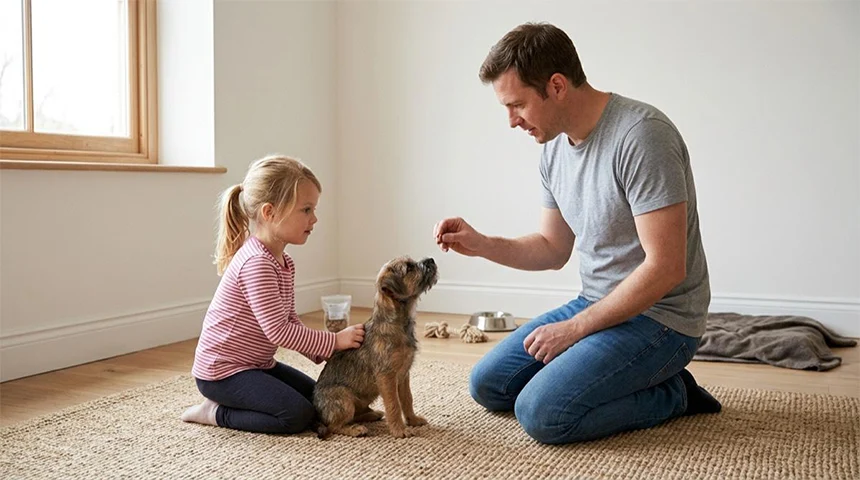
The living room is the place where you spend time with your family, watch movies, and do fun activities. However, if you’re planning to bring a puppy, the place is going to be where the puppy naps, plays, and learns the rules of the house.
Before bringing the puppy, make some plans so that you will not face any problems in the future. This article will help you to plan before moving your furniture.
Step 1 – Divide the Room Into Zones
A puppy-friendly living room gives more comfort to everyone when it has clear zones for rest, play and family time. Before getting into anything, stand in the doorway and picture a normal evening with the puppy in the room.
Picture the room on paper and mark these areas:
- A resting spot in a quiet corner
- An open area of floor for play and training
- The family seating area
- Walkways between doors, the kitchen, and the hallway
- Any spots that should stay off-limits for now
You don’t need much space for this; a small living room can work. You have to put a crate in one corner and a play mat near the middle. Plan the zones on paper first, so you can change the picture instead of furniture.
Step 2 – Keep Walkways Clear and Secure Tall Furniture
Clear walkways matter more with a puppy in the house, because a small dog underfoot is easy to trip over when someone is carrying a laundry basket or a hot drink. Keep the main paths through the room free of toys, beds and baskets.
Leave a big space between the front door and the kitchen, and keep the puppy’s bed and toy box to the side of it. A shallow basket for toys makes it quick to clear the floor at the end of the day.
A curious puppy and a busy family both collide into furniture. The CPSC calls anchoring TVs and furniture a quick, effective step that can prevent serious injuries. Anchor the TV and any tall shelves before the puppy arrives, and insert cords behind furniture or in covers.
Step 3 – Set Up a Quiet Resting Area
Puppies need more rest, so keep the resting area away from the busiest part of the room, that helps them to settle. Choose the place wisely, since you’ll have to keep it in the same place for months.
Choose a Low-Traffic Corner
Choose the place where the puppy can see the family but avoid the spots next to the front door or a heating vent.
Set the Sleeping Rule for Everyone
You should set the time limit for sleeping time and make a routine. The CDC’s advice is to not disturb a dog while it is eating, sleeping, or caring for puppies. Make it a family rule from day one, and say it out loud until it sticks.
Add a Bed and a Crate Cover
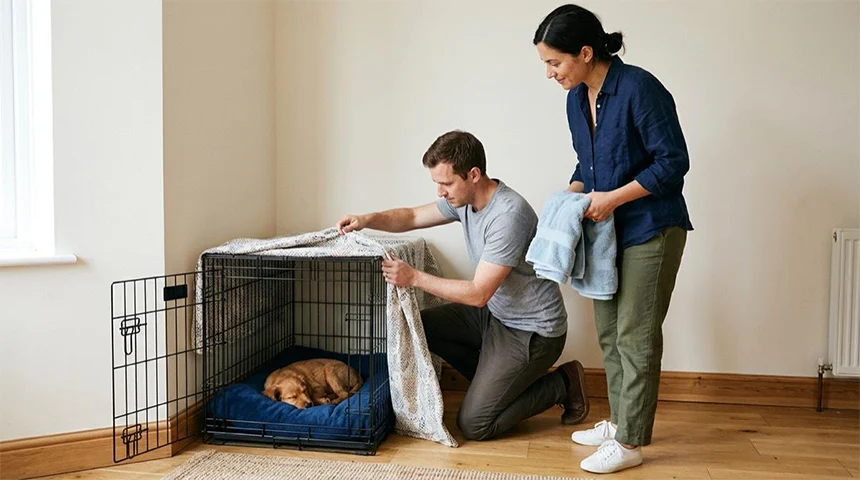
Add a clean bed inside a crate, with a light cover draped over it, and give them a den-like space. Leave the front open so the puppy can come and go during the day. Once you set up the resting area for the puppy, keep the toys and play out of it.
Step 4 – Arrange Seating Around the Puppy’s Space
The puppy’s resting time should be in the family room; place the main seating so it faces the TV or the conversation area, with the puppy’s corner beside it instead of in front of it.
Make the seating comfortable so it can adjust in its first year. Fur and the occasional accident are part of the deal, so covers you can clean easily make life simpler. If you’re arranging sectional couches from Home Reserve, the sectionals come with machine-washable covers, which helps when a puppy finds its way onto a cushion. Leave the gap between the seating and the crate, so the puppy isn’t awake every time someone sits down.
Keep a washable throw folded on one end of the seating as well. It’s quicker to wash a throw than to clean a whole cushion.
Top Tip: Decide before pickup day whether the puppy is allowed on the seating, and get every family member to agree. Puppies learn fastest when the rule never changes. If one person lets them up and another says no, the puppy can’t tell what’s expected and you’ll spend months untangling the habit.
Step 5 – Work Out the Ongoing Costs
Give proper attention to the puppy in its first month. So writing down the monthly total doesn’t surprise you.
List the regular costs you’ll pay for most of the puppy’s life:
- Food and treats
- Flea, tick and worm prevention
- Routine vet checkups and vaccines
- Grooming, nail trims and bathing supplies
- Replacement toys, beds and chews
Ask your veterinarian to give a rough idea of food quantities and vet costs for breeding and expected size. Add it all up and divide by twelve to find a realistic monthly figure, then set that amount aside each month.
Step 6 – Build Puppy Insurance Into the Budget
Keep the budget from the start and include insurance as well, because unexpected bills are the hardest part of the plan.
Compare plans by looking at the same deductible and reimbursement level for each, so the prices line up fairly. When you look at puppy insurance from Spot Pet Insurance, check whether you’d add its preventative care add-on, which can help cover the eligible cost of vaccinations. Review each policy’s
Read each policy’s isolation and waiting periods before you choose, and put the monthly premium straight into your puppy budget.
Keep a small emergency fund beside the insurance too. Many policies refund you after the bill, so you’ll still need money available on the day.
Map the Room on Paper This Weekend
You can start picturing your living room and the spot that you are going to modify. Set aside all the areas to move the furniture once you complete sketching.
Then sit down with your family and write out the monthly puppy budget, including insurance. With the room ready and the numbers agreed, you can focus on the fun part: getting to know your new dog.
Where should a puppy’s bed go in the living room?
Put it in a quiet corner where the puppy can see the family but isn’t in anyone’s way. Avoid spots next to the front door, the TV speakers, or a heating vent.
How do I keep a living room safe for a puppy and children?
Keep walkways clear of toys and beds, anchor the TV and tall shelves, and tuck thread behind furniture. Teach children not to disturb the puppy while it’s eating or sleeping.
What ongoing costs should a puppy budget include?
Include food, parasite avoidance, routine vet care, grooming, and replacement toys and beds. Add insurance and a small emergency fund for unexpected vet bills.