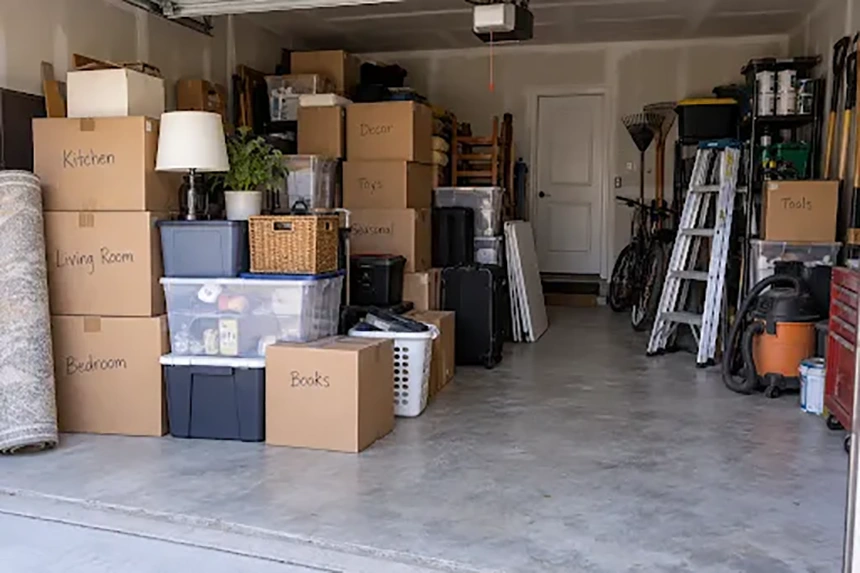
The crew arrives on a Tuesday morning, and the garage they need to work through still has eleven years of accumulated boxes stacked three deep against the wall where the new water heater is going.
So they move boxes. For most of the first day, at whatever their hourly rate happens to be, they move your things from one part of your house to another.
That’s the most common way a remodel starts badly, and it has nothing to do with the contractor.
Here’s the clearing-out sequence that avoids it, what each category of stuff is actually worth, and the two things no hauler will touch.
KEY TAKEAWAYS
- Clear the rooms on either side of the work, not just the room being remodeled.
- Anything still in the space on day one becomes the crew’s problem at their hourly rate.
- Intact cabinets and fixtures are donatable, but only if demo takes them out carefully.
- No junk hauler will touch asbestos, lead paint, or chemicals. Those need testing first.
The Window You Actually Have
Every remodel has a quiet stretch between signing the contract and the first day of demolition, and that stretch is the only time decluttering is free, because once the crew is on site,e every hour you spend deciding about the exercise bike is an hour somebody is being paid to wait.
Most people know this and put it off anyway. Sorting your own belongings is harder than it looks, in a way that has little to do with how much you own.
We’d put the window at four weeks for a kitchen or bathroom, six if the project touches a garage, basement,nt or attic. Those three rooms are where households store the things they’ve declined to make decisions about, sometimes for a very long time.
Four Weeks Out to Day One
- Four weeks out, empty the rooms next to the work. Not the room being remodeled. The ones on either side, because that’s where the crew stages materials and where dust travels. People always clear the wrong room first.
- Three weeks out, sort into four piles and be strict. Keep, donate, sell, dispose. A fifth pile called “decide later” always becomes the biggest one in the house.
- Three weeks out, photograph the sell pile and list it. Marketplace listings take about two weeks to move, and a mid-century sideboard nobody collects by the deadline becomes a disposal problem instead of forty dollars.
- Two weeks out, book the donation pickup. Habitat for Humanity ReStore locations take cabinets, doors, appliances, and fixtures, and they need notice. Donating to a registered charity also carries a tax benefit, which EPA counts among the ways diverting materials lowers a project’s cost.
- One week out, book the haul. This is the bit people leave until the driveway is already full, and same-day service exists but is not something to plan around. If you’re clearing out renovation debris as well as household clutter, tell whoever you’re booking that both are coming, because they price by volume and weight.
- The day before, walk the space with the contractor. Point at anything still in the room. Whatever you can’t explain the fate of becomes their problem and your invoice.
Where It Actually Goes
Sorting is the easy half of this, and what stalls people is working out which pile each thing actually belongs in. The answer varies by category, and nobody hands you the rules.
| What you’ve got | Best route | Worth knowing |
|---|---|---|
| Cabinets, doors, working appliances, fixtures | Donate to ReStore or similar | Must come out intact, which means telling the contractor before demo day |
| Furniture in decent condition | Sell or donate | Marketplace moves slowly, and many thrift stores decline upholstered pieces outright |
| Scrap metal: radiators, copper pipe, cast iron | Scrap yard | Actually pays, sometimes surprisingly well for copper |
| Mixed household clutter | Haul | Priced by volume and weight, so a truck of light bulky things costs more than you’d guess |
| Drywall, lumber, tile, shingles | Construction haul | Keep separate from household waste where you can — different disposal stream |
| Paint, solvents, asbestos, lead paint | Household hazardous waste facility | Nobody else will take it. See below. |
What No Hauler Will Take
This is the part that catches people out in older houses.
Junk removal companies will not accept hazardous material, and they say so plainly. Top Shelf Junk Removal, a Boise operator, lists asbestos, lead paint chips, and chemical waste among the things its crews won’t load, and that refusal is standard across the industry rather than one company being cautious.
Which matters, because a house built before 1980 may well have both. Popcorn ceilings, old vinyl tile, pipe insulation, window putty. If the remodel disturbs any of it, testing comes before decluttering, and the material goes to a licensed abatement contractor rather than anybody’s truck.
Fun Fact
Your municipal household hazardous waste facility handles the paint and solvents. Usually free, usually one Saturday a month, usually with a queue.
Where Your Old Kitchen Ends Up
Here is the thing that genuinely surprised me when I first went looking into it, and it has stuck with me since: the overwhelming majority of construction and demolition waste in the United States comes from tearing things down rather than putting them up. EPA’s figures put demolition at more than ninety percent of the stream, with construction accounting for under ten.
So the pile in your driveway isn’t a by-product of building your new kitchen. It is, almost entirely, your old kitchen.
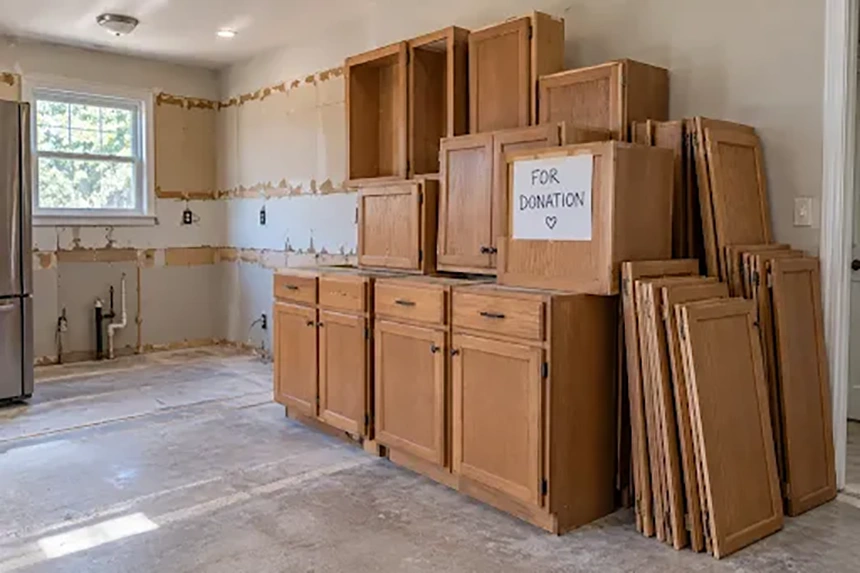
Which reframes the sorting job. Those cabinets had thirty years left in them for somebody with a rental property, and the difference between a landfill and a ReStore is usually just whether the demo crew was asked to pull them out carefully.
They’ll do it if you ask. It costs an hour, and nobody offers, because nobody asks.
The Box You Can’t Decide About
Every household has a box of things nobody can bring themselves to decide about, and in practice it is usually more like nine boxes.
The rule we give people is a deadline rather than a judgment. Put the undecided things in a labeled box, write a date six months out on the lid, and stick it in the attic. If you haven’t opened it by then, it goes unopened, because opening it restarts the argument.
It isn’t a clever system. It just moves the decision to a time when there isn’t a contractor standing in your hallway waiting for an answer.
Conclusion
The remodel will go fine. Contractors work around clutter constantly, and they’re good at it, which is the problem, because being good at working around your boxes is not the same as being free.
What you’re buying with four weeks of unglamorous sorting is a crew that starts on the actual job on the actual first morning.
And you’ll find things. Everybody does. The tools you replaced because you couldn’t find the originals, the paint for a color scheme you abandoned, one odd shoe. Set aside an afternoon for that part. It’s the only genuinely enjoyable hour in the process.
FAQs
How far in advance should I start decluttering for a remodel?
Four weeks for a kitchen or bathroom, six if the project involves a garage, basement, or attic. Those spaces hold the most undecided items.
Will my contractor move my belongings?
Usually yes, and they’ll charge you for it at their hourly rate. Clearing the space yourself is almost always cheaper.
What can’t junk removal companies take?
Hazardous material, including asbestos, lead paint,t and chemical waste. Those need a licensed abatement contractor or a municipal hazardous waste facility.
Is it worth donating old cabinets instead of skipping them?
Often, yes. Charities like Habitat ReStore accept intact cabinets and fixtures, and donations to registered charities carry a tax benefit alongside the reduced disposal cost.
US EPA — 600 million tons of construction and demolition debris, from Sustainable Management of Construction and Demolition Materials, for the demolition-versus-construction split, the reusable materials list, and the charitable donation tax benefit (figures are 2018 data from the Advancing SMM Fact Sheet)