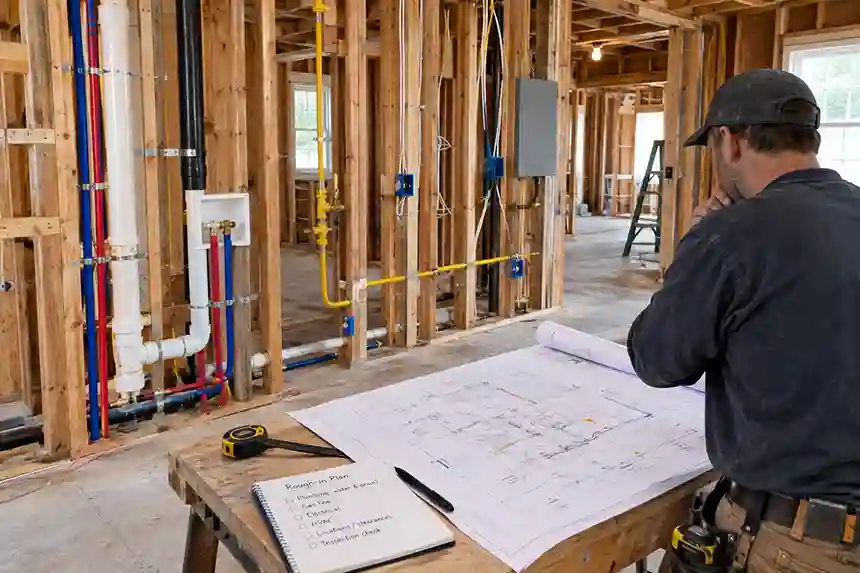
Most of the homeowners end up paying more than their expected budget after major renovations. One of the causes is hidden pipes under the walls that increase the cost significantly.
These can be plumbing, gas, electrical, or any other pipes that sometimes occupy the space where you plan to do a major construction.
To treat these situations, you need a good renovation plan that spots these hidden pipes early and lets you know what and where you should renovate and how.
This is exactly what you will learn in this article.
KEY TAKEAWAYS
- Gas and plumbing works are should be included in the renovation design.
- Check the local licensing needs or compliance requirements before starting any major home renovation project.
- Always mention service routes and access points in the project plan.
Why Utility Planning Starts Before Demolition
Knowing your home and planning a renovation after considering the placement of existing service pipelines like gas lines, vents, drainage, meters, and service points is very important.
This decides where your cabinets or other appliances can fit.
This happens often, and most of the examples can sound familiar to you. Bathrooms and kitchens are the places where these accidents happen the most.
Sometimes the whole water pipeline moves with the sink; sometimes gas pipelines need to be fixed after you just moved the cooktop, and many more.
Interesting Fact
YourHomify’s Plumbing coverage says that the system behind a finished room is part of the renovation.
Create a design that allows fittings to join lines, change directions, and adapt new routes. This approach can make your plan more satisfying instead of a plan that just has to be imposed.
The timing matters. Service changes become harder once walls, flooring, cabinetry, and waterproofing are already finished.
Gas Work Needs Specialist Attention
Always know the rules and requirements when renovating the gas pipes. Even minor changes can require permissions, licensing, and compliance rules can also apply.
NSW Fair Trading and Energy Safe Victoria told people that repairs and renovations that include gas pipelines are dangerous work and a professional is needed to do that work. A licensed gasfitter does the work, such as gas installations, repairs, and renovations.
Homeowners have to do gas work before starting renovation work. This can be done by installing a new cooktop and planning other work, which helps to give the work direction.
Thinking from the commercial aspect can also help. People who are planning for bigger projects, like changes to building use, may require commercial equipment.
System design, installation, repairs, inspections, maintenance, and compliance for shops, factories, new buildings, and larger civil or commercial projects are the work that is included in commercial gas work according to Vic Plumbing and Drainage.
Rules are different for different locations; know the rules for your exact location from the relevant authorities.
Plumbing Changes Can Affect the Whole Layout
Changes can be very troublesome when it comes to plumbing; you change a fixture, and suddenly the water is leaking from everywhere.
Many new bathroom items like a basin, shower, dishwasher, laundry sink, or a new bathroom layout require different water supply and new access points.
According to YourHomify’s bathroom renovation guidance, these practical constraints are part of the planning stage.
That’s why a simple bathroom refresh can become a larger utility project once the walls are opened.
Then the pipework is also not as simple as it looks. The elbows, tees, couplings, reducers, and other fittings that solve water problems are very difficult to fit and require professionals to get the work done neatly.
Put Utility Decisions Into the Renovation Schedule
Your plan should include all the aspects that are meant to be done. Here is the list that you should do:
- Note the services: If you know where the gas pipes and other pipes are, mark their location for safety.
- Make a list of changes: Make a list of the things that changed after renovation.
- Search for professionals: Always hire experienced people for the work that has to be done by professionals.
- Note inspection points: Inspect all the changes after the work is done and check if anything is left.
- Close the wall at last: Take photos and keep the final service layout with the renovation records.
Whenever you need to do some construction work like drilling, renovation, or any other work that includes the pipelines, those pics will help you a lot.
What to Check Before the Walls Close
Always check after the work is done. Look for the work that is ignored but can be done now, or other small things that can be fixed. Important things like waterproofing and flooring have to be checked properly.
Ask the professional about the details of remaining things or any other aspect to repair. Watch everything closely and then match the work; it should be done the way the professional agreed to.
Interesting Fact
The networks behind a single home sit inside a much bigger infrastructure picture. One current market report projects global gas pipeline infrastructure revenue to reach $38.14 billion by 2035.
Energy Safe Victoria notes that licensed gasfitters provide a compliance certificate after gas appliance installation and give the homeowner a record of the work. So it is important to keep the compliance documents for the gas work in a renovation.
Keep all the important documents, like permits and photographs, before the finishing work. These can be helpful for future renovations and constructions.
FAQs
Do I Need a Licensed Gasfitter for a Home Renovation?
Requirements depend on the jurisdiction, but gasfitting is regulated specialist work in many Australian states. NSW requires licensing for gasfitting work, and Energy Safe Victoria says to use a licensed gasfitter for renovations involving gas.
Can a Plumber Move a Gas Appliance?
Not simply because they are plumbers. Gasfitting work generally requires the appropriate gasfitting licence or authority for that category in the relevant jurisdiction.
Should Utility Work Happen Before Cabinetry and Finishes?
Yes. Service routes, connections, inspections, and testing should be settled before work is covered by cabinets, flooring, waterproofing, or walls.
What Records Should I Keep After a Renovation?
Keep permits or approvals where applicable, certificates, invoices, appliance information, final plans, and clear photographs showing concealed services before finishes were installed.
- types of plumbing fittings — YourHomify
- bathroom — YourHomify
- $38.14 billion — Custom Market Insights
- commercial gas plumbing — Vic Plumbing & Drainage
- NSW Fair Trading — Using a gasfitter
- NSW Government — Plumbing, draining and gasfitting work
- Energy Safe Victoria — Gasfitters