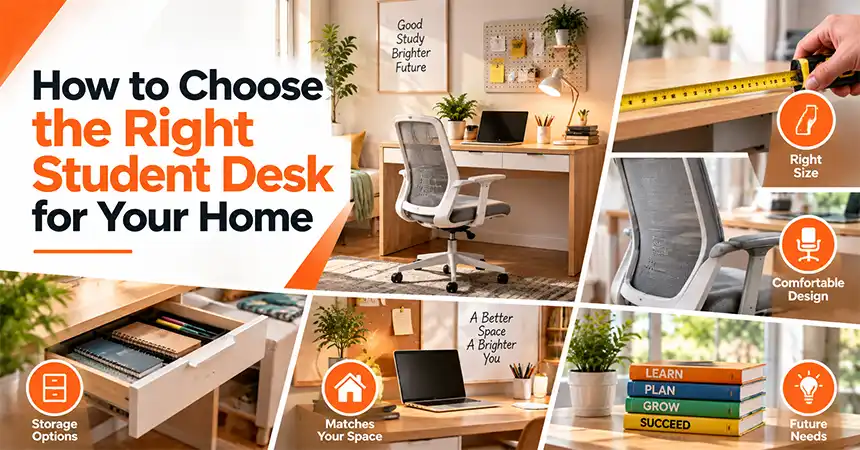
Talking about choosing the right student desk for your home needs to go through a fairly complex discussion.
A dedicated study space!
Yes, a dedicated study space that physically separates sleep areas from work zones can help minimize daily distractions. The right workstation setup may turn a typical bedroom into a productive academic environment.
Just as you might hire paper writer at EssayService to handle overwhelming research coursework, a proper desk may stop your posture from getting completely ruined from doing math on a soft mattress.
Shopping for student desks for home requires looking closely at surface area, storage capacity, and ergonomic heights. A good physical foundation at home may help set you up for long-term academic success.
Measure Your Available Bedroom Footprint
You need at least 36 inches of clearance behind a desk to comfortably roll a chair in and out. Finding the perfect small student desk for home means measuring out your entire floor plan before browsing online furniture catalogs. Taking the time to measure ensures your new furniture does not block essential room pathways.
Grabbing a tape measure prevents returning a heavy, half-assembled piece of wood. You must carefully account for swinging doors, sliding closet access, and nearby electrical outlets. An outlet hidden directly behind a heavy wooden frame is completely useless for charging a laptop.
Placing masking tape directly on the floor gives you a perfect visual representation of the furniture’s footprint. This simple trick shows exactly how much walking space actually remains in the bedroom.
Standard desk dimensions by student education level
| Education level | Minimum surface width | Recommended depth | Typical desk height |
| Elementary | 36 inches | 20 inches | 24 to 26 inches |
| Middle school | 42 inches | 22 inches | 28 inches |
| High school & college | 48 inches | 24 inches | 29 to 30 inches |
Source: General ergonomic guidelines from the Business and Institutional Furniture Manufacturers Association (BIFMA).
Prioritize Ergonomic Designs to Prevent Back Pain
Your elbows should rest at a 90-degree angle when your hands lie completely flat on the keyboard. Proper desk ergonomics directly impact how long you can comfortably study without getting tight shoulder cramps. A badly sized work surface quickly leads to daily slouching and chronic neck pain.
Adjustable standing desks are incredibly popular because they allow you to alternate between sitting and standing every single hour. This movement can improve blood flow and help you stay alert during long study sessions. Many motorized models also offer digital memory presets for different users.
If you purchase a complete student desk and chair set for home, ensure both pieces adjust to fit growing bodies. For extra support, use a simple footrest if your feet do not reach the floor after adjusting the seat. Once your chair is perfectly set, you must align your computer screen to prevent neck strain.
Ideal monitor viewing heights based on student height
| Student height | Desk surface height | Monitor center height (from floor) |
| 4’10” to 5’2″ | 25 inches | 41 inches |
| 5’3″ to 5’7″ | 27 inches | 44 inches |
| 5’8″ to 6’0″ | 29 inches | 48 inches |
Source: Computer workstation ergonomic guidelines from the Occupational Safety and Health Administration (OSHA).
Choose Tough Materials that Resist Scratches
Solid wood and high-pressure laminate (HPL) provide the best defense against spilled drinks and heavily dropped textbooks. Thin-veneer particle board can chip and swell when exposed to moisture, so choose a desk that can withstand accidental spills.
If you want a desk to last from middle school through college, avoid very cheap fiberboard models. Metal frames with solid wood tops offer better durability and can handle heavy books, computers, and daily use. Their sturdy construction also helps keep the desk stable and prevents wobbling while studying.
Glass desks look incredibly sleek but show every single fingerprint and speck of dust. They also carry a slight risk of shattering, making them a less ideal choice.
Consider these common desk materials when shopping online or in stores:
- Solid oak or pine for maximum longevity and incredibly easy sanding repairs.
- High-pressure laminate for superior scratch resistance against sharp ballpoint pens.
- Metal and tempered glass for a sleek, minimalist aesthetic in modernly styled rooms.
- Melamine-faced particleboard for tight budgets and temporary apartment living setups.
- Bamboo for a highly sustainable, lightweight, and incredibly strong work surface.
Maximize Storage to Organize Daily Coursework
A clear workspace translates directly to a clear mind, thereby minimizing visual distractions while you tackle tough science subjects. Designated drawers keep pens and folders organized and important papers easy to find.
If your room is tiny, a simple writing table paired with an independent rolling storage cart is highly effective. You can tuck the mobile cart into a closet after finishing your homework. This setup keeps your bedroom peaceful rather than making it feel like a classroom.
Cable management is another critical, yet often overlooked, storage feature for modern digital learners. Hiding messy plastic power strips makes the entire room feel instantly cleaner.
Look for these specific cable management solutions:
- Built-in desktop grommet holes
- Under-desk wire baskets
- Magnetic cord clips
Routing your laptop charger and lamp cords through a metal basket prevents a tangled, dangerous mess near your feet.
Compare the Best Budget-Friendly Options
You can easily find a highly rated student desk with chair for home ranging from $90 to $150 on most major retail websites. Spending more than $200 is only strictly necessary if you are buying an advanced electric standing frame or a solid hardwood piece.
Fortunately, buying a budget-friendly student desk for home still gets you great buyer protection. Several furniture items now come with an extended warranty to give you peace of mind. However, you should still read verified customer reviews to check for complaints about wobbly legs before spending your cash.
Second-hand online marketplaces are also goldmines to find high-quality vintage pieces at one-third of their original retail price.
Check out these affordable shopping alternatives:
- Local university surplus sales
- Neighborhood garage sales
- Online community marketplace apps
- Discount office supply liquidators
A quick coat of fresh paint and some brand new drawer knobs can easily revive an old thrift store find.
Frequently Asked Questions
What size desk is best for a student at home?
A desk around 36 to 48 inches wide and 20 to 24 inches deep is suitable for most students.
What is the ideal height for a student desk?
The ideal height for a student desk is as written below:
- Elementary: 24 to 26 inches
- Middle school: 28 inches
- High school & college: 29 to 30 inches
What material is best for a durable student desk?
Solid wood or bamboo is considered the best for a durable student desk.
How much should I spend on a student desk for home?
You can spend about $90 to $150 on a student desk for home.
Is a desk with built-in storage better for students?
Yes, a desk with built-in drawers or shelves can help students keep books, stationery, and other supplies organized.