“An ounce of prevention is worth a pound of cure.”
— Benjamin Franklin (Founding Father of the United States)
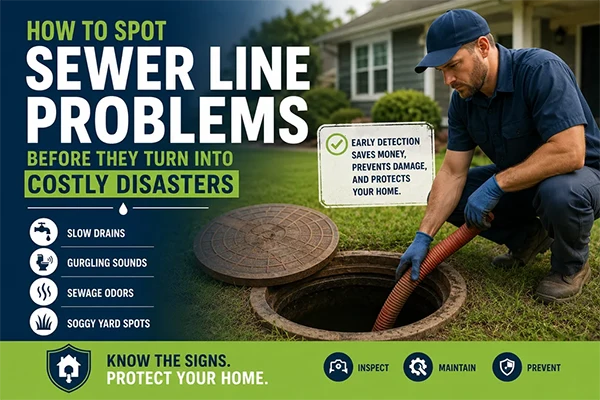
One of the home problems that many homeowners do not consider is a sewer line problem. In the years that have gone by, I’ve found that if you know the signs to look out for, you can save a lot of money, stress and property damage.
Minor plumbing problems are often trivial and can be a big repair if left untreated. Knowing what to look out for can enable you to take action before problems arise and maintain the well-being of your home’s plumbing.
Why Sewer Line Problems Should Never Be Ignored
Your sewer line must convey wastewater away from your house. If it gets clogged, fractured, or broken, problems can travel throughout the plumbing system. Ignoring early signs may lead to sewage backups, unpleasant odours, water damage, and costly repairs.
As a homeowner, it’s much easier to deal with the problem of a sewer line issue as early as possible in the process rather than a major plumbing emergency that would potentially be a lot more stressful. Inspecting your home early can prevent a big issue in the future.
Common Warning Signs of a Sewer Line Problem
Sewer line issues are really dangerous, and you should absolutely not ignore them. But how would you understand those problems? And what are the warning signs of these issues? Let’s learn them:
Slow Drains Throughout the Home
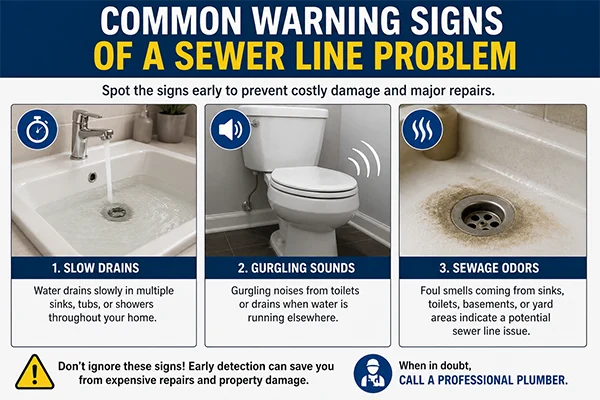
A single slow drain is typically a clogged drain. But if several sinks, tubs, and showers begin to back up simultaneously, it could be a larger issue in the main sewer line. If there is a gradual drainage problem throughout the house, it should never be neglected. This is one of the first indications that wastewater is not flowing through the system correctly.
Gurgling Sounds from Toilets or Drains
If toilets, sinks, or floor drains are gurgling for the same reason, it may be a sign of a sewer line blockage that’s trapping air in the pipes. These sounds are usually heard when there is some water or some water being drained elsewhere in the house. For instance, the toilet may drip when a neighbour’s sink is running. This peculiar plumbing activity normally indicates issues with the pressure in the drainage system and should be dealt with right away.
Sewage Odours Around Sinks, Toilets, or Yard Areas
A foul sewer smell is one of the most obvious signs of a sewer problem. A properly functioning sewer system will confine sewer gases. If the odour of sewer gas is present around drains, toilets, basements or outside near the sewer line, there is likely a crack, a blockage or a leak in the sewer line. If the odour persists after cleaning, it could be a sign that it’s time for a professional inspection. Sewer line damage signs outside the home are indicators that the damage is probably happening.
Outdoor Signs That May Point to Sewer Line Damage
When you know the important signs that you should not ignore for a sewer line, a thought would have crossed your mind regarding your outdoor sewer issues. Hence, here are some of the outdoor signs that may point to sewer line damage, which you should look out for:
Soggy Spots or Sinkholes in the Yard
An existing sewer pipe leak will allow sewer water to escape into the ground and lead to excess soil moisture. This can lead to soggy and muddy patches in the yard even if it has not rained. In extreme situations, the ground may begin to sink and create small pits and sinkholes. The changes should be investigated immediately to prevent further damage to the property.
Unusually Green Grass Patches
A healthy yard is a good thing, but if there are areas where the grass seems to grow too quickly or is usually green, it could be a sign of sewer leakage.
The wastewater works like a fertiliser because it contains nutrients that cause vegetation to grow above damaged pipes. So, whenever you notice any area of your yard greenery, make sure you check whether it is an underground plumbing issue.
Foundation Cracks or Pest Activity
Soil around the foundation of your home can be impacted by long-term leaks. Over time, the moisture can cause foundation movement or cracking. Furthermore, rodents, insects and other pests tend to be attracted to wet areas and sewage. If you notice more pests around the premises, it might be another indicator that the problem is undercover.
What Causes Sewer Line Problems in Homes?
Roots encroachment from trees where roots often travel towards water sources and may grow into small cracks found in pipes located underground.
Other common reasons include corrosion, shifting soil, heavy ground pressure from vehicles and construction work, and appropriate flushing and grease build-up in pipes. Knowing these causes can help homeowners take preventive measures in advance for any future problems.
When to Call a Professional Plumber for Inspection
If you see two or more warning signs, it’s time to seek professional plumbing service like Ravinia. Many times, an accurate diagnosis and solution to persistent problems such as repeated backups, sewerage odour or strange changes in the yard can only be made with the use of specialised equipment.
Sewer cameras are a tool that can be used by modern plumbers to look into pipes without having to dig up a lot of ground. This technology enables them to detect blockage, cracks, root intrusion, and other problems in a timely manner, efficiently, and without hesitation.
Often, waiting too late can lead to higher costs of repairs, so an early inspection is the best solution.
Preventing Future Sewer Line Issues with Regular Maintenance
One of the best things you can do to avoid major sewer line repairs is to do preventative maintenance. Don’t pour grease into the drains, have proper disposal systems in place and don’t plant trees too close to underground pipes.
Regular plumbing inspections can also be useful in pinpointing minor problems before they turn into costly emergencies. Many homeowners discover that routine maintenance will help ease worries and prolong the life of the plumbing system.
Frequently Asked Questions
How can I determine if my sewer is plugged?
Common symptoms are several slow drains, frequent toilet backups, clanging noises from plumbing fixtures, and sewage smells in your house. If multiple symptoms occur simultaneously, it could be a sewer backup.
Is it possible that a sewer line can heal itself?
No, the problem with your sewer line will probably get worse with the passage of time. If left untreated, small problems can turn into big issues such as blockages, cracks, or root intrusions.
What causes sewer line damage?
One of the most frequent is tree root intrusions. Roots have a tendency to follow narrow cracks in pipes to become blocked and damaged.