Are most of your weekends spent fixing your yard? Don’t worry, because after reading this guide, you won’t need to do that anymore. So here’s what will actually help you to achieve that.
See, most of the tasks you continue to do every single week for your yard aren’t actually hard or unavoidable. This only happens because you unknowingly created a system where you have to spend time every weekend to get the same chores done for your yard’s long life.
Now that’s the part that is worth fixing because only a couple of changes in the system can transform repetitive yard work every weekend into a no-yard-work weekend.
Core Ideas
- Mulch is the cheapest and most efficient upgrade that saves you a lot of time during your yard clean-up.
- As suggested by the specialists at MSU conducting turfgrass research, mowing leaves is a better approach than directly raking them.
- Wasting 30% of household watering on yard needs is both impractical and expensive. Hence, one should be very careful about how much water is being used in maintaining
- Shrink the lawn first. Then buy tools for the yard you have, not the one you used to have.
Don’t Increase Your Efforts, Reduce Your Reasons
Most of us buy a faster mower for our lawn thinking we would save time and effort. However, we do not realise that a house lawn shouldn’t be that big in the first place.
Most of the chore which takes up the majority of our weekends aren’t even necessary to begin with; the only problem was that we don’t spend enough time thinking about it. Potting soil in between shrubs makes the area you have to take care of big and hence increases the time of your efforts. Similarly, watering manually because of a lack of a line-up bed system is also something we don’t think about often, but it definitely adds to the workload on Saturday.
So the only logic behind actually removing the burden off your plate is not to speed up tasks with newer tools or even extra effort; it’s to actually remove reasons that make your tasks heavier without any reason. The next time, before you spend on any tool, always think — which of these tasks exists because of a choice someone made, and which is genuinely unavoidable?
The answer will usually help in reducing the time spent significantly.
Mulch Is the Cheapest Labor You’ll Ever Buy
Most people spend their money and time worrying about high-tech and bigger tools because they think that’s the way to go, but they don’t realise that mulch is the cheapest and most efficient upgrade for a yard.
In hotter, drier regions like America, water is used up quickly through evaporation, and thus there is an ever-lasting need for the proper watering of your yard, that too at short time intervals. This is primarily the reason why watering yards makes up 30% of household water charges. According to EPA’s WaterSense program, mulch actually helps reduce this usage of water by acting as a protective layer around the soil, which makes the process of evaporation slower and hence the need for watering regularly is reduced.
Also, mulch, when applied correctly, performs three tasks at once:
- It helps make the germination process of weed seeds faster by blocking light.
- It slows evaporation, which automatically reduces the costs of water and effort put into regularly watering.
- It completely covers the area of contact between beds and the lawn and makes your yard look clean.
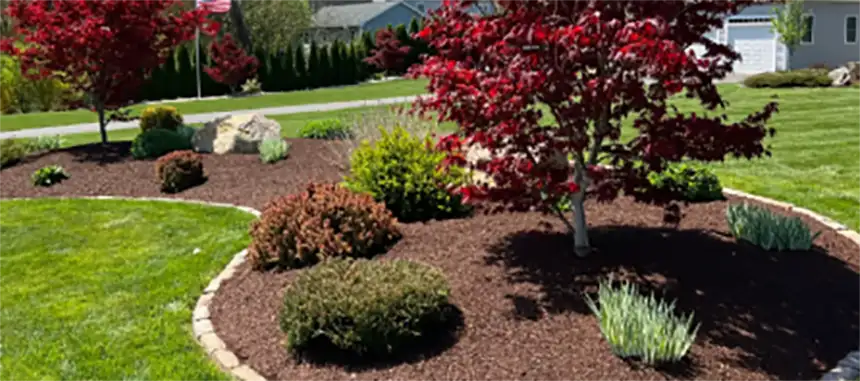
And if you pair mulching with steel or stone edging, you reduce more time by avoiding the weekly trim your yard needs.
Stop Raking — Mow the Leaves Instead
This one still surprises people, including me, because of how low-effort this replacement is and how it still remains unknown to most people.
Did You Know?
The turfgrass specialists of Michigan State University (MSU) suggest that one should mow the lawn by one or two passes weekly on the mower’s highest setting and then, depending on the feature, mulch, up to six inches, can be created at the same time. After a few days of visible residue, the mulch finally settles in between plants, where it acts like a barrier against weed seeds by blocking sunlight. This study by the specialists was conducted for over 20 years to understand what happens when you mow fallen leaves into a lawn instead of raking them. Peer-reviewed work from the same program linked mulched maple and oak leaves to reduced dandelion populations in established Kentucky bluegrass.
Also, MSU suggests layering mulch to a height of three to six inches over beds and vegetables so that weed suppression for the upcoming season can have the same material.
Shrink the Lawn, Not Your Standards
The most laborious and effort-demanding part of a yard cleanup is the turf. One has to mow, edge, water, and feed a turf for it to stay healthy and clean.
So to reduce that intensity of hard work and time spent on a single part of the lawn, you simply have to replace parts of it that either don’t work or aren’t that useful instead of starting from scratch. For example, the part of turf where grass never grows, the small unusable space behind the shed, and more.
Regionally appropriate plants matter here more than the specific species. According to the EPA, native plants generally need little water beyond normal rainfall once they’re established, which is the whole point — the upgrade should stop asking you for things.
| Weekend chore | The swap | What it saves |
|---|---|---|
| Raking leaves | Mowing leaves | Time and effort, plus some fall fertilizer |
| Manual watering of beds | Drip line on a smart controller | Money spent on household water and 30% of the water used in irrigation |
| Trimming along bare bed borders | Steel or stone edging | The weekly trimmer pass |
| Mowing a corner nobody uses | Groundcover or a shrub bed | Mowing time and water |
Make the Watering Automatic
Usually, the tasks that feel like less effort are the ones with the most amount of hours put into them, like hand watering. This doesn’t feel like a lot because the effort applied to carry out this particular task is comparatively less than all the others, but what you don’t account for is the time taken. Even though efforts are less, time put in for this task sometimes outweighs all the others.
Many studies show that water used for things outside the house, for example, in yards or cleaning of cars, actually makes up 30% of the overall household water supply. This figure reaches as high as 70% in hotter regions, with America spending more water outdoors than it ever spends on showering or laundering.
This water used outdoors isn’t just making up a significant percentage of overall household water consumption, but it’s actually proven that this outdoor water is mostly wasted due to evaporation and other factors.
All of this can be avoided by using drip lines with automatic timers set in them. By installing such systems, the plant beds regularly get watered without the need for you to put in the time or effort, and this is also more sustainable since water loss due to evaporation is minimised because water goes directly to the roots.
Adding a WaterSense-labeled controller — weather-based or soil-moisture-based — can cut an average home’s irrigation use by up to 30%, around 15,000 gallons a year.
Tools Always Come Last
Don’t assume the size of your yard or how much work it needs; always make sure the yard doesn’t need any more replacements, and then buy the tools. This way you’ll need fewer machines and can save a lot of money.
In the current state of lawn care technology, cordless and battery-equipped technology is the best approach when it comes to owners of average-sized properties. Brands like ECHO build battery-powered equipment around a single interchangeable battery, which means that different tools aren’t needed for different tasks. This also cuts down on the headaches traditional gas engines used to have, like mixing oil and gas or pulling cords to start an engine.
The honest trade-off: run time. A large property requires heavy equipment that can carry a heavy workload, so batteries in such a situation won’t work because they will run out in between, and buying new batteries will also be expensive; though if you have a small property with lawn areas and already mulched beds, then batteries will be your life-saver.
Conclusion
Make sure you follow all these steps in order, because each of them saves you time and effort. Moreover, performing these tasks in order makes the next easier.
None of these replacements feel too laborious or expensive to make and can actually reduce your efforts significantly, which is exactly the point. You’re not building an aesthetic yard; you’re just building one that stops asking for your weekends.
What is a good amount of mulch that can help save time during the weekly yard cleanup?
A decent amount of mulch covers the entire turf with no visible soil left.
Won’t mowed leaves smother the grass?
Not if you mulch them small. MSU’s research covers up to six inches of leaves mulched at a time, though a mulching mower handles it better than a standard deck.
Do I need to hire a professional to install a drip line system?
Not necessarily; you can buy kits to install drip systems above the ground. These kits are not that expensive and are very easy to use, but if you prefer a buried drip line system, then hiring a professional will be the best call.
What if I want to keep a real lawn?
Then keep it. Just make it the size you’d happily mow every week in July, and give the rest over to beds.
- Mulch Leaves into Turf for a Smart Lawn – Rebecca Finneran, Michigan State University Extension
- Don’t sweep your leaves to the curb – Michigan State University Extension (bed and garden mulching depths)
- Statistics and Facts – US EPA WaterSense (irrigation controller savings, outdoor water loss)
- Outdoors – US EPA WaterSense (share of household water used outdoors)