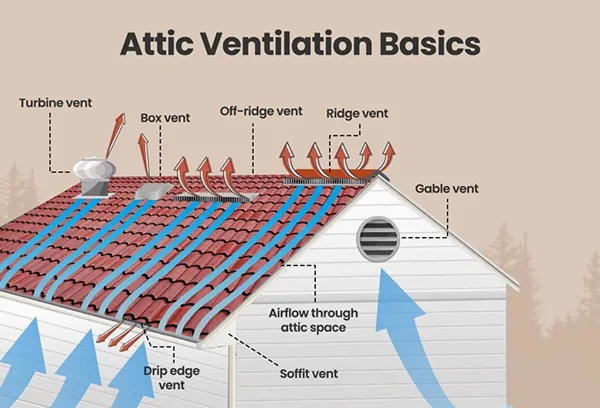
Experiencing your home to be super hot and tired of paying high energy bills? This might be a result of improper roof ventilation. A roof does a lot more than just protecting your home from the sun and rain. And for its proper working, it’s essential to look for proper ventilation and air flow in your roof.
A poorly ventilated roof can cause many consequences, such as quietly damaging your home or affecting your family’s health. These conditions are the first signs that the roof’s airflow is not working as it should. Its solution may involve eco friendly metal roofing.
Read this article to learn if your roof has a proper ventilation system. Also, know how and what to look for that can help you find the issue early, which can save you money from huge investments.
Key Takeaways
- High energy bills are a direct indication of an improper ventilation system and high load on cooling systems.
- Moisture and mould growth can result in weakening your house’s structure if not fixed for a long time.
- Moist air can lead to bad air quality and some respiratory issues and allergies.
- Addressing such issues on time can save you from large future investments. It’s better to address the issue on time.
Hot Spots in the Attic
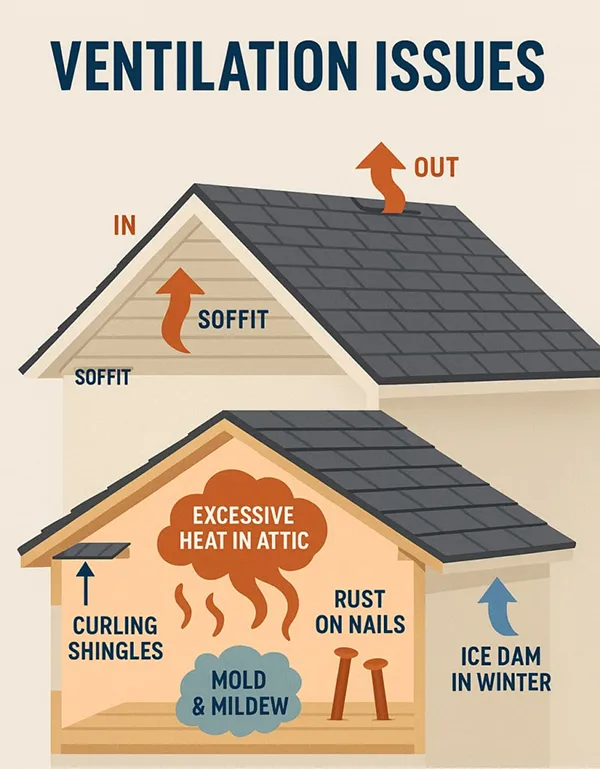
A poorly ventilated attic traps heat, creating hot spots that feel extreme compared to other parts of the house. This extra heat pushes down into living spaces, making it harder to keep rooms comfortable.
Over time, trapped heat also damages shingles and weakens insulation. Families may notice higher cooling bills as the air conditioning works overtime. Hot spots remain one of the most obvious warning signs that ventilation needs attention.
Moisture and Mold Growth
Moisture that builds up in a closed attic creates the perfect environment for mold. Dark patches on wood beams, musty odors, or visible mildew confirm that air is not circulating properly. Mold spreads quickly, leading to health risks for the household.
Left untreated, moisture also rots wood and compromises the structure’s strength. Proper airflow prevents condensation from forming, keeping the attic dry. A home free of mold maintains better air quality and lasts longer.
Interesting Fact
Properly maintaining your roof can reduce cooling costs up to 10-12%, and will also make sure that your roof is in the best condition.
Ice Dams During Winter
In colder regions, poor ventilation leads to uneven attic temperatures. Warm air trapped beneath the covering melts snow, which then refreezes at the edges. This cycle creates ice dams that damage shingles and gutters.
Ice dams allow water to back up beneath the covering, causing leaks inside the home. Families may spot water stains on ceilings during winter as proof of this issue. Balanced airflow prevents temperature swings and protects the structure during freezing months.
High Energy Bills
Energy costs rise when ventilation fails. Warm air trapped in the attic forces cooling systems to work harder in summer, while uneven airflow makes heating less efficient in winter. Homeowners may notice bills climbing with no clear explanation. Efficient systems, combined with options like eco-friendly metal roofing, provide better insulation and airflow balance. When combined, these solutions lower monthly costs and improve comfort. Energy bills that continue rising are strong evidence of poor ventilation.
Impact on Indoor Air Quality
Poor ventilation affects more than the attic; it also influences the air your family breathes every day. Trapped moisture encourages mold growth, and spores can spread into living spaces. This creates musty odors and aggravates allergies or respiratory problems.
Air that fails to circulate properly also feels stuffy, making rooms uncomfortable. Families who notice worsening air quality discover the source in the attic. Proper ventilation restores freshness indoors, protects health, and improves overall comfort throughout the home.
How Experts Can Help
Not every problem can be fixed without any help; in severe conditions, it is better to seek help from the professionals. They can:
- Detect ventilation problems early with proper tools and training.
- Measure airflow and evaluate insulation for weak spots.
- Identify hidden moisture damage that homeowners may miss.
- Recommend upgrades that improve airflow and energy efficiency.
- Suggest solutions that pair well with eco-friendly metal roofing for long-term durability.
Poor ventilation affects comfort, efficiency, and structural strength. Hot attics, mold growth, ice dams, and unexplained energy bills all point to airflow problems. Families who act quickly prevent costly repairs and maintain healthier living conditions. Attention to these signs and timely action helps homeowners extend the lifespan of their homes and enjoy greater peace of mind.
Conclusion
Recognizing the signs of poor roof ventilation on time is very important to avoid any future issues. Especially, poor roof ventilation needs to be identified to maintain a safe, comfortable, and energy-efficient home. From hot spots and mould growth to ice growth, every single indication highlights a hidden airflow issue that can result in expensive repairs if not addressed on time. Regular inspections and reacting on time can protect your home and large investments.
What are the major signs of improper ventilation?
Hot spots in the attic, mould growth, ice dams in winter, and rising energy bills are the major signs of improper ventilation.
What is the relation between poor ventilation and energy bills?
Trapped heat puts more load on the cooling system and leads to higher energy costs.
Can a ventilation issue result in roof damage?
Yes, poor ventilation can weaken your roof, shingles, and roofing material, leading to roof damage.
When to prefer reaching a professional?
Continuous rise of problems such as ice dams, high energy bills, and water damage calls for a professional to reach out.