


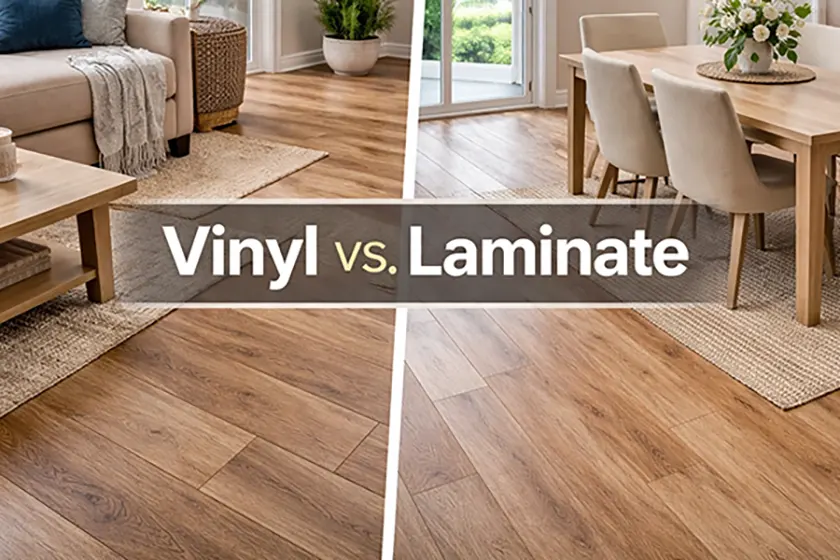
If you are thinking about a new floor, it can be overwhelming and confusing as well, especially when two popular options look so similar. Choosing between vinyl and laminate is actually difficult. Both of these floors are affordable, stylish, and relatively easy to install.
In this guide, we’ll walk you through everything you need to know about vinyl vs. laminate flooring so you can make a confident decision.
What Exactly Is Vinyl Flooring?
Vinyl flooring is a synthetic product made mainly from PVC (polyvinyl chloride). It comes in several forms, including sheet vinyl, vinyl tiles, and luxury vinyl plank, widely known as LVP.
What makes vinyl better is its flexibility and water resistance. This means you can install it in kitchens, bathrooms, and basements without thinking about moisture damage.
Modern vinyl has come a long way from the thin, cheap sheets your grandparents may have had. Today’s luxury vinyl planks can convincingly mimic the look of actual hardwood or natural stone, which usually surprises first-time shoppers.
What Exactly Is Laminate Flooring?
Laminate flooring is made up of several layers, including a high-density fiberboard core and a photographic image layer topped with a protective wear layer. It’s created to replicate the appearance of wood, tile, or stone at a fraction of the cost.
One thing that sets laminate apart is its pretty scratch resistance. If you have pets or kids running around, laminate holds up surprisingly well against everyday wear and tear.
That said, laminate’s core is made from wood-based materials. This makes it more vulnerable to moisture compared to vinyl, which is something to keep in mind when selecting rooms for installation.
Seeing Your Options Before You Commit
Before you begin comparing specs and prices, it actually helps to see how each flooring type would look in your room. Floorma’s floor visualizer tool lets you upload a photo of your space and preview different flooring styles, so you’re never left wondering about the final result.
This kind of hands-on preview takes the stress out of decision-making. Rather than relying on small samples from the store, you get a realistic picture of how your whole room will transform with each option.
Water Resistance: A Major Difference
This is where vinyl really pulls ahead. Vinyl is actually 100% waterproof, which makes it an ideal choice for any room where spills, splashes, or humidity are part of daily life.
Laminate, on the other hand, doesn’t manage water nearly as well. While some newer laminate products offer water-resistant coatings, prolonged exposure to moisture can lead to the boards swelling and warping over time.
So if you’re planning to install new floors in a bathroom, laundry room, or basement, vinyl is almost always the safer bet. For living rooms and bedrooms where moisture isn’t an issue, laminate works beautifully.
Durability and Everyday Wear
Both vinyl and laminate are considered durable flooring options, but they manage different types of stress in several ways. Laminate tends to be more resistant to scratches and surface scuffs, which is great news for high-traffic hallways and living areas.
Vinyl, meanwhile, is softer underfoot and more flexible when it comes to impacts from dropped items. However, heavy furniture can sometimes leave indentations on vinyl surfaces that are difficult to remove.
Your lifestyle plays a major role here. If scratch resistance is your top priority, laminate might edge ahead — but if you want flexibility and cushion underfoot, vinyl could be your winner.
Comfort and Feel Underfoot
Speaking of comfort, vinyl generally feels warmer and softer when you walk on it barefoot. This is actually true for luxury vinyl plank, which usually comes with a built-in underlayment layer.
Laminate can feel a bit harder and cooler beneath your feet, though adding a quality underlayment can make a noticeable difference. If you spend a lot of time standing in the kitchen or moving around your home, this comfort factor is definitely worth thinking about before you buy.
Installation: DIY-Friendly or Not?
Here’s some good news — both vinyl and laminate are better choices for DIY installation. Most laminate floors use a click-lock system that snaps together without glue or nails, making the process straightforward even for beginners.
Vinyl provides even more flexibility with peel-and-stick tiles, click-lock planks, and loose-lay options. If you’re a first-time DIYer, vinyl’s lighter weight and easy cutting can make the complete project feel a lot less intimidating.
Irrespective of which option you choose, proper subfloor preparation is essential for both. Taking time to level and clean your subfloor will save you headaches and make sure a longer-lasting result down the road.
Appearance and Style Options
Both flooring types provide an impressive range of designs, from rustic oak to sleek modern gray tones. Thanks to advances in printing technology, it can be really hard to tell either one apart from real wood at first glance.
Laminate sometimes has a slight edge in realism because of its textured, embossed surface layers. Vinyl counters with a wider variety of looks, covering stone and concrete patterns that are harder to find in most laminate collections.
When you’re torn between styles, the Floorma laminate floor visualizer can help you compare several looks side by side in your real room. Seeing your top choices in context makes it so much easier to commit to a design direction with confidence.
Cost Comparison
Budget is usually the deciding factor for many homeowners, and fortunately both vinyl and laminate are wallet-friendly options. On average, vinyl ranges from about $1 to $5 per square foot, while laminate often falls between $1 and $4 per square foot for the materials alone.
Keep in mind that installation costs, underlayment, and extra materials can shift your overall price significantly. Getting quotes for both options and factoring in the whole scope of the project is always a smart move before you make your final decision.
Maintenance and Cleaning
Keeping your floors clean shouldn’t feel like work, and both vinyl and laminate make routine maintenance easy. Regular sweeping and occasional damp mopping are often all you need for either option to stay looking great.
One advantage vinyl has is that you can use wet mops freely without wondering about water damage. With laminate, you’ll need to wring your mop thoroughly and avoid letting any standing water sit on the surface for too long.
Neither floor needs waxing, polishing, or any special treatments, which is a big plus for busy households. Just a little routine care goes a long way with both of these options.
Environmental Considerations
If sustainability matters to you, it’s worth noting that laminate usually uses more natural wood-based materials in its core. Some manufacturers also provide eco-friendly laminate lines made with recycled content and certified sustainable wood fibers.
Vinyl is harder to recycle and is petroleum-based, which may be an issue for environmentally conscious homeowners. However, vinyl’s longer lifespan in wet areas could mean fewer replacements over time, which offsets some of its environmental impact.
Neither option is perfect from a green perspective, but looking for certifications such as FloorScore or GreenGuard can help you find the healthiest and most responsible products available. Your flooring retailer should be able to point you in the right direction.
Making Your Final Decision
At the end of the day, the best pick in the vinyl vs. laminate flooring debate actually depends on where you’re installing it and how you live. Vinyl wins in wet areas and for anyone who prioritizes water resistance above all else, while laminate shines in living spaces where scratch resistance and a natural wood feel matter most.
Don’t rush the process — there’s no reason to. Take your time checking samples, read reviews, and ask the right questions before you commit to one direction.
If you’re still unsure, try using the Floorma flooring visualizer to picture your top pick right inside your own home. Seeing a realistic preview in your real space can be the final push you need to feel great about your pick.
Whatever you decide, both vinyl and laminate provide incredible value and style for the investment. Your perfect floor is out there — you just have to find the one that fits your life and your home.
FAQs
What is vinyl flooring?
Ans. Vinyl flooring is a synthetic product made mainly from PVC (polyvinyl chloride). What makes vinyl better is its flexibility and water resistance.
What is laminate flooring?
Ans. Laminate flooring is made up of several layers, including a high-density fiberboard core and a photographic image layer topped with a protective wear layer. It’s created to replicate the appearance of wood, tile, or stone at a fraction of the cost.
Why is vinyl flooring better?
Ans. Vinyl has the advantage that you can use wet mops freely without worrying about water damage. With laminate, you’ll need to wring your mop thoroughly and avoid letting any standing water sit on the surface for too long.