When I first heard the name of the New Jersey tea plant, I thought it was used to make tea. This is partly true because the shrub was historically used as a substitute for tea by colonists.
More than its beautiful white flowers, I was curious to know about how beneficial and versatile the NJ tea plant was, in terms of its household and medicinal benefits.
To experience these uses first-hand, I planted this shrub in my lawn and realised, not only is it easy to grow, but it is a smart ecological choice.
Dive in to know how the New Jersey tea plant is so much more than “pretty white flowers.”
New Jersey Tea Shrub: Plant Overview
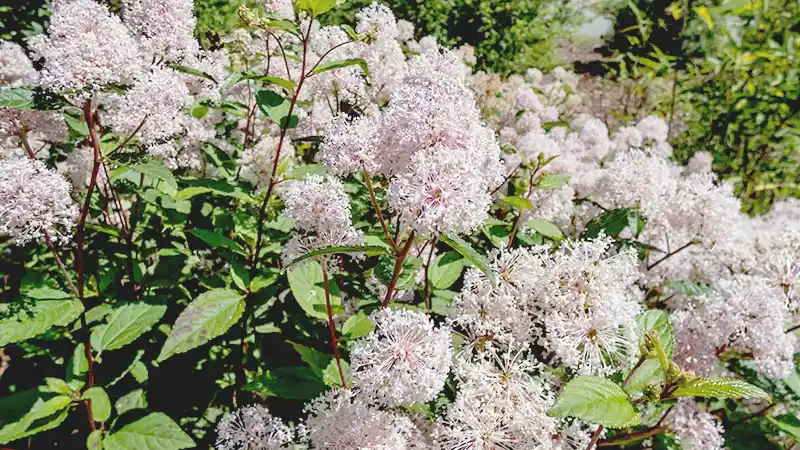
Also known as Ceanothus Americanus, New Jersey Tea is a deciduous evergreen shrubs native to North America that produces white flowers resembling lilacs. The dried leaves of the New Jersey tea shrub are also used as a tea substitute, which the colonists used to make tea during the Revolutionary War.
The spectacular display of white flowers blooms from June to August. Another name of this plant is the red root tea due to its rich red coloured roots. It is listed among the species that ‘ Supports Conservation Biological Control’.
New Jersey Tea: Features and Taxonomic Details
The New Jersey Tea Shrub is perfect for borders and rock gardens, primarily due to its thick green foliage. This wildlife-friendly shrub is ecologically beneficial too and is known to attract helpful pollinators to maintain garden health.
New Jersey Tea Plant is drought-resistant and can survive in dry conditions, which also makes it quite low-maintenance. The rich green, thick leaves along the cluster of white flowers can adapt to versatile garden settings.
Additionally, this low-growing shrub is also famous for its numerous health benefits. Before exploring that, take a look at the core features of the Nj tea plant:
| Core Features | |
|---|---|
| Hardiness Zone | To zone 4 |
| Length | 3ft high and 5 ft wide |
| Bloom period | June, July |
| Leaves | Oval, 3 inches long and 2 inches wide |
| Flowers | Densely packed white flowers |
Here are the taxonomic specifications of the New Jersey Tea:
| Taxonomic Specification | |
|---|---|
| Botanical name | Ceanothus Americanus |
| Species | Ceanothus Americanus L |
| Order | Rosales |
| Genus | Ceanothus |
| Family | Rhamnaceae |
How Can I Grow a New Jersey Tea Plant?
Growing them in your outdoor living area is the most cost-effective way to adore their beauty and enjoy the benefits that they provide:
Follow these simple steps to have your own New Jersey Tea Shrub:
- Soil Requirements
The New Jersey Tea Plant grows in a well-draining sandy soil and prefers the pH between acidic and neutral (6.0–7.0).
- Planting Time
The best time to grow this native shrub is in spring or early fall because cooler temperature allows better root establishment.
- Planning Steps
- Dig a hole in the ground as large as the root ball and twice as wide as the container.
- Place the plant in the hole and fill it with soil and water.
- Plant them at least 2-5 ft apart, as they grow up to 5 ft wide.
- Sunlight
It needs at least 6 hours of direct sunlight to survive. Keeping it in partial shade might not give the NJ plant enough energy to establish itself completely.
- Watering Requirements
The New Jersey Tea Shrub requires sufficient watering during its first year of growth. Ensure you water for 3–4 days in summer and 6–7 days for the rest of the year.
Avoid over-watering as it might lead to root rot and yellowing leaves.
How Can I Care for the New Jersey Tea Plant?
What I love about the New Jersey Tea Plant is that there is not a lot that needs to be done to care for these shrubs. They are an effortless addition to your space:
However, if you do follow some care steps to ensure the best growth, here is all you can do to have a thick, healthy growth:
1. Fertilizer
Fertilizing is generally not needed because its root takes nitrogen from the air and convert it into ammonia that plants use for their growth. However, if you want to, using a balanced fertilizer will do well.
2. Removing Extra Foliage
Removing the dead and damaged leaves will encourage new growth and improve the overall health and shape of the plant.
When I was growing the New Jersey Shrub as a hedge for my living space, I ensured I pruned it throughout the year, especially in winter.
Not only did it give the shrub a structure, but it also ensured thick growth, perfect for a hedge.
3. Mulch
Add a layer of mulch to retain moisture and to prevent drying out leaves. It is also beneficial for suppressing the weeds.
What are the Benefits of Growing a New Jersey Tea Shrub?
Apart from enhancing your landscape view, it offers medicinal and ecological benefits too:
- Medicinal Benefits
- The roots and bark of the New Jersey Tea were used by Native Americans in North America to treat fever and sore throat.
- Even today, the New Jersey tea plant is used to treat the complaints of asthma and bronchitis due to its high tannin content (8%).
- The roots and the bark of the plant have antisyphilitic, antispasmodic, and sedative properties.
- The decoction of the bark of the shrub is used to treat sores on the skin from skin cancer.
- Household Uses
- The white flowers contain a high level of saponins, which form a great lather and can be used as a mild soap.
- The lather can also be used as a body wash to clean your body and to wash clothes as well.
- The dried leaves of the New Jersey Tea Plant make an excellent caffeine-free tea.
- Ecological Benefits
- The New Jersey Tea Plant is drought-resistant and can survive in dry soils as well.
- Known to attract pollinators like bees and butterflies, which creates a rich ecosystem, which in turn affects the overall health of the garden.
- The roots of the New Jersey Tea bush have nitrogen-fixing qualities. It pulls the atmospheric nitrogen and converts it into ammonia, and improves the soil quality.
Interesting Insight
- According to the USDA, the tribes of the Missouri River region used the leaves of the NJ tea plant for tea and the roots for fueling hunting trips.
Can I Drink Tea From the New Jersey Tea Plant?
The New Jersey tea shrub is known for its uses as a tea substitute.
The colonists consumed it during the Revolutionary War, and it does not contain any caffeine.

“How do I make tea from the New Jersey Tea Plant?” was my exact question the first time I grew this plant, and I discovered the very easy steps to enjoy this native herbal tea.
All you need to do is:
- Dry the leaves of the Ceanothus New Jersey Tea.
- Take 1 tablespoon of dry leaves per cup of hot boiling water.
- Steep for 15 minutes and enjoy.
Personal Tip
I used fresh leaves for the first time, which can be great if you like a mild-flavoured tea, but dried leaves offer a stronger flavour compared to fresh ones.
Lesser-Known Facts About New Jersey Tea Shrub
Something more fascinating than its white flowers are these interesting, lesser-known facts about the shrub that set it apart from most shrubs.
Get to know more about the New Jersey Tea Plant with these interesting insights:
Did you know?
- The New Jersey tea plant is not deer-resistant. As per the USDA, animals like deer, elk, and rabbits browse on it throughout the year. So, protect it with fencing to avoid nibbling by deer and rabbits.
- The New Jersey tea plant is also known as the “Red Root” plant due to its bright red coloured roots.
- The New Jersey Ceanothus Americanus is one of the few shrubs common to the Tall Grass Prairie habitat in Ontario.
- A red dye is obtained from its root. Green coloured dye from its flowers and cinnamon coloured dye from the leaves of the shrub.
Concluding Remarks
The journey of exploring the New Jersey tea started as mere curiosity, but in this process, I learned its historic use as a tea substitute to its modern-day medicinal benefits. This shrub has proven its worth way beyond being an enhancement for gardens.
This low-growing shrub is low-maintenance and has a lot of ecological and household benefits, too, which makes it versatile and useful.
So, it just does not remain as a mere accessory to your home gardens.
FAQs
Does the New Jersey Tea Plant like the sun or shade?
The New Jersey Tea bush thrives in sunlight. It needs at least 6 hours of direct sunlight. Planting it in partial shade will not allow it to establish properly.
How tall does New Jersey Tea Shrub get?
The New Jersey tea plant is a low-growing shrub that grows up to 3-5 ft high and wide.
Is it hard to grow the New Jersey tea bush?
No, the New Jersey tea plant is a very low- maintenance shrub that can grow in dry sandy soil and does not require much care once established.
Can I grow a New Jersey tea plant in clay soil?
No, the NJ tea plant prefers a well-drained rocky soil, which offers proper aeration. Clay soil holds water and can get waterlogged, which is not the appropriate condition for the New Jersey tea plant.
- New Jersey tea – Britannica
- New Jersey Tea– Missouri Department of Conservation