
Swapping out light fixtures or painting a wall is still ok. But thinking of handling an overall home renovation by yourself is a fool’s errand.
There is a reason there are experts designated for some of the specialized works. In renovations, those are the structural ones.
You think you can save some of your money by DIY but that’s not the case. In fact, it’s exactly the opposite of that. Studies show that DIY or improper home renovations can lead to rework that can add 10% to the total renovation costs.
Home renovations require expert guidance from day one.
In this article, I’ll clear your doubts about why that is the case. The following sections will differentiate between cosmetic renovations that you can handle and the ones that require professionals. There are some examples of those renovations as well.
KEY TAKEAWAYS
- You can handle cosmetic renovations, but structural ones require professionals.
- Examples of structural renovations are: removing a wall, foundation and roof layout changes, or any work with concrete.
- Doing these by yourself can make things worse, as you’ll have to eventually call for a professional, and the charges would be much higher due to rework.
Not Every Renovation Is Just Cosmetic
Cosmetic renovations change the look of the space. You can do those on your own; you can paint the walls, replace the flooring, switch up the cabinets, or update the light fixtures. Any of these projects will instantly refresh a room, but they won’t affect the structure of your home.
Renovations that affect the structure are a completely different story.
They interact with the framework that literally keeps your house stable and standing. If a renovation touches beams and framing, roof supports, load-bearing walls, the foundation, or concrete slab, walk away. This is complicated work and only a professional from a proper building company, like a K Graber construction contractor, can do the job well.
Structural projects need a good amount of planning because there’s a lot to consider before a complete makeover. You need to take weight distribution into account, as well as structural stability.
You also need building permits before any work can begin.
Sometimes, you might even need an inspection and, as annoying as those can be, you should be thankful for them because this is how you make sure that whatever you’re doing meets safety standards.
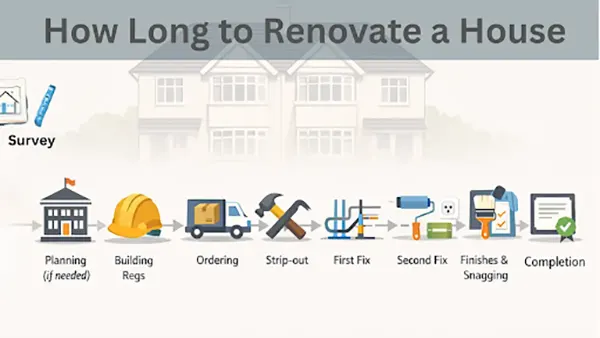
The following infographic shows what a regular structural renovation process looks like:
Renovation Projects That Usually Need a Contractor Right Away
Some structural renovations might seem simple in thought, but once the work starts, they get pretty complex. At that point, you regret the decision of a DIY renovation. And eventually, you have to call a professional.
The following are some of the renovations you shouldn’t even consider starting by yourself; they require an expert professional.
Removing a Wall Between Rooms
Ah, the open floor plan. The thing everyone wants, and it’s one of the most common renovation ideas today. Most of the time, you’ll see people wanting to remove the walls that connect the kitchen, dining room, and living area. And you can’t blame them, that looks beautiful.
But you also can’t just give them a sledgehammer and let them go to town.
Some interior walls are only dividers, that’s true. But others carry weight from the floors above or from the roofs, so removing them is dangerous.
If you’re planning something of this kind, call a contractor right away.
Changing the Layout of the Roof
Roof systems are designed very carefully because the weight needs to be evenly distributed through rafters and trusses.
This means that any renovations that change the layout of the roof can change that balance.
Homeowners will want to raise the ceiling sometimes or convert an attic into a living space. Those are all beautiful upgrades, but they usually mean that the roof’s framing system needs to be altered, and that’s by no means a DIY job.
Working with Concrete Slabs or Foundations
The foundation supports your entire house, so if you plan on messing with it in any way, you need a plan and a professional first.
Some renovation projects require cutting through a concrete slab in order to install plumbing lines or building an addition that has to connect to the foundation you already have.
The thing is, that will change how the weight is distributed and how your home sits on the ground. If this isn’t done well (and it won’t be if you take the DIY route), you’ll have to deal with cracks, moisture, and uneven settling.
You have to remember that the foundation of your house is in constant contact with the soil, and every contractor will usually first assess structural loads, drainage, and soil conditions before starting the work.
Conclusion
Besides the money-saving trap, DIY renovations also seem exciting. Renovating your home by yourself is a powerful thought.
However, this article has cleared your doubts about some renovations not being a child’s play. You need to consider many things before redesigning your home. Don’t think much, and call a professional for them.
You can still have that open floor plan or the studio apartment in the attic if you’ll just be reasonable and call in a professional. Because if you try to do any of this yourself, you’ll not only spend a ton of time and money, but you’ll also be left with problems instead of home upgrades.
What is the purpose of a house renovation?
Improve its structural integrity, aesthetics, and safety, which in turn boosts the building’s market value.
What are the most common DIY renovation mistakes?
Bad planning and budgeting, ignoring permits, and overconfidence in your renovation skills.
Why is a contractor important?
Contractors keep the renovation process streamlined and predictable, minimizing mistakes.
What are the points to consider before selecting a contractor?
Verify their license and insurance. Also, scroll through their reviews to determine their reputation.