Scandinavian home decor is taking the interior design industry by storm. The minimalist yet sleek style is becoming the homeowner’s delight, and ‘Pyntekvister’ offers all that is needed to elevate the house with minimal effort.
This style blends the natural elements of outdoors with the minimalism of indoors to create a perfect balance, which looks elegant, and if you, too, are looking for a home upgrade, dive in and learn all about the Pyntekvister style with easy steps and benefits.
Quick answer
The pyntekvister is a Scandinavian design that is made out of twisted and decorative branches for home decor purposes. This style helps in incorporating the elements of nature indoors to create a rustic and classy look that looks minimal and elegant at the same time.
What is Pyntekvister?
‘Pyntekvister’ is derived from the Norwegian word ‘pynte,’ meaning ‘decorative,’ and ‘kvister,’ meaning branches. It incorporates the natural elements into the house to create a more sophisticated and modern look without pinching your pocket.
This style of handcrafted decor is a much more sustainable approach than other alternatives and makes the vision of a classy yet simple decor possible and affordable. Historically, the decorative branches were used by artists for a symbolic meaning, which later evolved into home decor inspiration.
What Does the Pyntekvister Design Incorporate?
Basically, as the name suggests, the pyntekvister is an amalgamation of different types of branches that help add texture and design to the space.
Take a look at the different types of branches used in Pyntekvister and their significance:
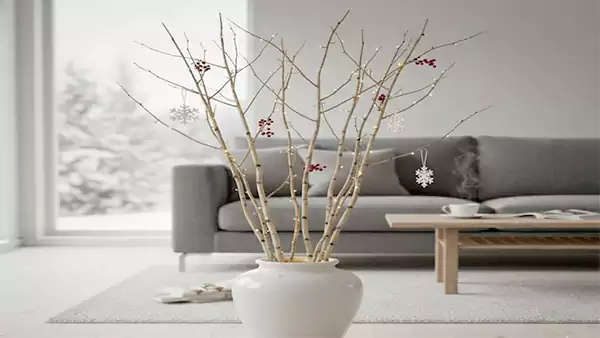
- The birch branches are used for their airy and lightweight texture, which is easily incorporated in vases and centrepieces for dining tables and hallway entrances.
- Willow branches are mainly used due to their flexible and bendable design, which can be moulded into wreaths and wall art easily, as compared to the birch branches.
- The flowering branches like cherry, apple, apple and lunaria are also used in pyntekvister to add that pop of colour to the interiors.
- Branches of eucalyptus, olive, and huckleberry are really beneficial due to their unique texture. Historically, they were used during festivals and special events.
How to Design a Pyntekvister at Home?
The Pyntekvister designs help in elevating the home decor without the hassle of spending a lot.
Here are some simple and easy steps to make your own pyntekvister at home:
For a Vase
- Take some fresh or dried branches and use them as per your personal preference.
- I personally use the fresh flowering branches in the spring and the dried ones in the winter for a seasonal touch.
- Cut the size of the branches as per your convenience, but make sure not to be too rigid with the structure, as the imperfections are the beauty of it.
For Wall Art
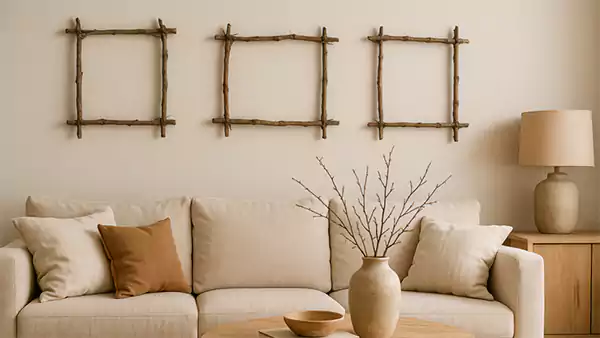
- These decorative twigs can be used for wall art by weaving them against a canvas using a thread and some colours.
- This way, the twisted branches can be hung around doors and walls for an elevated look.
Where Can I Use a Pyntekvister for Home Decor?
Although the pyntekvister can be used in various ways as per your personal choice, here are some of the most common ways I have used them for my home decor:
- Dining Tables: Put the decorative branches in a vase and place it on the dining table. This not only elevated the look of the dining area but also helped in creating a contrast with the modern design.
- Hallways: I personally use the willow branches in a glass vase or a pot and place them in my hallways or near the entry gate in the hallway, which makes them the first thing in the view of visitors.
- Wall Art: Either attached and tied to the walls along with fairy lights or woven into a canvas. The decorative branches as wall art create a rustic and whimsical ambience that perfectly complements any home decor.
What are the Benefits of the Pyntekvister Design?
The pyntekvister is a sustainable alternative to other home decor, which is also really cost-effective.
If you are planning to add a touch of Pyntekvister to your home, here are some basic benefits and why it is a better alternative than others:
- These decorative branches are eco-friendly and reduce the carbon footprint significantly more than the other alternatives.
- The required materials can be easily sourced from your personal garden or outdoor surroundings, which makes it affordable and convenient as compared to other options.
- These sleek and vertical branches are perfect for an elevated decor for the house that can add a little height to the indoor space.
- Additionally, the twisted and decorated twigs help in contrasting well with the otherwise rigid and boring modern architecture.
- Unlike most of the designs for the interior decor, the decorative branches can be customised and moulded perfectly as per your personal needs and wants, and they also perfectly fit into your existing home design without looking off or dull.
How to Take Care of Pyntekvister with Simple and Effective Tips
Although these decorative branches are really low-maintenance and sustainable, a little care goes a long way, and therefore, here are some simple yet effective ways to maintain them to last longer:
- Clean the dirt on the branches occasionally with a damp cloth to maintain the clean look, but ensure not to break them in the process.
- If you are using fresh branches, then keep them away from direct sunlight, as it can make them brittle and dull.
- Use a clear matte sealer spray to maintain the shine and colour of the branches for a longer time.
Concluding Remarks
Getting introduced to the Pyntekvister was a new revelation for me. As someone who has been a home decor enthusiast, this Scandinavian style was an innovative yet sustainable way to add that touch of modern elegance to my space.
While these decorative branches are traditionally used in a vase, there are endless ways to incorporate these designs and experiment at the same time.
FAQs
What is pyntekvister?
The Pyntekvister is a style of design that incorporates dried and fresh branches for home decor designs to add a natural touch to the space.
What are the different branches used in the pyntekvister?
The different types of branches used in the pyntekvister are willow, birch, hazel, and cherry, which offer different benefits.
How can I use the Pyntekvister design at home?
The decorative branches’ design can be incorporated in the house on wall art, dining tables, or living room areas, as per your taste and style.
Is the Pyntekvister sustainable?
Yes, the Pyntekvister is a sustainable style for home decor, as it uses natural elements to create sleek and sophisticated decor for homes.
How can decorative branches be used for wall art?
The decorative branches can be painted and woven on a canvas and hung on a wall for a hanging-on-the-wall decor vision.