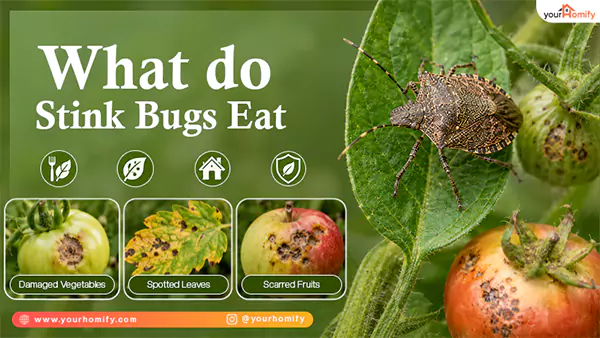
Understanding what do stink bugs eat and what are their feeding habits can help you identify and manage these pests more effectively. Dealing with damaged tomatoes or discolored leaves of your favorite flowers caused by stink bugs can be frustrating.
Their eating preferences change with the seasons and can affect everything from vegetable gardens and fruit trees to alluring wild flowers.
Let’s take a closer look at their diet, feeding behavior, and impact on gardens and homes.
Quick Answer
Stink bugs eat plant juices from fruits, vegetables, seeds, leaves, and stems. They use their needle or straw-like mouth organ to feed on crops such as tomatoes, peppers, beans, corns, apples, peaches, sunflowers, and maple flowers.
What do Stink Bugs Eat?
Stink bugs are primarily known as plant-feeding insects. They feed on plant juices using their straw-like mouthpart, piercing the surface of the leaves, stems, or seeds and suck out all the essential nutrients. While most of them are plant eaters, some of their common food sources include tomatoes, bell peppers, beans, corn, apples, and peaches.
Apart from this, some predator stink bug varieties forage on other insects, such as caterpillars, beetle larvae, and other soft-bodied pests. They got their name from the foul, pungent odor they emit when they are threatened or crushed.
What Do Stink Bugs Eat in Gardens and How to Identify Damage
Unlike other pests, stink bugs are not very picky about which plants they feed on. They are particularly drawn to fruits, vegetables, garden crops, and ornamental plants because these provide the nutrient-rich juices they require, often leaving behind visible signs of damage.
| Common Garden Plants Affected | |
| Vegetables | Tomatoes, Pepper, Beans, Corn, Okra |
| Fruits | Apples, Peaches, Pears, Berries, Grapes |
| Garden Crops | Soybean, Cabbage, Sunflower, Squash |
| Ornamental Plants | Hibiscus, Roses, Maple, Myrtle |
Since this pest feeds on the plant juices and does not leave any chewing marks on the surface, the damage caused by them often goes unnoticed.
They typically get attracted towards mature or ripe food sources, and it is only after repeated feeding that the appearance of the fruit, vegetables, or plants starts getting affected, giving signs of damage.
Let us quickly understand some common signs of damage on different garden plants:
- Tiny puncture marks on fruits and vegetables.
- Discoloration, dark scars, or fungal spots on the foliage surface.
- Deformed or uneven growth of the crop.
- Mushy or spongy tissue beneath the skin of a fruit or vegetable.
- Early harvest due to severe infestation.
- Complete seed damage resulting in a dead crop.
Gardener’s Insight
Stink bug damage is often mistaken for a plant disease. You may see scars, discoloration, or spotting on the leaves and assume it’s a fungal infection. Before thinking of a treatment, it is ideal to inspect the fruit or the crop properly to identify the real cause.
Do Stink Bugs Eat Other Insects?
Yes, some stink bug species eat other insects, but not all of them. While most plant thrips, like brown marmorated stink bugs, feed on plant juices, a smaller group known as predatory stink bugs drink and eat caterpillars, beetle larvae, aphids, and other soft-bodied pests.
Two stink bugs can look almost identical yet have completely different diets. As per the research done by the University of Maryland, these insect-eating mites suck the body fluid from their prey. Because of these eating habits, predatory insects are often considered natural pest control helpers in gardens and cottage farms.
What do Stink Bugs Eat in the House?
Stink bugs do not feed inside homes. They usually enter houses to find shelter and escape cold weather. You may find them occasionally feeding on houseplants or overripe fruits like bananas, peaches, and apples, but they do not disturb people, pets, or any household items. These mites generally survive on stored energy until spring.
Once they enter your house, they do not get attracted to food; their primary goal is to find a warm and comforting hiding place for themselves, like wall gaps, near window panes, or the basement. Stink bugs typically prefer to survive the winter by remaining inactive and start feeding outdoors during the growing season.
How to Protect Your Home and Garden From Stink Bugs?
Looking for a fast solution? Try these quick stink bug control methods to protect your plants and indoor space from pest invasion.
1. Protecting Your Garden from Stink Bugs
- Inspect the plants regularly
- For small infestations, you can manually remove them by hand-picking.
- Get rid of all the host plants that attract stink bugs.
- Protect vegetables and fruits from damage using row covers.
- Encourage beneficial insects that prey on stink bugs.
- Keep the garden clean and remove all the debris.
2. Quick Fix for Indoor Stink Bugs
- Avoid crushing them and capture them using a vacuum cleaner.
- Take the disposable bag outside and dump the bugs immediately.
- Seal all the visible gaps, like cracks near the window or door frames.
- Place a soap mix under a lamp in a dark room to trap any bugs left.
- Once you close all the gaps, use repellent sprays to deter any remaining stink bugs; this may also help reduce lingering odors.
These pests can be frustrating because they damage garden plants during the growing season and invade homes as the weather cools. Combining prevention, regular monitoring, and taking effective control measures is the most reliable approach to getting rid of them.
Conclusion
Now that you know what do stink bugs eat, it is easier to understand why they are commonly found in gardens, orchards, or around homes. Their adaptable diet is one of the main reasons they thrive in so many environments.
It is ideal to know their preferred food sources and behavior to stay one step ahead and take all the possible preventive measures to reduce the damage they can cause.
FAQs
What do stink bugs eat and drink?
Stink bugs eat a wide variety of fruits and vegetables such as tomatoes, bell peppers, corn, apples, peaches, and bananas. They drink the liquid sap from all their food sources using their straw-like mouth organ.
What do brown marmorated stink bugs eat?
Similar to other plant pests, the brown marmorated stink bugs are also herbivorous and feed on sap, tissues, fruits, and vegetables.
What instantly kills stink bugs?
Spraying a mix of water and liquid dish soap can kill the stink bugs instantly.
What is the lifespan of a stink bug?
The average lifespan of an adult stink bug is 6-8 months, which can roughly extend to 1 year.
Do stink bugs bite humans?
No, these plant pests do not bite humans, but their odor can be a little irritating.
- Stink Bugs – Missouri Department of Conservation
- Stink Bugs Description – Utah State University Paper