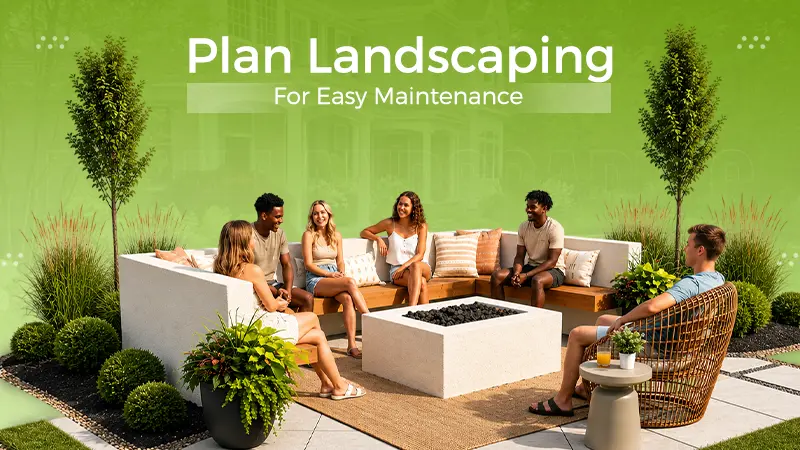
A low-maintenance pool garden is not one that requires no work. It is a garden where watering, pruning, leaf removal and seasonal cleanup are limited, predictable and easy to complete.
The design should begin with the amount of maintenance the homeowner is prepared to handle. A garden filled with flowering plants, containers and fast-growing shrubs may look attractive, but it will require more irrigation, trimming and debris removal than a design based on a smaller number of structural plants.
The objective is to create visual interest without producing unnecessary work around the pool.
Audit the Existing Pool Garden Before Adding New Plants
Before purchasing plants or replacing paving, record which parts of the current garden create regular maintenance problems.
The review should identify plants that need frequent trimming, trees that drop material into the water, beds that release soil onto the deck and irrigation heads that spray toward the pool. Paths, lighting and equipment access should also be checked.
A practical audit can classify each existing plant or feature into four categories:
- Retain because it performs well and requires limited care.
- Relocate because it is suitable but positioned incorrectly.
- Replace because it creates repeated maintenance problems.
- Remove because it is unsafe, damaged or incompatible with the site.
This prevents unnecessary replacement of healthy landscaping while directing the budget toward the areas that cause the most work.
Keep Established Plants That Already Suit the Site
A mature plant that tolerates the local climate and remains within its allocated space may be more useful than a new specimen selected only for appearance.
Established plants often require less watering than recently installed landscaping. They also provide immediate structure, shade or screening.
The decision should depend on behaviour rather than age. A healthy shrub can remain if it does not block paths, interfere with pool equipment or produce excessive debris. It may only need selective pruning and a clearer bed edge.
Remove Problems That Return Every Week
Some maintenance issues cannot be solved through more frequent gardening.
A tree that drops fruit directly into the pool will continue doing so each season. A shrub planted too close to a walkway will need repeated trimming. A ground cover that spreads into drainage channels will require constant control.
When the same problem returns after every service visit, the cause is usually plant selection or placement. Replacing or relocating the plant may require more work initially, but it can reduce maintenance for several years.
Divide the Garden Into Maintenance Zones
Plants with different care requirements should not be distributed evenly around the pool. A zoned layout makes maintenance easier to organise.
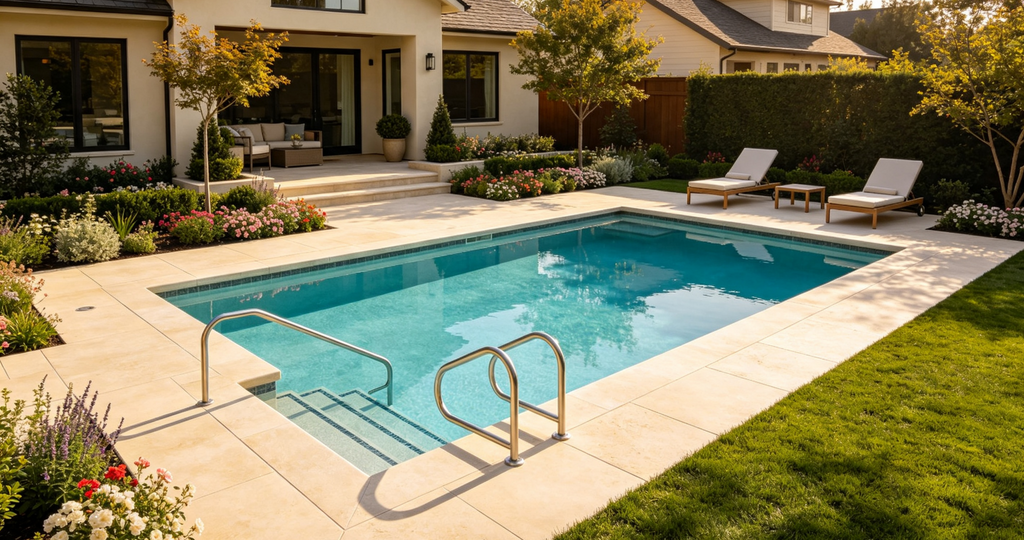
The area immediately beside the pool should contain durable plants with controlled growth and relatively low debris. These plants should tolerate reflected heat, occasional pool-water splash and regular foot traffic nearby.
A secondary garden zone can contain larger shrubs, screening plants and species that need occasional pruning. This area can provide most of the garden’s height and structure without placing heavy vegetation directly beside the water.
Higher-maintenance plants should be limited to one or two feature zones. Containers, seasonal flowers and plants requiring more frequent attention can be concentrated near the seating area or the main view from the house. This keeps detailed gardening work in a defined location.
Keep High-Debris Plants Away From the Prevailing Wind
Flowering and deciduous plants do not have to be excluded from a pool garden. Their position is more important than their classification.
Plants that release flowers, seeds or leaves should generally be placed farther from the water. Local wind direction should also be considered. A tree located upwind of the pool may send debris into the water even when it is several metres away.
The same principle applies to lawn clippings and dry ornamental grasses. Plants that require cutting or produce loose material should not be positioned where maintenance work sends debris directly toward the pool.
Choose Plants by Their Annual Maintenance Requirements
Terms such as drought-tolerant, native and evergreen are useful, but they do not provide a complete maintenance profile.
A drought-tolerant plant may still require shaping. A native plant may spread aggressively in a small bed. An evergreen shrub may release old leaves, needles, flowers or berries throughout the year.
Before selecting a plant, check:
- its mature height and width;
- watering needs after establishment;
- normal pruning frequency;
- seasonal leaf, flower, fruit and seed drop;
- root behaviour near paving and pipes;
- tolerance of heat and occasional splash;
- thorns, sharp foliage or toxic parts;
- attraction of bees and other insects.
These factors should be considered over a full year, not only during the swimming season.
Use Fewer Species and Repeat Them
A garden containing many individual plant varieties usually requires several different watering, feeding and pruning routines.
Repeating a limited plant palette reduces that complexity. Groups of the same plant can be maintained at the same time and create stronger visual structure than isolated specimens.
Variation can come from height, foliage shape and placement rather than from using a different species in every bed. This approach also makes future replacement easier because the design does not depend on one unusual plant.
Use Containers Only Where Flexibility Is Necessary
Containers are useful for seasonal colour, small feature plants and areas where permanent roots would create problems. They can be moved when the seating layout changes and replaced without disturbing surrounding paving.
They are not automatically low-maintenance. Container plants dry faster, need reliable drainage and may require more frequent feeding. Large containers are also difficult to move once filled.
For a low-maintenance design, containers should be used selectively as accents rather than as the main planting system.
Use Hardscape and Edging to Control Soil and Weeds
Hardscape can reduce planting work, but only when drainage, surface temperature and joint maintenance are considered. Replacing every bed with paving may reduce pruning while increasing heat, glare and runoff.
The immediate pool edge should have a stable surface that can be cleaned without washing soil into the water. Planting beds need firm boundaries that contain mulch, gravel and loose soil during rain or irrigation. Where grass meets the pool area, a defined mowing edge can prevent clippings from spreading across the deck.
Paving should be selected for wet slip resistance and barefoot comfort. Dark materials may become hot in direct sun, while highly textured surfaces can hold dirt and require more scrubbing. Wide joints may also collect weeds or displaced sand if the base and jointing system are unsuitable.
Keep Irrigation Water Away From the Pool
Irrigation should deliver water to plants without spraying the deck or pool surface. Drip systems can reduce overspray, but emitters still require inspection for leaks and blockages.
Runoff from beds should not carry fertilizer, soil or mulch toward the water. The landscape plan should separate irrigation drainage from pool splash water and rainwater wherever possible.
Before installing new paving, confirm the locations of irrigation lines, pool plumbing, electrical conduits and deck drains. Future repairs become more disruptive when these services are undocumented or buried beneath permanent finishes.
Create Visual Interest Without Adding Weekly Work
A low-maintenance garden does not need to look empty. Strong design can come from repetition, proportion and contrast rather than a large number of plants.
Use a limited range of foliage shapes and heights. One upright plant group can provide vertical structure, while lower planting keeps the pool edge open. Repeating the same materials in coping, paths and seating areas can connect the garden to the house.
Seasonal colour is easier to manage when it is concentrated in one visible area. A small group of flowering containers near the seating zone will usually require less work than planting short-lived flowers around the entire pool.
Focal points should also be limited. One specimen plant, screen, sculpture or seating area is generally easier to maintain than several unrelated decorative features. Every added object creates another edge where leaves, dust and irrigation marks can collect.
Remove Floating Debris Before It Reaches the Pool Floor
Even a carefully planned garden will produce some leaves, flowers, pollen, grass and insects. The maintenance objective is to reduce preventable debris and remove the remainder before it becomes waterlogged and sinks.
Surface debris is usually easier to collect than material that has settled around drains, steps and corners. Once organic matter remains in the water, it may break into smaller particles and increase work for the pool-floor cleaner and hydraulic filter.
Plant selection remains the first control. Pruning, defined bed edges, careful mowing and correct irrigation direction should reduce the amount of material reaching the water. Cleaning equipment should deal with the remaining load, not compensate for poor planting decisions.
Beatbot iSkim Ultra for Residual Surface Debris
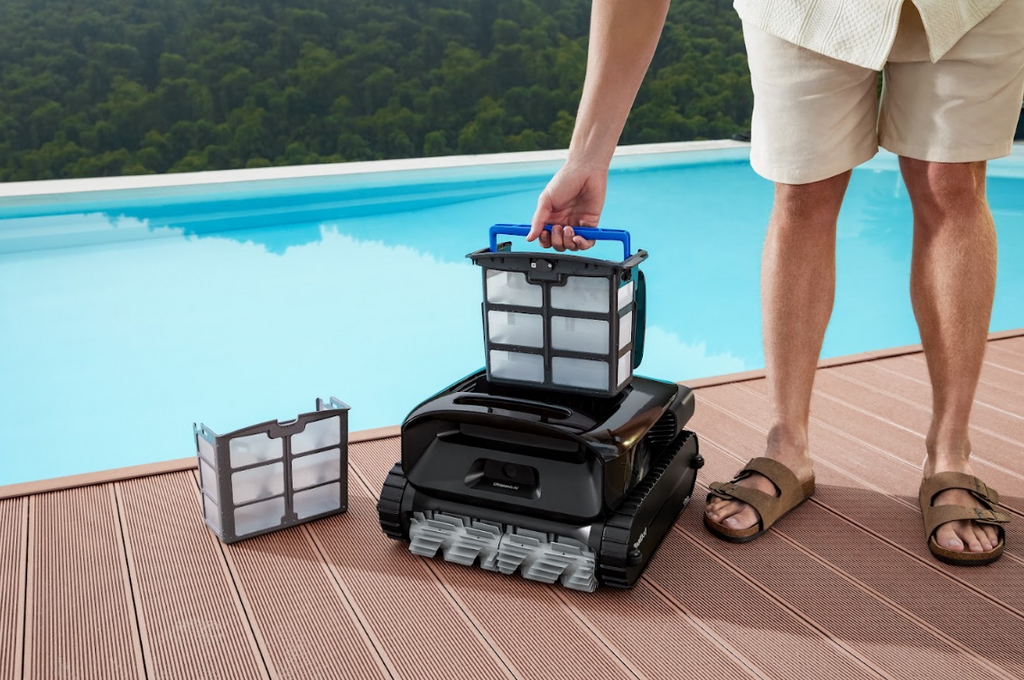
When comparing the best rated robotic pool cleaners, homeowners should distinguish between robots designed for submerged surfaces and equipment intended specifically for floating material. Beatbot iSkim Ultra is a robotic surface skimmer with a 9-litre basket, dual side brushes, sensor-supported navigation, a 24W solar panel and a 10,000mAh battery. In a pool garden, its role is to collect leaves, flowers, seeds, grass, pollen and insects while they remain on the surface. This can be useful during lawn cutting, light leaf fall or short flowering periods when debris enters gradually throughout the day. The larger basket may reduce interruptions compared with frequent manual netting, although emptying frequency still depends on the actual amount and size of material. The owner must continue checking narrow corners, steps and areas obstructed by toys or pool fittings. The unit only addresses floating debris. It does not clean the floor or walls, control plant roots, correct irrigation runoff, test water chemistry or maintain the main filter. Its practical value is limited and specific: reducing repeated surface skimming after the garden layout has already controlled avoidable debris.
Set a Seasonal Maintenance Schedule
Low-maintenance landscaping works best when tasks are completed at the correct time rather than postponed until the swimming season.
| Period | Garden work | Pool-related check |
| Start of growing season | Inspect irrigation, edging and new growth | Check runoff and remove winter debris |
| Main swimming season | Light pruning and weed control | Empty surface baskets as required |
| Flowering or leaf-drop period | Increase targeted cleanup | Remove floating material before it sinks |
| End of season | Cut back suitable plants and clean beds | Wash and store seasonal equipment |
| Dormant period | Inspect drainage, paving and plant structure | Plan replacements or relocations |
The schedule should be adjusted to local climate and plant behaviour. In warm regions, growth and debris may continue for most of the year. In colder regions, spring startup and autumn leaf fall may create the heaviest workload.
Record Repeated Problems Before Changing the Design
A short maintenance record can show which plants or areas create unnecessary work. Note when the pool receives heavy debris, where soil reaches the deck and which irrigation zones need frequent adjustment.
After one full growing season, the owner can make targeted changes. A plant may need relocation rather than removal. A bed may only need improved edging. A repeated weed problem may come from damaged joints rather than the planting itself.
This method avoids replacing the entire garden based on one short period of poor maintenance.
Limit the Number of Maintenance Tasks
A beautiful, low-maintenance pool garden depends on controlling how many different care routines are required.
Suitable existing plants should be retained. High-debris or fast-growing plants should be relocated or replaced when they create the same problem every week. The immediate pool zone should remain open, stable and easy to clean, while more demanding plants are concentrated in smaller feature areas.
Hardscape, edging, drainage and irrigation should keep soil and garden material away from the water. Surface-cleaning equipment can manage the debris that remains, but it should support the landscape plan rather than correct poor placement.
Before installation, every plant and material should have a known mature size, maintenance task and effect on the pool. That information is more useful than selecting the garden only by appearance.