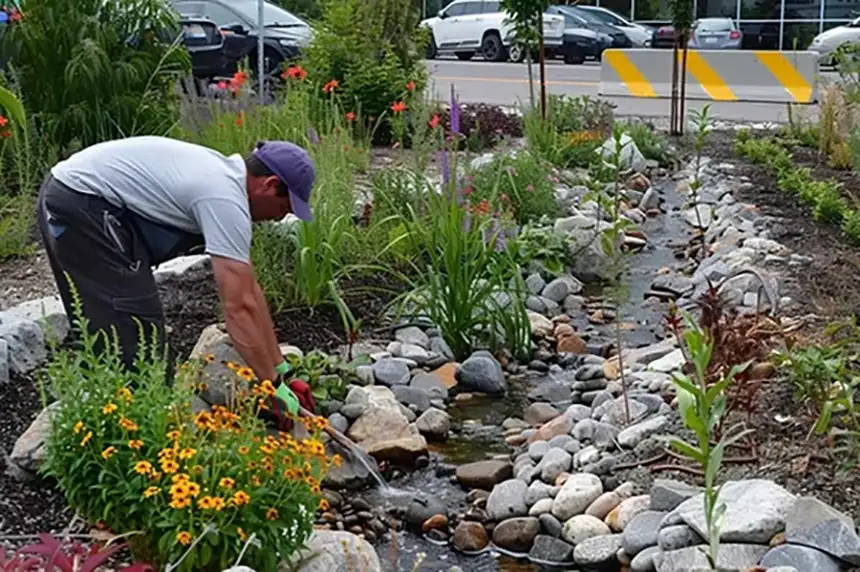
A backyard garden might look good when it is freshly landscaped, but after some time, the beauty starts fading. Sometimes heavy rainfall may take the soil away from garden beds, regular foot traffic can turn grassy areas into muddy paths, and bare patches, all can ruin the beauty of the healthy lawn and backyard.
These issues are caused by many different reasons, but they are still connected. An outdoor space’s performance over time depends on water movement, soil stability, and ground coverage. But the best thing is, all these problems can be solved by choosing the right materials and improving how water moves across the property, which can make a noticeable difference.
Start by Identifying the Real Problem
Before ordering landscaping materials, take a closer look at the areas that require attention.
Walk around your yard after a moderate rainstorm. Pay attention to where water collects, where soil has moved, and which areas stay muddy longer than others.
Common warning signs are:
- Bare soil around planting beds or on slopes
- Puddles that stay long after rainfall
- Gravel paths that have developed ruts or uneven surfaces
- Thin grass in high-traffic areas
- Exposed roots or soil accumulating at the bottom of a slope
Understanding the underlying issue helps prevent unnecessary work.
For instance, adding grass seed to an area with persistent standing water may produce disappointing results. Likewise, spreading decorative gravel over unstable soil will probably not stop it from moving during heavy rain.
A successful landscape improvement starts with correcting the conditions that caused the problem.
Use Gravel to Improve Paths and Problem Areas
Gravel is one of the most versatile materials for backyard improvements. It can offer a durable walking surface, support drainage systems, and help define multiple areas of a landscape.
However, not all gravel performs the same way.
Angular crushed stone tends to interlock, making it important for compacted bases and heavily used surfaces. Clean washed stone lets water move through the spaces between particles and is often selected for drainage applications.
Homeowners comparing crushed stone and gravel should think about particle size, intended use, drainage requirements, and whether the material has to compact.
Create More Durable Garden Walkways
Repeated foot traffic can slowly damage grass, particularly between patios, sheds, gates, and garden beds.
A properly constructed gravel walkway provides a designated route while supporting and protecting the surrounding lawn.
Begin by defining the path and excavating to the depth required for the intended construction. Prepare the subgrade, establish adequate drainage, and install a suitable compactable base when required.
For instance, a frequently used walkway may benefit from a compacted crushed-stone base and a separate surface layer selected for comfort and appearance. Angular aggregate often provides better stability than rounded decorative stone, which can shift underfoot.
Edging can help keep loose aggregate in place and avoid it from spreading into nearby planting areas.
For a decorative finish, choose gravel that complements the home and surrounding landscape. Consider walking comfort as well as appearance, especially for paths used often.
Choose the Right Gravel for Drainage
Gravel can play a crucial role in managing water, but it needs to be part of a properly designed system.
For instance, clean washed aggregate is commonly used around perforated drainage pipes because the spaces between the stones let water move toward the pipe.
In areas for example Raleigh and Wake Forest, where clay-rich soils can contribute to slow drainage and surface runoff, selecting suitable materials is particularly important.
A decorative gravel bed alone, however, will not solve a drainage issue if water has nowhere to go.
Before installation, determine where runoff should be directed and whether the site needs additional grading or drainage infrastructure.
Protect Exposed Soil From Erosion
Soil erosion is usually overlooked until visible damage appears.
Rainfall striking bare soil can dislodge particles, while concentrated runoff might carry sediment downhill. Over time, this can form channels, expose plant roots, and damage newly landscaped areas.
Sloped yards, disturbed construction sites, and recently seeded lawns are particularly vulnerable.
The most effective solution relies on how steep the area is, how much water flows across it, and whether vegetation can establish successfully.
Use Protective Materials While Plants Establish
On exposed slopes and newly landscaped areas, temporary protection can help stabilize the soil while plants grow.
Common erosion control products include biodegradable blankets, coir mats, erosion control netting, and wattles designed for multiple site conditions.
Erosion control blankets shield the soil surface from rainfall and can support seed establishment when installed correctly.
For instance, after grading a sloped section of a yard, a suitable biodegradable blanket can help protect newly seeded soil while grass starts to establish. The material should be installed and anchored according to the manufacturer’s instructions, with specific attention to edges and overlapping sections.
Wattles and similar sediment-control devices may help slow surface runoff and capture sediment when positioned and maintained correctly.
The correct choice depends on the application. Products designed for gentle slopes may not be suitable for steep channels or areas experiencing concentrated water flow.
Combine Erosion Protection With Better Drainage
Protective materials work best when the underlying drainage problem is also addressed.
If runoff from a roof or driveway repeatedly flows across a planting bed, the region may continue to erode even after new mulch or soil is added.
Possible improvements involve redirecting downspouts to approved discharge locations, correcting minor grading problems, or installing a properly designed drainage system.
For significant drainage issues, especially near a building foundation or neighboring property, professional assessment is advisable.
The goal is to manage water safely instead of simply moving the problem elsewhere.
Repair Bare Lawn Areas With the Right Grass Seed
A healthy lawn offers more than an attractive green surface. Established turf also helps protect topsoil and minimizes the amount of exposed ground vulnerable to rainfall.
However, successful lawn repair needs more than spreading seed over bare patches.
First, determine why the grass disappeared.
Heavy shade, compacted soil, insufficient irrigation, disease, and often foot traffic can all contribute to thinning turf. Unless the underlying problem is corrected, new grass may struggle in the same location.
Match Grass Seed to Your Climate and Conditions
Selecting grass seed for lawns involves considering sunlight, climate, soil conditions, and how the area will be used.
Cool-season grasses, for example, tall fescue, are commonly used in transition-zone climates, where they are often established during cooler fall weather.
Warm-season grasses such as Bermuda often perform best in sunny conditions and establish during warmer parts of the year.
For instance, homeowners in central North Carolina often establish or overseed tall fescue lawns during early fall, when soil temperatures remain suitable for germination, and cooler air temperatures minimize heat stress.
Bermuda grass, by contrast, is often established during warmer weather when active growth supports germination and establishment.
Temporary grasses, including annual ryegrass, may offer short-term ground cover, but they should not automatically be treated as permanent lawn solutions.
Seed mixes also differ in their tolerance for shade, traffic, and seasonal stress. Check the seed label and select a product suited to the site instead of choosing only by price.
Prepare the Soil Before Seeding
Seed-to-soil contact is important for successful germination.
Eliminate loose debris and dead vegetation, correct significant compaction, and prepare a firm but workable seedbed.
Where appropriate, soil testing can help identify pH or nutrient issues before fertilizers or amendments are added.
After spreading seed at the recommended rate, lightly irrigate it according to the manufacturer’s instructions.
Maintain consistent surface moisture during germination without letting water collect or wash the seeds away.
Avoid heavy foot traffic until the new grass has developed enough.
On sloped areas, a correct erosion control blanket may help keep seed and soil in place during establishment.
Combine Gravel, Soil Protection, and Grass for a Balanced Yard
Landscaping materials are most effective when they solve multiple problems as part of one overall plan.
Consider a backyard where rainwater flows down a gentle slope toward a regularly used garden path.
Instead of repeatedly reseeding the muddy path, the homeowner could establish a properly designed gravel walkway and direct foot traffic away from vulnerable turf.
Exposed soil beside the path could get erosion protection while suitable vegetation becomes established.
Nearby bare lawn areas could then be repaired with grass picked for the property’s sunlight and growing conditions.
Each improvement helps the others.
The gravel path creates a more durable walking surface. Soil protection minimizes erosion during establishment. Healthy vegetation offers longer-term ground coverage.
This coordinated approach usually produces better results than treating each damaged area independently.
Common Mistakes to Avoid
Even straightforward landscaping improvements can fail when installation details are ignored.
Using decorative gravel rather than a suitable base material. Different aggregates serve multiple purposes. A stable walkway or patio needs an appropriate foundation, not simply a layer of attractive stone.
Ignoring concentrated water flow. Gravel, mulch, or grass seed cannot compensate for a badly planned drainage route.
Seeding at the wrong time. Grass species have different establishment needs. Timing work around the local growing season improves the chances of success.
Leaving soil exposed after grading. Disturbed ground is vulnerable to erosion, especially before vegetation becomes established.
Choosing materials without measuring the area. Estimating quantities too vaguely can result in shortages, excess material, and unnecessary delivery costs.
Planning carefully before purchasing materials helps keep the project workable.
Build a Backyard That Lasts
A well-maintained backyard relies on more than appearance. Stable soil, appropriate drainage, durable walking surfaces, and healthy vegetation all add to an outdoor space that is easier to manage.
Gravel can improve heavily used areas, erosion control materials can protect exposed soil, and properly selected grass seed can support restoring damaged lawns.
The most crucial step is understanding what each material is designed to do and using it where it will provide lasting value.
By understanding the causes of muddy paths, soil erosion, and bare lawn areas, homeowners can create outdoor spaces that stay functional and attractive through changing seasons.
FAQs
What are some common challenges in landscaping?
Ans. Some of the common challenges in landscaping are poor drainage, over-irrigation, pests, and diseases.
What are the three important qualities for landscaping?
Ans. The three important qualities for landscaping are functionality, sustainability, and aesthetics.
What are the four elements of landscape?
Ans. The four elements of landscape are line, form, color, and texture.