“Simplicity is the ultimate sophistication.” — Leonardo da Vinci (Polymath)
Keeping the yard beautiful shouldn’t turn your weekends into workdays. Yet mowing, watering, fertilizing, and patching worn-out grass can quickly turn lawn care into an endless chore.
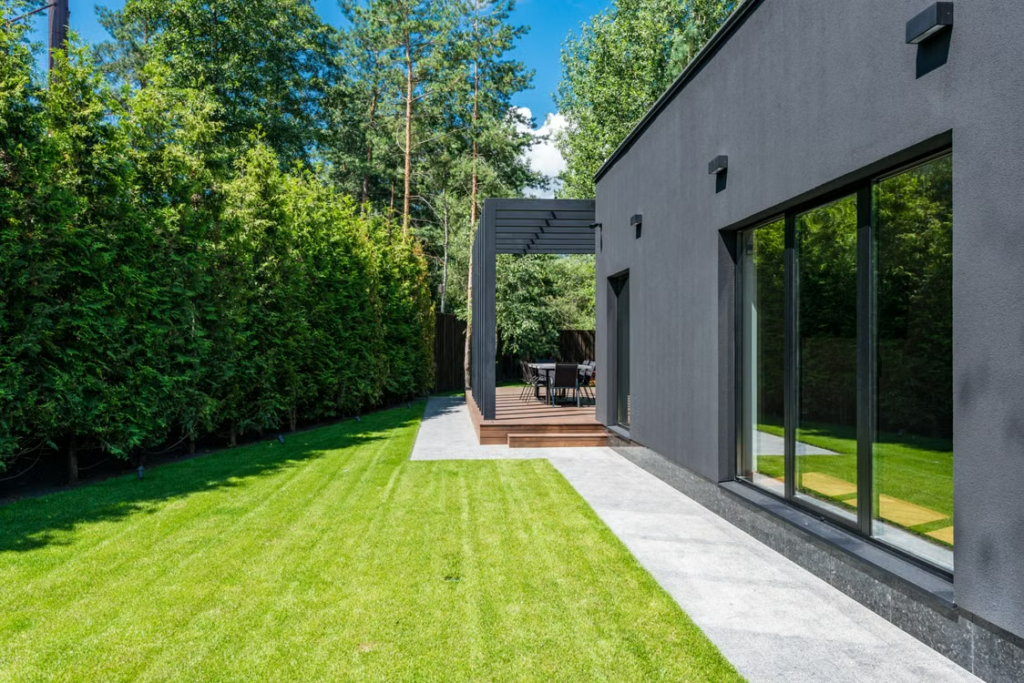
That’s why modern homeowners are going for artificial grass. Far beyond replacing traditional lawns, today’s synthetic turf can define patios, soften hardscapes, create pet-friendly play areas, surround pools, and even transform rooftops into inviting outdoor retreats. The key is choosing the right application for how your yard is actually used, because factors like drainage, heat exposure, and foot traffic ultimately determine how well synthetic turf performs over time.
Best Artificial Grass Ideas at a Glance
Synthetic turf is versatile enough to work across almost every outdoor setting, but the best choice depends on how you use your yard. Here is a quick look at the most practical directions for a low-maintenance yard:
- Lawn replacement: Eliminates mowing, watering, and seasonal reseeding while keeping the yard consistently green.
- Between pavers: Softens hardscape surfaces without the weeding that natural grass between stones demands.
- Patio zones: Creates a clean, defined transition from built surfaces to the yard with minimal upkeep.
- Pool area: Offers a slip-resistant, easy-to-rinse surface that stays cooler underfoot than concrete.
- Pet-friendly turf: Drains efficiently and holds up under heavy use, replacing muddy patches with a cleanable surface.
- Play areas: Cushions falls, drains after rain, and resists the worn patches that appear under heavy play.
- Backyard putting green: Performs consistently year-round with almost no maintenance beyond occasional brushing.
Suitability for each of these ideas depends on factors like drainage capacity, sun exposure, heat retention, and how the space is used day to day. The sections below explore each direction in more detail.
Design Ideas That Fit How You Use the Yard
The most successful artificial grass projects begin with lifestyle rather than aesthetics. It should align with the way a space is actually used. Consulting an artificial turf supplier early in the process helps homeowners match pile height, density, and material feel to the intended yard use, whether that means a patio zone, a pet area, or a decorative lawn replacement. The ideas below are grouped by lifestyle and activity to make that matching process easier.
Relaxed Entertaining Spaces
Synthetic grass works particularly well in outdoor living spaces where the goal is a polished, low-effort finish. Laid between pavers, it softens the hardscape without introducing the weeding and watering that natural grass between stones typically demands.
Around a patio, turf creates a defined transition from the built surface to the yard. It reads as intentional, keeps mud away from furniture, and holds up well through consistent foot traffic from gatherings. For anyone following modern turf landscaping trends, the patio-to-lawn connection is one of the more versatile design moves available right now.
Active Zones for Play, Pets, and Practice
Pet-friendly grass is built with drainage and durability in mind. A dedicated dog run laid with this material stays cleaner than a natural grass equivalent, since rinse-down maintenance replaces the muddy patches and bare spots that dogs typically leave behind.
Playground zones benefit from the same logic. Synthetic turf cushions falls better than compacted dirt, drains after rain, and doesn’t wear into patches the way grass does under heavy play.
A backyard putting green is another strong use case. It performs consistently year-round and requires almost no upkeep beyond occasional brushing. Pool areas are well-suited to turf as well. The surface stays cooler than concrete for bare feet and doesn’t trap water either, which helps with both slip resistance and cleanup.
Small-Space and Feature-Focused Layouts
Not every grass transformation involves a full yard. A rooftop terrace, for instance, can use synthetic turf to add warmth and texture to an otherwise hard, urban surface.
Rock gardens and water features gain definition when turf borders them cleanly. The contrast between the structured green surface and natural stone or water draws attention to the feature itself, which adds curb appeal without the upkeep that planted borders typically require.
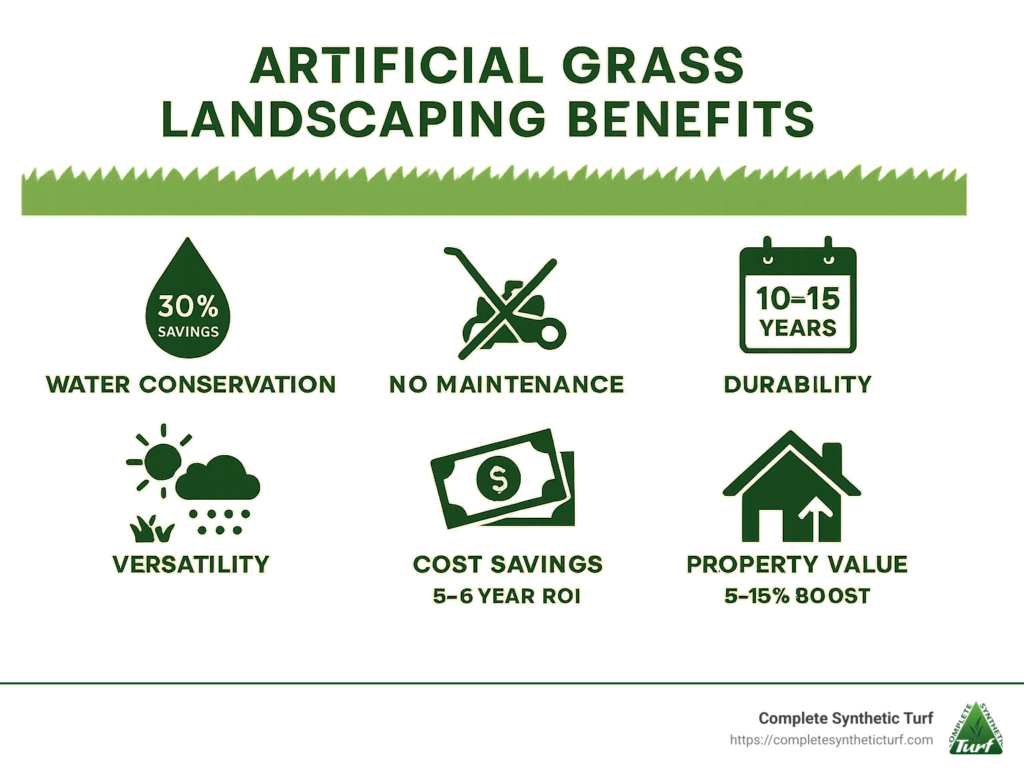
The infographic summarizes all the benefits of an artificial grass yard:
What to Plan Before You Install Turf
A successful installation depends as much on what’s beneath the turf as the turf itself.
Drainage is the most important structural consideration. A well-designed drainage system underneath the turf prevents pooling and keeps the surface clean after rain or rinsing. Base preparation matters just as much, since a poorly compacted sub-base leads to uneven surfaces and premature wear.
Sun exposure and traffic levels also shape material choices. High-traffic zones benefit from durable polyethylene blades, which hold their shape under consistent use. UV resistance becomes a priority in sun-heavy areas, particularly near hardscape surfaces like pavers or a patio, where reflected heat raises surface temperatures noticeably.
Infill selection ties into both performance and comfort. The right infill stabilizes the blades, supports drainage, and reduces heat retention in warmer climates. Edge transitions are worth thinking through early as well. Where synthetic turf meets concrete, pavers, or garden borders, a clean edge keeps the installation looking intentional and prevents lifting over time.
These choices collectively determine whether the yard functions the way it should. Understanding how synthetic turf transforms outdoor spaces can help homeowners align their planning decisions with the results they actually want.
Low Maintenance Does Not Mean No Maintenance
Artificial grass dramatically reduces yard work, but it isn’t completely maintenance-free. The workload is genuinely lighter than natural grass care, yet a few routine tasks still protect the surface and extend its lifespan.
Brushing the blades upright periodically keeps synthetic turf looking full and even, particularly in high-traffic areas where fibers flatten over time. Rinsing removes dust, pollen, and light debris, while occasional infill top-ups restore the stability that supports both blade posture and drainage performance.
The specific routine varies by use case. Pet-friendly turf benefits from more frequent rinsing to maintain hygiene and keep the drainage system clear. Pool area surfaces collect sunscreen residue and organic matter that needs regular removal. Decorative front or backyard zones generally require less attention, since foot traffic and contaminants are lower. Consistent upkeep ties directly to how the surface drains, how long it lasts, and how well it holds its appearance across seasons.
Tradeoffs to Know Before You Commit
Like any landscaping investment, artificial grass comes with both advantages and limitations.
Heat buildup is one of the more consistent limitations. Synthetic turf surfaces run noticeably hotter than natural grass in direct sun, particularly where reflected heat from nearby hardscape amplifies the effect. UV resistance in the turf material slows degradation, but it doesn’t eliminate surface heat. Upfront cost is also higher than seeding or sodding, and the product will eventually need replacement after years of use.
Drainage, odor control, and comfort all vary significantly by product and installation quality. A drainage system that isn’t sized correctly for the intended use creates problems that no infill choice can fully offset. Treating these factors as screening criteria when evaluating options leads to better long-term outcomes than treating them as reasons to avoid turf altogether.
How to Choose the Right Idea for Your Yard
The best synthetic turf design isn’t necessarily the most elaborate. Choosing the right one depends on how the space is actually used. Daily foot traffic, sun exposure, drainage needs, and the surrounding hardscape all point toward which design and product type will perform well over time.
The best low-maintenance results come from matching design ambition with realistic installation planning. An idea that looks great but exceeds the yard’s drainage capacity, or requires more upkeep than the household can commit to, will underdeliver regardless of how well it’s installed.
Water conservation and curb appeal are genuine benefits of synthetic turf, though industry research points out that those benefits depend on the application fitting the space well. When the design aligns with the outdoor living space it’s meant to serve, the result tends to take care of itself.
FAQs
Is artificial grass totally maintenance-free?
Not entirely. While synthetic turf eliminates mowing, watering, and fertilizing, it still benefits from occasional brushing, rinsing, debris removal, and periodic infill maintenance to keep it looking and performing its best.
Does artificial grass get hot in summer?
Yes. It can become noticeably warmer than natural grass under direct sunlight, especially near concrete or other heat-reflecting surfaces.
Is artificial grass safe for pets and children?
High-quality synthetic turf designed for pets and play areas is generally safe.