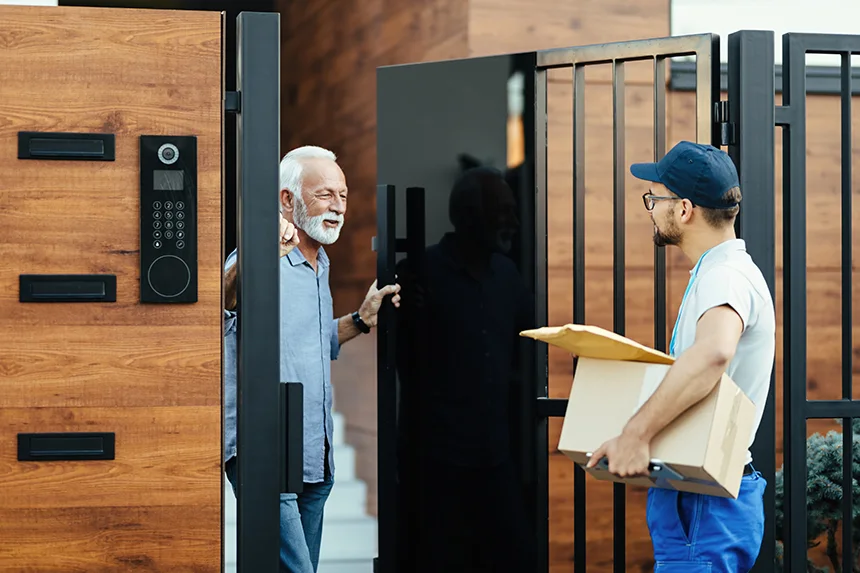
A home’s entryway is one of the most crucial areas to keep the home secure and look aesthetic at the same time.
Apart from being a part of the daily operations, these entryways make the first impression of a house. And if such impressions have a weak lock or loose hinges, the entire security seems to be compromised.
A few smart changes can help create a stronger and safer entrance. When a lock needs fixing or replacing, local lock and key services can provide the right help.
Start With a Strong Door Lock
The lock is one of the initial parts of an entryway that deserves attention. An old or damaged lock may not provide the exact level of protection as a newer, well-installed lock. A strong deadbolt can add another layer of security because it extends deeper into the door frame.
Check the Door and Frame
A strong lock cannot do its job well if the door or frame is fragile. The door should end firmly without large gaps around the edges. The frame should also be firm and free from cracks or damage. Screws that hold the strike plate in place should be snug. In some homes, replacing short screws with wider ones can help secure the hardware more firmly to the frame. These small improvements can make the whole entry point stronger.
Improve Entryway Lighting
Good lighting can make an entrance secure at night. A dark doorway can make it difficult to see visitors, keys, or signs of damage around the door. A vibrant porch light can improve visibility and may also discourage undesired activity around the entrance.
Consider a Smart Lock
Smart locks can offer useful activities for modern homes. Depending on the model, a smart lock may allow entry with a code, phone, fingerprint, or traditional key. Some systems can also bring alerts when the lock is used. This can be useful for households that have family members, trusted workers, or guests who need temporary access. However, smart locks still require proper installation and regular maintenance. A reliable backup method should also be provided in case the battery runs out.
Keep Keys Under Control
Keys are easy to overlook when thinking about home security. Spare keys should not be left in predictable places such as under a doormat, inside a plant pot, or on a nearby ledge. If a key is lost, the secure choice may be to have the lock rekeyed or replaced, depending on the situation. Old keys should also be removed from use when locks are altered. Keeping track of who has access to the home can reduce not required security risks.
Do Not Ignore Worn Door Hardware
Door handles, hinges, strike plates, and locks can become loose or worn with time. A handle that proceeds too much or a hinge with loose screws should not be ignored. Regular checks can help spot these problems before they become bigger issues. Professional locksmith help can be helpful when a homeowner is unsure whether a lock or door component should be fixed or replaced. Ben’s Lock & Key of Cherry Hill can be considered when professional aid is needed for lock and key concerns.
Keep the Area Around the Door Clear
The space around an entryway can also impact security. Bushes, tall plants, and big decorations can block the view of the door. Keeping these areas clean makes it easier to see who is approaching the home. Clear sightlines can also make security cameras and outdoor lights more efficient. Other home maintenance tasks, such as arranging furniture near the entrance or scheduling Carpet Cleaning Services for an entry rug, can upgrade the overall condition of the area without affecting its security features.
Think About Who Has Access
Home security is not only about the hardware on the door. It is also about understanding who can enter the property. When a former tenant, worker, or other person no longer needs access, old keys or access codes should be eliminated when possible. Temporary codes can be helpful for visitors because they can often be changed later. A useful record of active keys and codes can help homeowners keep better control of entry.
Regular Security Checks Matter
Entryway security should be cross-checked from time to time rather than only after a problem occurs. A quick inspection can include testing the lock, looking at the door frame, looking at the hinges, and making sure outdoor lights work efficiently. Any unusual noise, sticking lock, loose hardware, or visible damage should get attention.
Final Words
A secure entryway begins with the basics. A good lock, solid door frame, nice lighting, controlled key access, and regular maintenance can all help secure a home. When a lock is tampered with, outdated, or difficult to use, professional assistance can build a safer way to address the problem.
FAQs
What are the 5 basic security principles?
The five basic security principles—often expanding the core CIA triad with identity and accountability—are Confidentiality, Integrity, Availability, Authentication, and Non-Repudiation.
What are the 5 C’s in security?
In cybersecurity and risk management, the 5 C’s stand for Change, Compliance, Cost, Continuity, and Coverage.
What are the three elements of security?
In information and cybersecurity, the three elements of security are the CIA Triad (Confidentiality, Integrity, and Availability).
What are the 4 P’s in security?
The “4 P’s” in security depend on the specific context of the field. In cybersecurity, they stand for People, Policy, Process, and Platform.