“Handle a book as a bee does a flower, extract its sweetness but do not damage it.”
– John Muir (Naturalist & environmental philosopher)
Pollinators are essential to healthy gardens and food production. In fact, roughly three-quarters of the world’s crops depend on pollinators to some extent, making bees, butterflies, and other pollinators some of the hardest-working visitors your garden will ever have.
That makes it difficult for home gardeners. When aphids, squash bugs, or tomato hornworms start damaging plants, reaching for a pesticide can feel like the quickest solution. Unfortunately, many common treatments don’t distinguish between harmful pests and beneficial pollinators. The result can be fewer bees visiting flowers, reduced pollination, and ultimately smaller harvests.
But protecting plants doesn’t demand the sacrifice of pollinators. With the right products, proper timing, and targeted treatment, you can manage pests while keeping your garden a safe place for bees and butterflies. And when an infestation grows beyond what manual removal or selective treatments can handle, consulting a professional such as Clear Defense Pest Control is often a smarter choice than relying on broad-spectrum sprays. A trained technician can identify the specific pest and recommend treatments that minimize unintended harm to beneficial insects.
Most home gardeners don’t want to hurt pollinators. The harm usually comes from timing and product choice rather than any lack of care, since a pesticide that is perfectly safe applied at dusk on a non-flowering plant can be genuinely dangerous when applied at noon on a blooming one. Understanding those distinctions turns pest control into something far more precise than simply spraying whatever is in the shed.
Why Timing and Product Choice Matter So Much
Insecticides lead to a wide range of toxicity levels concerning bees specifically. Some active ingredients, like insecticidal soap or diatomaceous earth, carry relatively low risk to pollinators when used correctly. Others, particularly systemic neonicotinoids, can persist in a plant’s pollen and nectar for weeks after application, which implies the danger to a visiting bee does not end when the spray dries on the leaves. Reading the label for bee hazard warnings before buying a product, rather than after a problem has already emerged, saves a lot of guesswork later.
Application timing changes the risk profile as much as the product itself does. Bees are typically most active during the middle of the day and largely inactive after sunset, so treating a pest situation in the evening dramatically cuts the odds of direct contact even with a moderately toxic product. Avoiding any application at all while a plant is actively flowering removes the single biggest source of accidental pollinator exposure, since that is precisely when bees are visiting the blossoms.
Why This Actually Matters for Your Garden
The table below puts some numbers behind why pollinators are worth protecting in the first place.
| Metric | Figure |
| US farm earnings attributed to insect pollinators (Cornell, 2010 data) | $29 billion |
| Bee species native to North America | Around 3,500 |
| Share of edible produce that depend on animal pollination | Roughly one third |
According to Ohio State University Extension’s guide to protecting pollinators when using pesticides, gardeners can substantially lower harm by choosing less toxic active ingredients, targeting only the affected plants rather than treating the whole landscape, and avoiding any treatment while a plant is in bloom. Those three habits alone address most of the incidental pollinator exposure that happens in backyard gardens.
Practical Steps That Work in a Real Garden
Scouting plants regularly and treating problems early, while pest numbers are still low, lets a gardener employ a smaller amount of product and often a gentler one. Choosing dry granular formulations over dusts or fine sprays reduces the chance that particles stick to a bee the way pollen does, since dusts are among the most hazardous formulations for precisely that reason.
To stop the drift from reaching areas you don’t intend to treat, do just these two things:
- Keep a buffer between any known beehives and the treatment area
- Check wind conditions before spraying anything
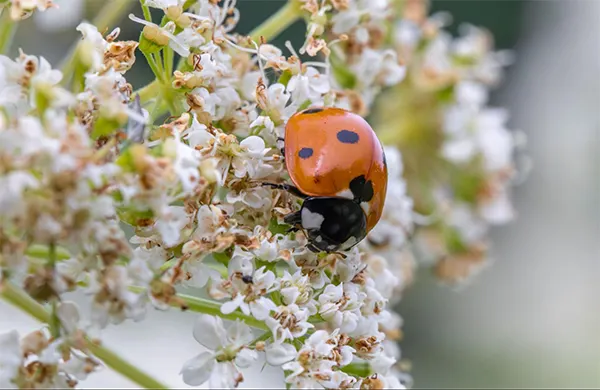
Manual expulsion still has a place in an integrated approach. Handpicking larger pests like tomato hornworms or squash bugs, using row covers during vulnerable growth stages, and encouraging natural predators such as ladybugs and lacewings all reduce how often a spray is needed in the first place. Anyone assembling a full plant protection routine can find more detailed guidance in this garden plant protection resource hub, which covers pest identification alongside prevention strategies for specific plants.
Conclusion
Pest control is necessary for a home and its garden. But a healthy garden and a fit pollinator population are not competing goals. Neither is effective pest control about eliminating every insect in your garden. With the right timing, the right product, and a willingness to treat only what actually needs it, a gardener can keep pests in check without turning the yard into a place bees learn to avoid.
FAQs
How to control garden pests without harming bees?
Always first try the non-chemical methods such as handpicking pests, using row covers, and encouraging beneficial insects like ladybugs.
Which pesticides are most harmful to pollinators?
Systemic insecticides, particularly neonicotinoids, are considered among the highest-risk options because they can remain in a plant’s pollen and nectar for weeks, exposing pollinators long after application.
When is the best time to spray pesticides in a garden?
Evening or after sunset is generally the safest time because most bees and butterflies are no longer actively foraging.