The gap between a bare-root sapling and the potted tree sitting beside it on the same nursery page is roughly forty dollars. But it’s not the best reason to pick the cheaper one. The best reason shows up three summers later, when one tree is chest-high, and the other is a stub you keep apologizing to. Bare-root material is lifted dormant and shipped fast, so it settles into your soil before it has to feed a canopy. Potted trees spend months in a greenhouse being pushed hard, and they arrive used to conditions your yard will never reproduce.
This isn’t an argument against buying plants online, which is where most people start now. Sites like Trees.com ship both formats, and the catalog photos make the potted version look safer.
What BareRoot Actually Means When the Box Arrives
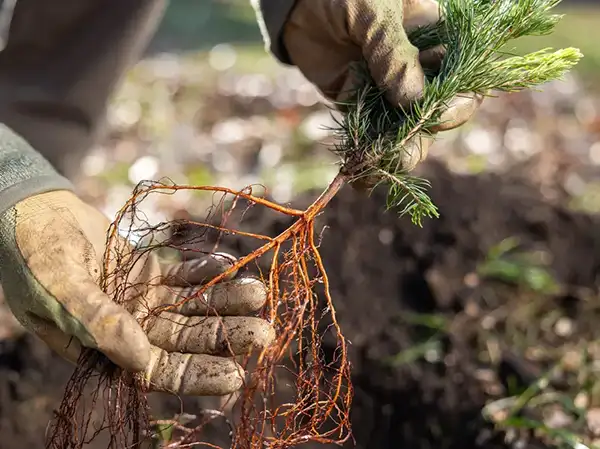
A bare-root tree is dug out in late fall or winter, shaken free of soil, and held in cold storage until it ships. What lands on your porch is roots and a whip of a trunk, no dirt at all, sometimes kept in damp paper. It looks alarming. It is also the oldest way fruit growers have shifted trees for centuries, and it works because a sleeping tree doesn’t want soil to survive a shipping week.
Dormancy does the heavy lifting. When a tree is fully asleep and its roots remain moist, it can sit in a box for days without stress. Wake it up in wet ground in early spring, and its roots begin exploring your soil quickly, with no potting mix to transition out of and no circling root ball to untangle.
The potted alternative isn’t a scam, so don’t hear it that way. Container trees have an actual place. They let you plant in June when you suddenly decide the yard wants a crabapple. They let you inspect a full canopy before you pay. And a potted tree is far more forgiving if you can’t plant for three weeks.
Four Things Bare-Root Does Better
Cost per tree. No soil, no pot, no greenhouse bench time. The savings run deep enough that you can buy three saplings for the price of one container specimen, which is important when you’re hedging a property line instead of decorating a patio.
Root architecture. Bare-root roots get planted in their natural area. Container roots grow against plastic, and by the time you buy the tree, those roots may already be curling. You can score them loose with a knife, but you can’t fully reverse a season of circling.
Shipping weight. A soil-filled pot is heavy, and nurseries price that weight into freight. A packet of dormant saplings travels cheap.
Root-to-shoot balance. Bare-root trees are pruned to match their less root mass, so the tree isn’t trying to feed foliage it can’t support. Potted trees usually arrive top-heavy and lush, then stall for a season while the roots catch up.
Timing is the Whole Trick
Here’s the thing that trips up first-timers. The window is narrow. According to the USDA, plant hardiness zones map the predicted minimum winter temperatures for your area, and that zone tells you roughly when your ground freezes and thaws. Bare-root stock wants to go in during that thawed, still-cold stretch, before buds break.
If you order in March for a Zone 5 yard, you may be fine. If you order in May, you’re rolling dice. The tree arrives awake enough to push growth with no established roots to aid it, and that’s how you get a sapling that leafs out, wilts, and quietly gives up by July. Order early, plant the week it arrives, and if you can’t plant within a few days, heel the roots into a bucket of damp sawdust and keep it in the shade.
A Planting Checklist You Can Follow in One Afternoon
- Soak the roots for a few hours before planting. Not overnight, a few hours.
- Dig a hole wider than the root area and no deeper than the root crown. Deep holes settle and drown trees.
- Design a small mound in the hole, spread the roots over it, and backfill with the soil you dug out. Skip the amended potting mix; roots need to learn your actual dirt.
- Water thoroughly, then mulch two to three inches deep, keeping mulch off the trunk.
- Stake only if the site is windy. Loose stakes that allow the trunk to flex build stronger wood.
Penn State Extension publishes guidance on tree planting depth that’s worth five minutes before you pick up a shovel, especially because planting too deep is the single most common way new trees die.
The One Call I’d Make for You
If you’re planting more than one tree, or planting for privacy, or planting a fruit tree you want to keep for thirty years, buy bare-root. Order it in winter, plant it the week it arrives, and accept the bad stick for one season. Your reward is a tree that spends its first spring building roots rather than recovering from transplant shock.
The exception is actual, though. If your ground is already warm, if you’re replacing a dead shrub in July, or if you simply want something that looks like a tree in your yard by Saturday, buy the potted specimen and water it like you mean it. Knowing which situation you’re in is the real skill here.
One last thing about ordering. Plant nurseries have quietly become a serious online retail category; the Bureau of Labor Statistics tracks garden centers and nursery stock as its own retail segment, which tells you how much of this shopping has moved off the lot and onto your phone. Ask two questions before you check out. Is this shipped bare-root or potted? And what’s the guarantee if the tree doesn’t break dormancy? A nursery that answers both plainly is one you can trust with your first order.
So which tree is going in your yard, and what’s stopping you from ordering it this week while the ground is still cold?
FAQs
Why are bare-roots cheaper?
Ans. Bare-roots are cheaper because they need less labor, material, and transport costs.
What is the best way to plant a bare-root tree?
Ans. Dormant stages are best for planting a bare-root tree.
How long can you keep bare-root plants before planting?
Ans. Bare-root plants can be kept for almost 2 weeks before planting.