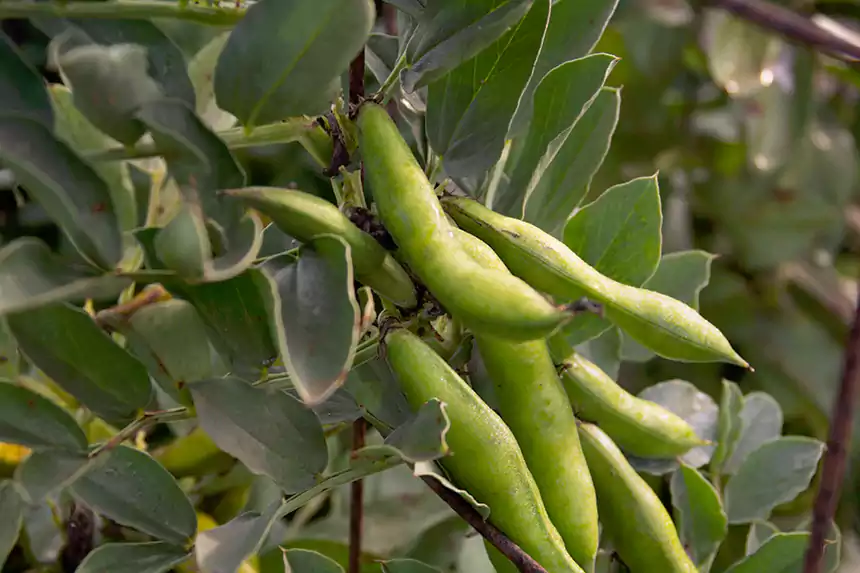
To grow fava beans, sow the seeds directly into well-draining, fertile soil in a sunny location during cool weather. Plant each seed 1-2 inches deep and 6-8 inches apart. You can also soak the seeds before planting for 8-12 hours, though this is optional. Water thoroughly, and keep the soil consistently moist until the seedlings emerge.
Fava beans are one of the oldest cultivated legumes, valued for their rich, buttery flavor and high nutritional value. In this complete guide, you will learn how to grow fava beans, the best planting and harvesting time, ideal growing conditions, common problems, and practical solutions for a successful harvest.
Quick Answer
Fava beans are easy to grow in cool weather. Plant the seeds in well-draining soil, give them plenty of sunlight and regular water, and provide support as they grow. With proper care, you can harvest plump, tender pods in about 90 days.
What are Fava Beans?
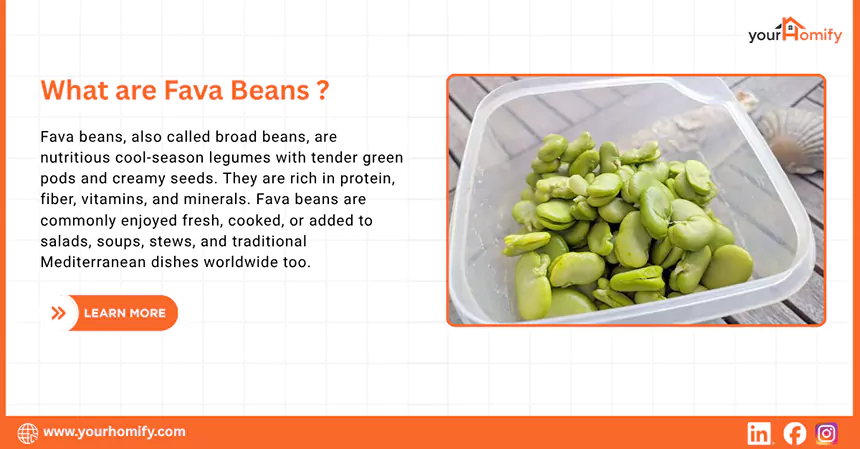
Fava beans, also called broad beans, are large, flat, green, and one of the oldest cultivated legumes. They are a cool-season crop with an annual lifespan and a fast-to-moderate growth rate. Botanically called Vicia faba, this herbaceous legume grows about 2-6 feet tall and 1-1.5 feet wide.
This green veggie requires 6-8 hours of direct sunlight, moderate watering for pod formation, and well-draining, fertile soil with a pH of 6.0-7.5. It blooms from early to mid-spring, almost 4-6 weeks after planting.
Fava beans are generally non-toxic and edible for humans and most pets in moderation, but they can cause favism (hemolytic reaction) in individuals with G6PD deficiency.
How to Grow Fava Beans From Seed?
Growing Fava beans from seed is simple. You need to choose the right time and prepare the soil. Pre-soak the seeds and sow them properly. Water them thoroughly and make sure they are properly spaced to prevent fungal diseases.
Step 1: Choose the Right Time
Plant fava beans when the temperature is cool. It is best to sow the seeds in early spring (February or March) or in late fall (October or November). The ideal soil temperature for germination is around 45–65°F (7–18°C).
Step 2: Prepare the Soil
Well-draining, fertile, loamy soil works best for this vegetable. Turn and loosen the soil using a garden fork to a depth of about 8- 10 inches. Fava beans prefer slightly alkaline to neutral soil with a pH of 6.0-7.5. It is better to mix compost but avoid heavy nitrogen fertilizers.
Step 3: Pre-Soak the Seeds
Although this is an optional step, pre-soaking the seeds in room-temperature water for 8-12 hours can soften the seed coat and encourage quicker germination. Do not soak the seeds for more than 24 hours, as it may cause seed rot.
Step 4: Sow the Seeds
Plant each seed about 1-2 inches deep. Leave 6-8 inches between each plant and 18-24 inches between the rows for proper airflow. Cover the seeds with soil and gently press the top surface to pack the seeds and soil together.
Step 5: Water Thoroughly
Water the planting area immediately after sowing the seeds. Keep the soil consistently moist but not soggy. Germination usually takes 7-14 days, depending on the growing circumstances.
Step 6: Space the Seedlings (If Needed)
If you notice the seedlings emerging too close, space them to maintain a 6-8-inch gap between them. Proper spacing improves airflow and reduces the risk of fungal diseases.
Ideal Growing Conditions Needed for Fava Broad Beans
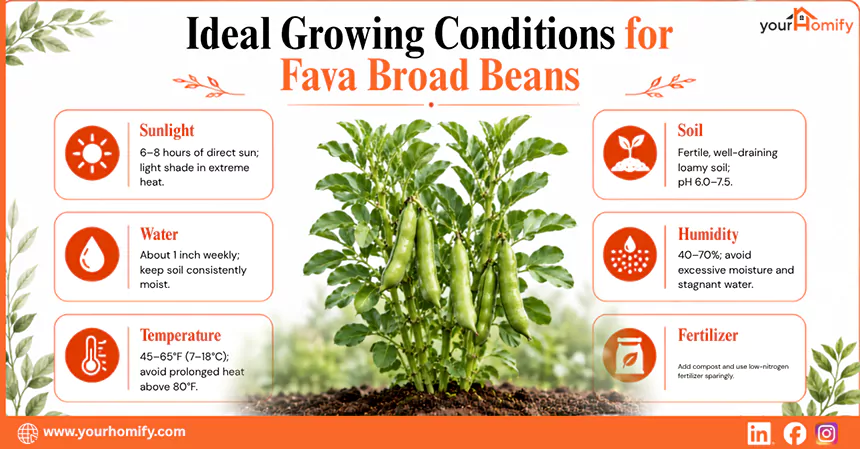
Fava Beans need 6-8 hours of direct sunlight, about 1 inch of water per week, temperatures between 45–65°F (7–18°C), permeable soil, moderate humidity, and low-nitrogen fertilizer. Providing the right growing conditions helps plants produce healthy foliage, strong roots, and abundant pods.
– Sunlight
Grow fava beans in a location that receives 6-8 hours of direct sunlight each day. If you live in a region with extremely dry conditions, it is advisable to place the plant in areas with light shade to help reduce heat stress.
– Watering
Keep the soil consistently moist, especially during flowering and pod development. About 1 inch of water per week is necessary. Deep watering once or twice a week is generally better. Adjust the frequency if the soil remains wet for too long.
– Temperature
Fava broad beans are cool-season vegetables that thrive between 45–65°F (7–18°C). They tolerate light frosts and can survive temperatures slightly below freezing once fully established. Growing them in areas where temperatures remain above 80°F (27°C) for extended periods may lead to a decrease in pod production.
– Soil
Use well-draining, fertile loamy soil enriched with compost or aged manure. Ensure that the soil is permeable because overly wet soil can cause root diseases and stunted plant growth. The soil should be slightly alkaline to neutral with a pH of 6.0-7.5.
– Humidity
Fava beans thrive in humidity levels of 40-70%. The species prefer growing in cool and moist conditions. High humidity and stagnant water can cause fungal issues. Keep the temperature cool but do not moisten the soil too much.
– Fertilizer
Similar to other legume plants, Fava beans can also fix nitrogen using beneficial soil bacteria. Minimal feeding works best for the species. Mix compost into the soil before planting and apply a low-nitrogen, balanced fertilizer to enhance fertility.
Care and Maintenance Tips for Fava Beans
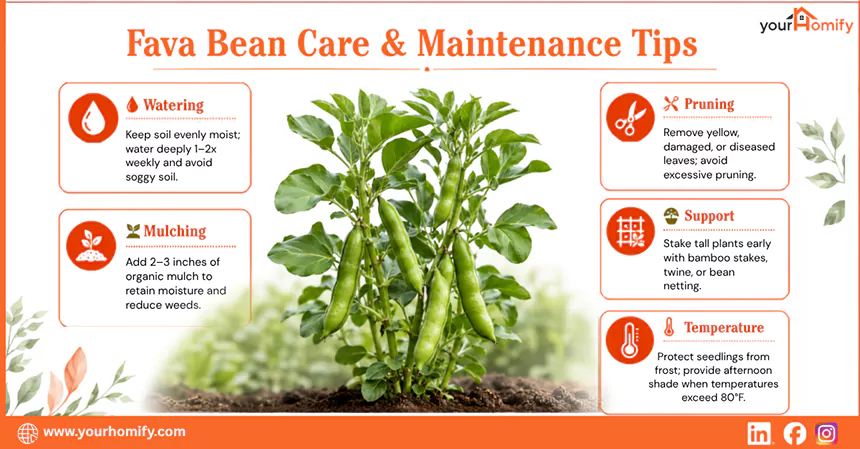
Some of the care practices that you can follow include consistent watering, mulching around the plants, pruning, supporting tall plants, and managing temperature stress.
– Consistent Watering
Keep the soil evenly moist throughout the growing season, especially during flowering and pod formation. Water them deeply once or twice a week rather than watering them frequently, and avoid waterlogging, as soggy soil can lead to root rot.
– Mulching Around the Plants
Apply a 2-3 inch layer of organic mulch, such as straw, shredded leaves, or compost, around the base of the plants. This helps in conserving soil moisture, suppresses weed growth, and reduces the risk of fungal diseases. Keep mulch a few inches away from the stems to prevent them from turning mushy.
– Pruning
Pruning is generally done to remove yellow, damaged, or diseased leaves. Cut away all the broken stems and remove heavily infected plant parts immediately to prevent the disease from spreading. Avoid excess pruning, as healthy foliage is needed for proper pod development.
– Supporting Tall Plants
Some fava bean varieties grow 3-5 feet tall and may lean due to the weight of developing pods or excessive wind. It is ideal to use bamboo stakes, garden twine between the stakes, or pea and bean netting. Install the support early, before plants begin to flop.
– Managing Temperature Stress
Established plants can tolerate light frosts. Protect young seedlings from severe freezes with frost cloths or row covers. Avoid planting during extreme cold seasons or when the soil is waterlogged. Temperatures above 80F can reduce flowering, pollination, and pod production. Make sure to provide afternoon shade in hot climates.
When and How to Harvest Fava Bean Plants?
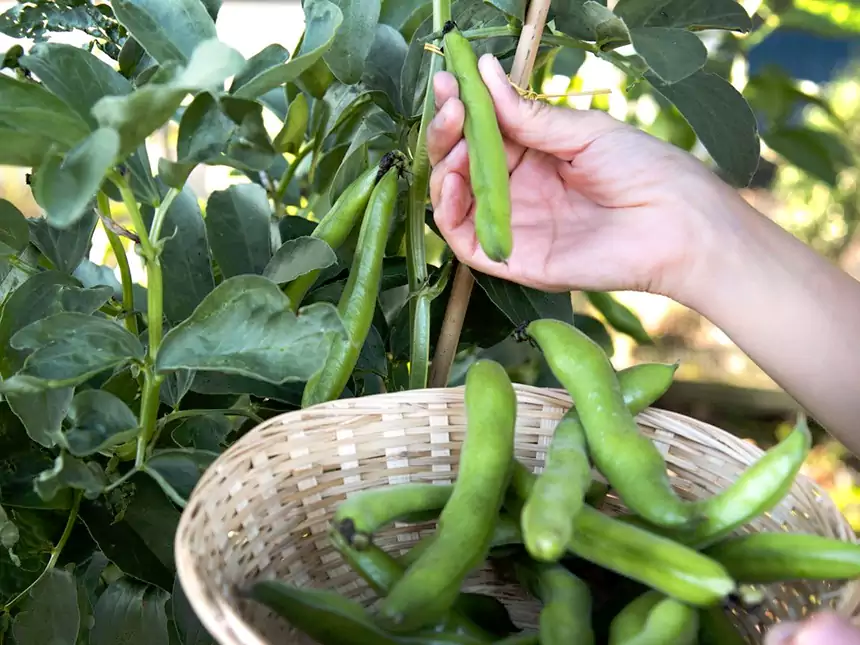
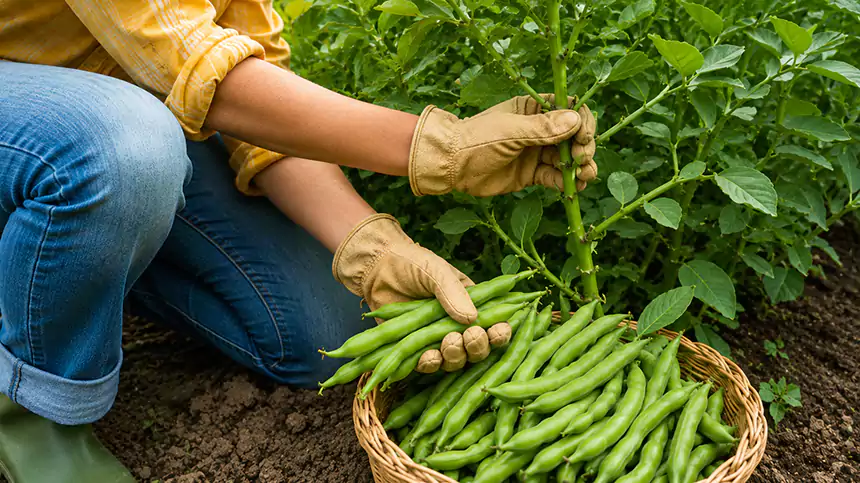
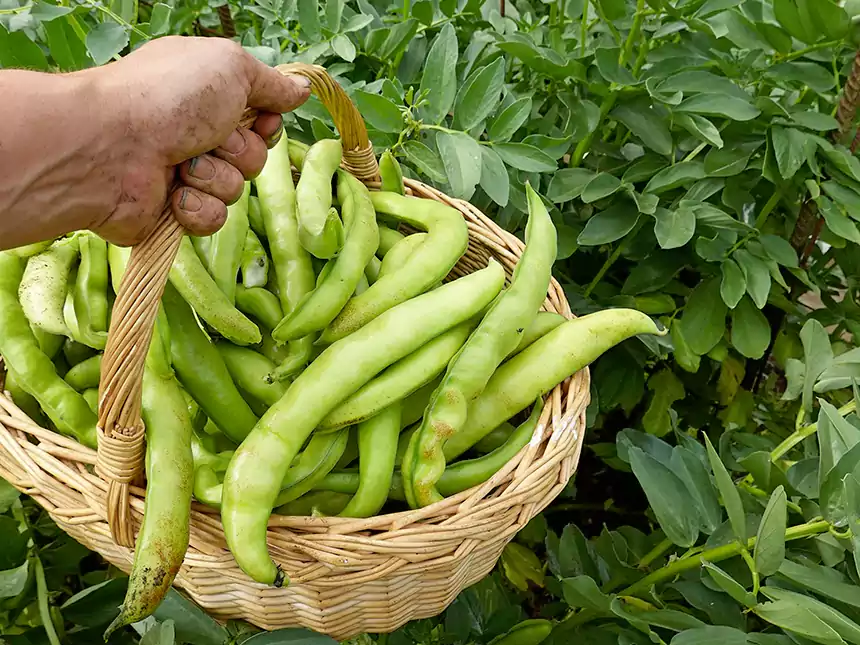
Most fava bean varieties are ready to harvest 80-100 days after planting, when the pods are 6-8 inches long and feel plump and firm. You can easily harvest this veggie by holding the stems gently and cutting them off using clean pruning shears. Open the pod and pop the seeds out, or you can also eat them with the outer layer intact.
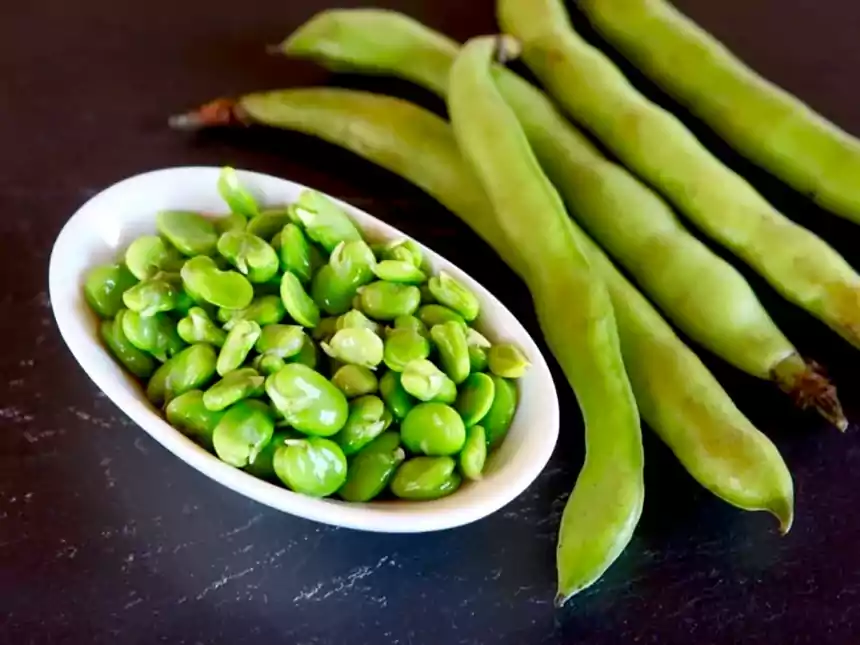
Harvest Young Pods: If you wish to eat favas as fresh whole beans, harvest young pods when they are 3-5 inches long, have a bright green and smooth outer layer, and can be snapped easily. Young pods are tender and can be cooked whole like beans.
Harvest Fresh Shelled Beans: For the seeds of fava beans, wait until the pods are thick and fully developed. You can harvest them when individual beans are clearly visible through the pod. Once mature, pick the pods, shell them manually, blanch the seeds, and they are ready to eat.
How to Harvest Fava Beans?
- Check if the pods are ready.

- Support the stem with one hand while harvesting. This prevents the plant from bending or wilting.

- Twist the pod gently until it separates from the stem, or you can also cut it off with garden shears. Avoid pulling forcefully, as this can damage the overall growth of the plant.
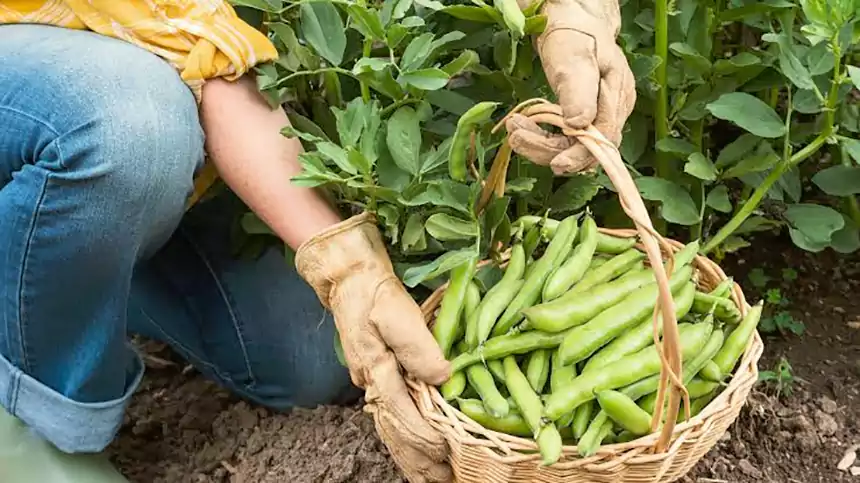
- Place the harvested pods in a basket or container. Handle them gently to prevent bruising.
- Refrigerate fresh pods or shelled beans and use them within 5-7 days.
Benefits and Nutritional Value of Fava Beans
Some of the key fava beans benefits include a nutrient-dense legume packed with plant-based protein, dietary fiber, and antioxidants. These tend to support heart health, digestion, muscle function, and overall wellness while also being naturally low in fat.
- Fava beans provide a good amount of protein, making them an excellent choice for vegetarians and vegans. Protein helps build and repair muscles, supports healthy tissues, and keeps you full for longer.
- The high fiber content supports healthy digestion, encourages regular bowel movements, and promotes a healthy gut. Fiber also helps improve satiety, which may support healthy weight management.
- Fava beans are rich in potassium and magnesium, nutrients that help maintain healthy blood pressure and cholesterol levels as part of a balanced diet.
- A high amount of iron present in fava beans helps the body produce hemoglobin, which carries oxygen in the blood. Pairing cooked fava beans with vitamin C rich goods such as tomatoes, bell peppers, or citrus fruits can improve iron absorption.
- Fava beans are low in saturated fat, making them a nutritious addition to heart-conscious meal plans. You can add them to soups, stews, curries, and salads.
Here is the nutritional value of Fava Beans (per 100g, cooked) for your reference.
| Nutrient | Amount |
| Calories | 110 kcal |
| Protein | 7.6 g |
| Dietary Fiber | 5.4 g |
| Fat | 0.4 g |
| Folate | 104 mcg |
| Iron | 1.5 mg |
| Potassium | 332 mg |
*Nutrient values are approximate and may vary slightly depending on the variety and cooking method.
Common Pests and Diseases Affecting Fava Bean Plants
Some of the common pests and diseases that affect Fava Bean plants are black bean aphids, bean seed fly, leaf miners, powdery mildew, and bean mosaic virus. Regular inspection, proper spacing, and seasonal garden care help prevent most problems.
| Pest/ Disease | Signs of Damage | Treatment |
Black Bean Aphids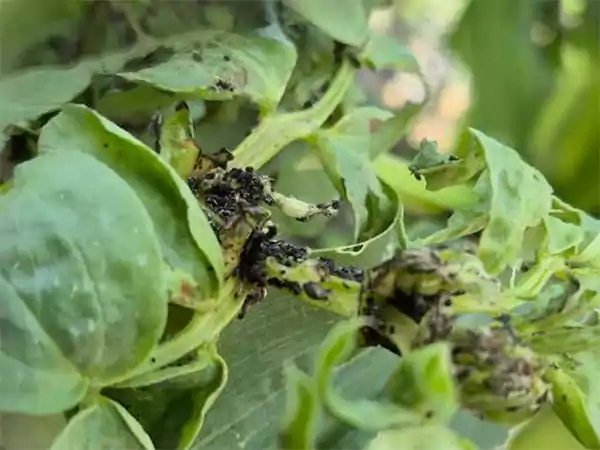 | Clusters of black insects on shoot tips, curled leaves, or sticky honeydew. It also leads to a stunted growth rate of the plant. | Cut off infested shoot tips, spray with a strong stream of water, encourage beneficial insects like ladybugs, or use insecticidal soap if needed. |
Bean Seed Fly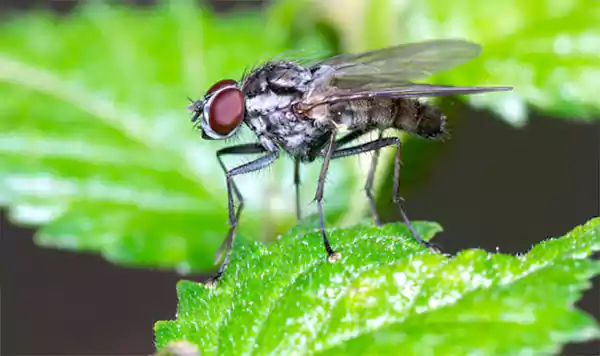 | The seeds of the plant fail to germinate. Young plants may wilt and collapse. | Sow into warm, well-prepared soil and remove plant debris immediately after the harvest. |
Leaf Miners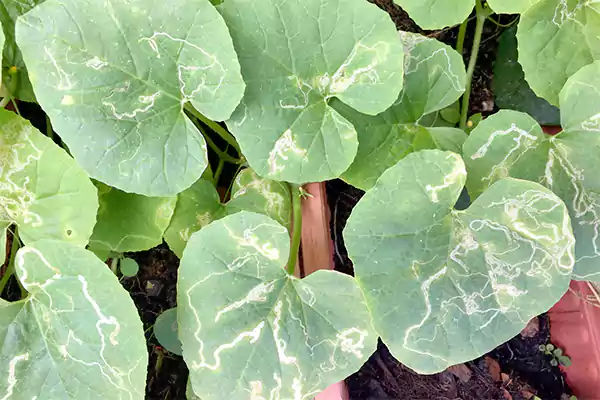 | These are white or pale yellow lines on the surface of the leaves. This hinders plant growth and makes them droopy. | Remove all the affected leaves, introduce beneficial insects like ladybugs, or use horticultural oils. |
Powdery Mildew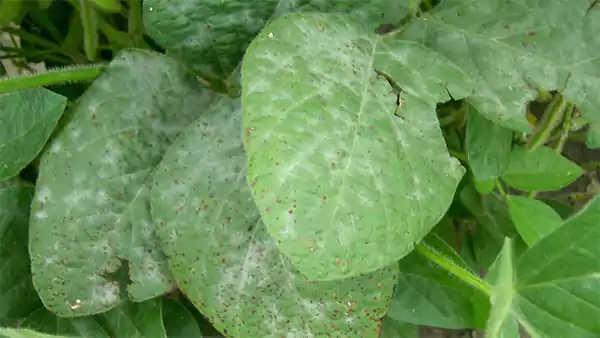 | This is a white powder-like coating on leaves during warm and dry weather conditions. | Improve airflow, make sure the plants are properly spaced, and remove all the affected leaves. |
Bean mosaic Virus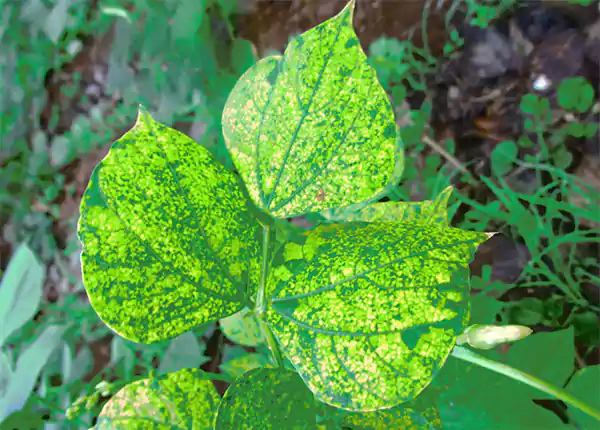 | You will notice mottled or distorted leaves, stunted growth rate, and reduced yields. | Remove all the infected parts immediately and use horticultural oils or neem water to remove the aphids that cause the virus. |
Final Words
Fava Beans are one of the easiest cool-season vegetables to grow, making them an excellent choice for both beginner and experienced gardeners. By planting seeds at the right time, providing fertile soil, watering consistently, and protecting plants from common pests and diseases, you can enjoy a productive harvest of fresh, nutritious pods.
Learning how to grow fava beans is a rewarding experience that offers many benefits. These hardy legumes are simple to plant and require minimal care.
FAQs
Why can’t I eat fava beans?
You cannot eat fava beans if you have a genetic condition called G6PD deficiency. Consuming these beans can cause a serious allergic reaction called favism.
What are fava beans called in America?
Though primarily called fava beans, some other names of the vegetable are broad beans, horse beans, or faba beans.
What is the best way to eat fava beans?
The best way to eat fava beans is to peel them, blanch them lightly, and toss them with salt, olive oil, and soya sauce.
Are fava beans healthy?
Yes, these are extremely healthy. Some of the key fava bean benefits include a nutrient-dense legume packed with plant-based protein, dietary fiber, and antioxidants. These tend to support heart health, digestion, and muscle function.
What do Americans call fava beans?
Fava beans are popularly called broad beans in the United States.
- How to Grow Fava Beans: Planting, Care, and Harvest Tips for a Successful Crop – Yahoo
- Fava Beans – University of California Research Paper
- Pests of Beans and Peas – NC State Extension Research Paper