


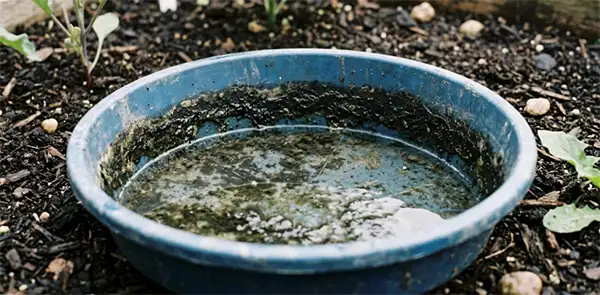
Tip out the water, and you’ve dealt with the mosquitoes. That is the standard advice, and it is close enough to true that almost everyone stops there. It’s also wrong in a specific and annoying way.
The eggs are not in the water. They are glued to the inside of the container, above the waterline, and they can sit there dry for months waiting for the next time it rains.
Which changes what a yard job actually is.
This guide covers where water hides in a normal yard, a ten-minute walk worth doing weekly, the hardware that does nothing, and when paying somebody is the sensible move.
Emptying the Bucket Does Not Empty the Bucket
The majority of the problem comes from the thing that most people miss, which is that a female mosquito often breeds and lays its eggs on a layer above the water. This is why actually removing those eggs is a lot harder than it looks and the reason why most people get it wrong.
According to the CDC, mosquito eggs have up to eight months of survival while they remain completely dry because these eggs stick to the container walls like glue and are harder to pull out. This means that for eight months, removing those eggs is a tougher problem than most people think.
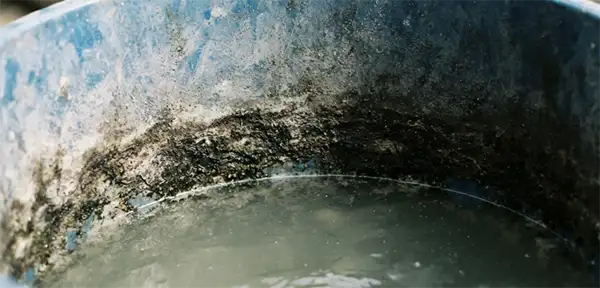
Now the most obvious solution might be to tip the bucket so that the water flows away. This is also the approach most people tend to use, and it is the completely wrong one. The whole problem with this method is that once you tip the bucket, the water goes away but the eggs remain exactly where they are. This is because mosquitoes breed over a layer above the water and not directly on the water, so 3 weeks later, when the mosquitoes breed again over the same place, you have no clue what to do.
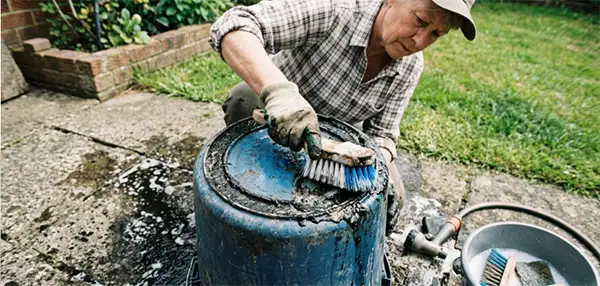
Thus, a better and more useful approach is to actually scrub the inside wall free of these eggs. So take a stiff brush and scrub the containers nicely, approximately 10 seconds per container. This might be less satisfying than tipping a bucket of water and thinking that the problem is solved, but it is more effective in use.
Egg to biting adult runs seven to ten days, so a container that refills every couple of weeks is a nursery running on a schedule.
Where the Water Actually Is
The obvious culprit in which the mosquitoes breed is usually the ones that everyone has forgotten about. So think about the old tire or the kid pool that you forgot to pump the water out of as the main open sources of standing water.
Now, while these are the most common sources of water, one might assume that these are also the sources where most of the breeding happens. It doesn’t. In fact, mosquitoes rarely ever breed in these open sources, which are placed in a tidy suburban yard.
The places where mosquitoes actually breed are harder to spot and duller, which makes it easy for them to breed in.
For example, a saucer under a plant pot, the corrugated ridges on a gutter downspout extension, a tarp over the firewood with a dip that holds a cup of rain for a week, and the lip of an upturned wheelbarrow.
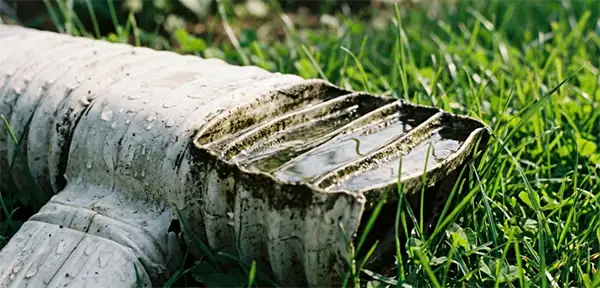
There are two problems that occur most commonly with the water that is collected in households. So while everyone advises on standing water damage and how to overcome it, mosquito damage is usually not talked about that often and yet remains one of the constant problems of every household.
The Ten-Minute Walk
- Most people forget this step and then wonder why the mosquitoes are still breeding in their yard. So make sure to always clear the gutters below your roof and to make sure that your roofline is clean because everything that you remove from up there will automatically settle down in what is sitting below it.
- After that, you should work your way down to the things that will actually collect water and are harder to notice, like buckets, tires, or toys. If you see eggs already laid out on such water surfaces, then scrubbing the surfaces of such containers rather than just tipping the bucket so that the water flows down is a more effective solution.
- A better approach to figure out these dull spots where mosquitoes often breed is to take a walk in your yard after the next heavy rain because this is the time that these slow spots show themselves.
- Moreover, if you have utensils in your yard that store standing water in them, like bird baths, then it is recommended to change the water in them regularly, preferably every other week, so that the water does not get dirty and you spot mosquitoes breeding before they become a big problem.
That walk is a maintenance habit. It is not a real inspection, which is a different job and the sort of thing worth booking when the problem has clearly moved indoors.
What Does Not Work, and Why It Sells Anyway
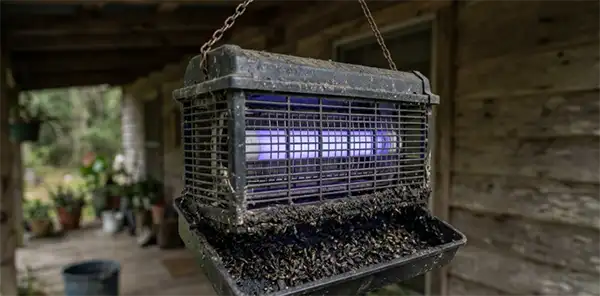
Most people buy bug zappers and think the problem of breeding mosquitoes in standing water is solved and their yard will be pest-free.
However, this is the wrong assumption because bug zappers attract only the insects with light,t and what you need to attract is mosquitoes, which can only be attracted by either carbon dioxide or warmth. This means that the one thing which is used to trap these mosquitoes and avoid the pest problem altogether is tuned to the wrong signal entirely.
The same thing happens with ultrasonic plug-ins. Both of these products have never worked on the problem of keeping your yard pest-free, and yet somehow this still keeps selling. So good advice is to stop wasting your money on buying such traps that do not work and actually invest your money in a place that will solve your problem rather than just making you feel like it does.
A better way to solve the mosquito damage is to adhere to EPA’s minimum risk category products, which skip the federal registration entirely. The only condition of this exemption is that the label on the product cannot claim to control anything that carries a disease.
So in such cases, plant-oil products are more interesting. This is because they are real and also legally constrained.
Hence, it is often seen that a bottle of clove and lemongrass oil can do wonders for your yard in making it pest-free by reducing the biting in your yard. It is also restricted by the EPA to have a label that suggests that this oil will do more than that, which is generally the part that most homeowners should read before they treat that label as a promise and not as a solution.
General pest control advice concentrates on indoor entry points, which is right for termites and roaches and no help at all for a yard full of saucers.
Key Takeaways
Most people cannot get rid of the pests in the yard because they usually follow the wrong order. It usually runs zapper, candles, spray, and drainage. But in reality, the order that will actually help with getting rid of the mosquito damage starts with drainage first, scrubbing second, a seasonal spray only if the yard still bites, and the hardware left on the shelf.
When It Is Worth Paying Someone
Most people solve their own yard’s mosquito issues, but somehow breeding still occurs in their yards.
This is because the neighbouring mosquitoes fly over from a roadside ditch, a low spot that floods in heavy rain, or a standing water spot in your neighbour’s yard. All of these are spots where the water is not yours to fix, and somehow the problems still become yours.
This is when you should consider paying for a seasonal treatment because it is usually worth it. The usual pattern changes to monthly applications between April and October, especially in the Mid-Atlantic, and the better operators treat the shaded resting spots rather than fogging the lawn.
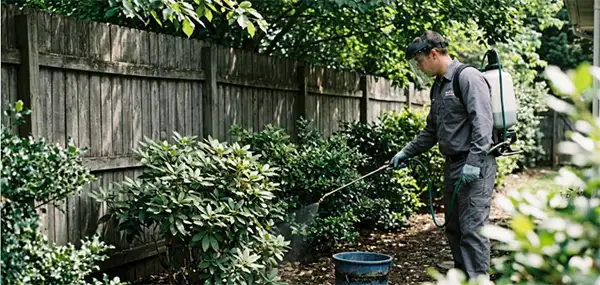
Operators around Hampton Roads advertise under terms like virginia Beach mosquito control, and those pages are where the service area and the treatment window usually get stated. Ask what they are spraying and whether pets need to be inside. The answer to the second one is usually yes, for about an hour.
What to Do This Weekend
Most people buy heavy equipment or spend their money on getting different traps which they see online, but those never work, and they end up actually costing you more money and time than the right method would have cost you.
So the best recommendation to make sure your yard is best free is to buy a stiff brush.
Mosquitoes do not breed directly over the water; rather, they breed on a layer above that standing water, so when you tip that bucket and the water flows down, it is not necessary that the eggs have also gone. Because up to eight months, these eggs stick to the container walls like glue, and so tipping the container does not actually help.
Instead, you should scrub the inside of every container that you find has water in it. Also, if your yard has containers that hold standing water in them, like bird baths, then cleaning those containers every week and changing their water with fresh water is a good option to avoid mosquito breeding.
If the biting drops off in two weeks, you have your answer about what was actually breeding out there, and you didn’t spend anything to get it.
FAQs
How often do I need to empty things out?
Weekly, because egg to adult runs about a week in warm weather. Anything longer and you are giving them the time they need.
Do citronella candles do anything?
A little, in still air, within a couple of feet of the candle. They are pleasant. As a yard treatment, they are decoration.
Can I get rid of mosquitoes completely?
No, because they fly in from wherever the water is. The realistic goal is making your yard the worst option on the street.
- CDC, Life Cycle of Aedes Mosquitoes
- US EPA, Conditions for Minimum Risk Pesticides under FIFRA 25(b)
- Diamond Exterminators, VA Beach mosquito control




7 Practical Ways to Keep Mosquitoes Away From Your Patio
[…] And when nothing seems to work, prefer choosing a mosquito control service. […]