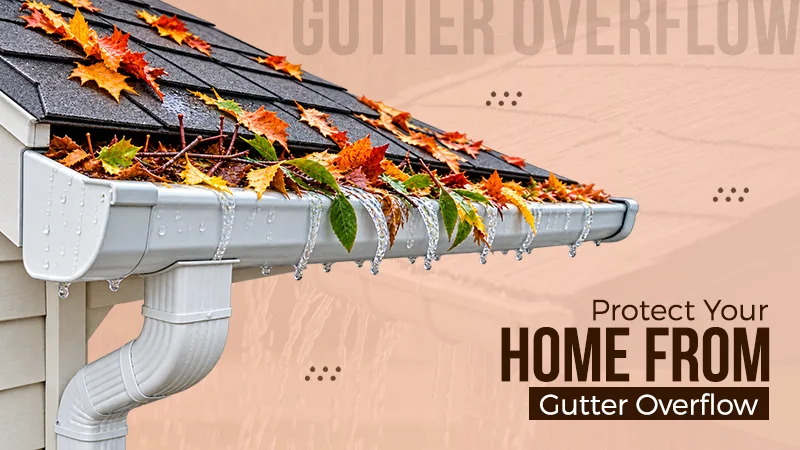
While trees may enhance the appeal of your property by providing shade and other elements of beauty, there is a lot more to the interaction between them and your roof than homeowners may realize. Branches and canopies can cast shade on your roof, shed their leaves into your gutters, scrape across your shingles, and introduce excess moisture.
In windy conditions, even a perfectly healthy tree may pose a danger to your house simply because its branches may be too close for comfort. The good news is that you do not have to cut down the tree to protect your home.
With some distance and proper care, you can ensure your trees’ health while protecting your roof at the same time.
How Far Should Tree Branches Be From Your Roof?
The working answer from arborists and roofers is 8 to 10 feet of clearance between the nearest branch and the roof surface. Sources disagree within that range. Some tree services say 6 feet; some roofers say 10. The spread exists because the right number depends on the tree, not on a rule. Ask three questions about yours:
- How fast does it grow? A silver maple or a poplar can close a 6-foot gap in two growing seasons. A slow-growing oak may hold that same gap for five years.
- How far does it move? Your clearance is tested during a storm, not on a nice, sunny day. Your branches can cover more distance if your tree is tall and flexible.
- Which direction does it drop? A limb that reaches over the roof drops its leaves onto it. A limb that reaches past the roof drops them past it.
| Branch distance from the roof | What the roof is still exposed to |
|---|---|
| Touching | Granule abrasion, a bridge for pests, and constant moisture on the shingle |
| 1 to 5 feet | Heavy leaf and needle load, deep shade, moss on north-facing planes |
| 6 to 8 feet | Storm sway contact, most routine debris drop |
| 8 to 10 feet | Little routine contact, and sunlight and air reach the roof |
In case you are establishing a new one, plant the tree sufficiently far away so that even when it grows up, its canopy will not be brushing against your house. In the case of a large shade tree, this would mean at least 20 feet from the foundation.
What Overhanging Branches Do to Shingles
A shingle is protected from the UV rays and impact by the layer of mineral granules. It means that the underlying asphalt is protected from the harmful effects because it is absorbed by the layer of mineral granules. The branch placed on top of the roof continuously scrapes mineral granules away whenever the wind comes, and the asphalt starts baking.
Debris does the quieter damage. Leaves, needles, and seed pods settle in the valleys and along the low edge of the roof, then hold water against the shingles after the rain stops. A roof plane that dries in two hours lasts longer than one that stays damp for two days. Branches touching the house also work as a bridge. Carpenter ants, squirrels, and mice use them to reach the fascia, soffit, and trim.
The Moss Problem Nobody Traces Back to a Tree
Moss on a roof is a shade problem, and shade usually comes from a tree. The Asphalt Roofing Manufacturers Association notes that moss grows on north-facing roof planes that stay damp, and that it grows fastest under overhanging branches. It is not a cosmetic issue. In ARMA’s words, moss “can cause the leading edges of the shingles to lift or curl, which increases the risk of shingle blow-off.” If you already have it, the manufacturer-backed method is narrow:
- Apply a 50:50 blend of laundry-strength liquid chlorine bleach and water. Let the mixture dwell for 15 to 20 minutes, followed by a gentle rinse.
- Never use a pressure washer. ARMA is blunt about this: it “will cause granule loss and very likely premature failure.” A pressure washer can take years off a roof in an afternoon.
- Pre-wet and rinse the plants below the eaves, or cover them, before any bleach goes up.
- Skip the retrofit zinc or copper strips. ARMA does not recommend adding them to an existing roof because the fasteners that hold them create their own leak and wind-damage risk.
The real solution is to expose the roof to sunlight. Open up the canopy in such a way that it allows the light and wind to penetrate the roof plane.
Leaves in the Gutter Become Ice on the Roof
In any climate with a freeze-thaw cycle, a clogged gutter in November is an ice dam in January. Leaves pack the trough; snowmelt has nowhere to go; it refreezes at the cold eave, and the ridge of ice that builds forces water back up under the shingles.
Shingles are supposed to repel flowing water, but not standing water. It goes beyond them, reaching the deck and finally the ceiling. Timing is much more important than frequency in this case. Clean the gutters once the leaves fall from the trees, rather than while they are falling.
When a Tree Is a Risk, Not a Nuisance
Some trees are past the point where pruning solves it. Look for:
- Large dead limbs in the canopy, especially any positioned over the roof
- A lean that has changed, or soil lifting on one side of the base
- Mushrooms or shelf fungus at the base or on the trunk, which points to internal decay
- Bark falling away in sheets
There is an insurance reason to act on those before a storm does. If a healthy tree comes down on your house during a storm, that is generally a covered peril, and the policy pays for the roof damage above your deductible.
If the tree is dead and the insured was aware of its presence, then this type of loss may be classified as negligence in maintaining the property and not paid out as a result. Tree removal coverage is another one and has its limits – about 5% of dwelling coverage with a limit of $500 per tree, and only when it causes some damage to the property.
A Maintenance Rhythm That Works
- Spring: Walk the perimeter. Look for anything within 10 feet of the roof, and for winter breakage still hanging up in the canopy.
- After leaf drop: Clear the gutters and the roof valleys. Check the north-facing plane for green.
- After a storm with winds above 50 mph: Look at the roof from the ground with binoculars and check for fresh debris sitting on the roof plane.
- Every two to three years: Have the canopy thinned by someone who prunes for tree health, not just for clearance. Topping a tree makes it grow back faster and weaker.
- Every two years, and after any major storm: Book a roof inspection with someone who will show you photos of what is actually up there.
The trees and the roof are on the same maintenance calendar. Most homeowners only run one of them.
Endnote
Distance, sunshine, and drainage determine if a tree will shade your house or age it. Maintain 8 to 10 feet of space between the canopy and the shingles, clean out the gutters once all the leaves have dropped, consider moss as an indicator of shade rather than an ugly mark that needs to be washed off, and address any dead branches on the roof before nature addresses them.
FAQs
Can I cut the branches hanging over my roof myself?
Small, low limbs you can reach from the ground with a pole saw are reasonable. Anything needing a ladder, a chainsaw over your head, or a cut near a power line is not. A bad cut also leaves a wound that invites decay, and a limb dropped wrong lands on the roof you were trying to protect. For anything over the roofline, hire an arborist.
Does moss actually damage shingles, or does it just look bad?
It damages them. Moss holds moisture against the shingle and lifts the leading edges as it grows underneath, which raises the odds of a shingle blowing off in the wind. Algae streaking, the black staining you often see on the same roofs, is mostly cosmetic by comparison. Moss is the one to act on.
My neighbor’s tree hangs over my roof. Can I trim it?
In most US states, you can trim branches back to the property line at your own expense, as long as you do not damage the tree’s health or step onto their property to do it. Rules vary by state and sometimes by town, and a dead tree on their side that threatens your house is a different conversation, usually one that starts with written notice. Check your local ordinance first.