I’ll admit it – the first time someone told me soapstone countertops need almost no fuss, I didn’t buy it. But now I know it’s easy to keep them clean if you know how to clean soapstone countertops properly.
My go-to method is embarrassingly basic – warm water, a bit of dish soap, a cloth, done. Because soapstone is nonporous, it is naturally resistant to both stains and moisture. On some rare days when something stubborn sticks around, a baking soda paste handles it without me having to hunt down a specialty product.
Proper cleaning keeps soapstone countertops looking fresh without damaging their naturally smooth finish. This article covers simple cleaning and maintenance tips to protect the surface and common mistakes that you should avoid.
Bookmark it – you’ll want to come back to it the next time your countertop needs a refresh.
Quick Answer
To clean a kitchen countertop, remove clutter and crumbs, wipe away spills, clean the surface with a suitable cleaner, disinfect it if needed, and dry it with a clean cloth. Always use a cleaner that matches your countertop material to prevent stains, scratches, or damage.
What Are Soapstone Countertops?
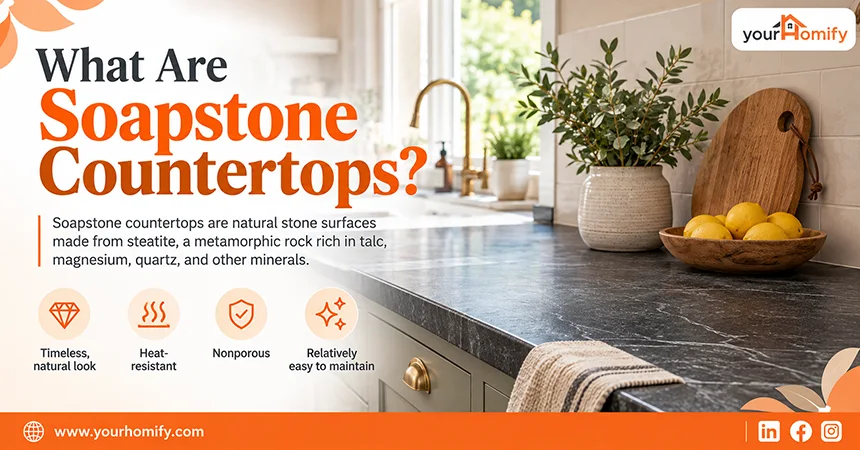
Soapstone countertops are natural stone surfaces made from steatite, a metamorphic rock rich in talc, magnesium, quartz, and other minerals. Run your hand across one, and you’ll notice it right away – soft to the touch, with a smoothness you don’t get from granite or quartz. Most come in shades of gray, charcoal, or greenish-gray, with light veining.
Many homeowners choose soapstone counters because they offer a timeless, natural look while being heat-resistant, nonporous, and relatively easy to maintain. Unlike other options, this trending kitchen countertop develops a natural patina* over time, giving the surface more character and refinement as it ages.
*Patina Meaning: A thin layer of film that forms on the surface of the object over time due to age, use, weathering, or chemical change.
How to Clean Soapstone Countertops?
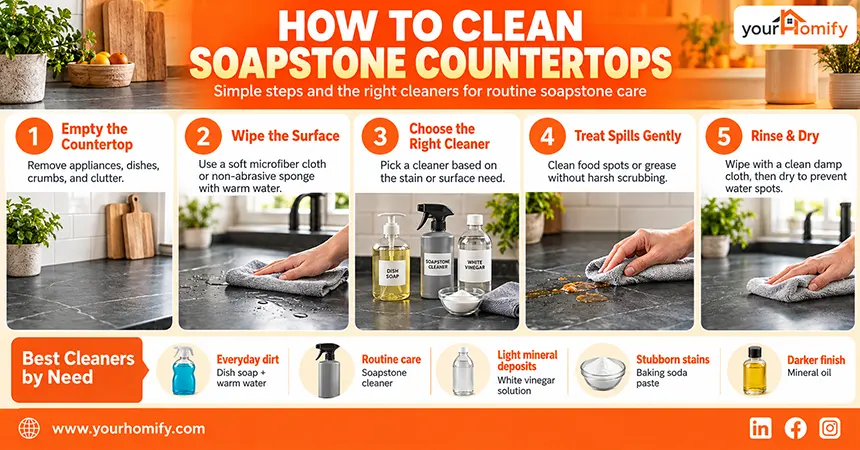
Cleaning soapstone countertops is generally simple because the stone is nonporous and does not require harsh chemicals for routine care. You can use mild dish soap and warm water, soapstone-specific cleaner, white vinegar solution, baking soda paste, or mineral oil treatment.
Here are a few easy steps that you can use to clean soapstone countertops
- Empty the countertop by taking off the appliances, dishes, crumbs, or any other items from the surface.

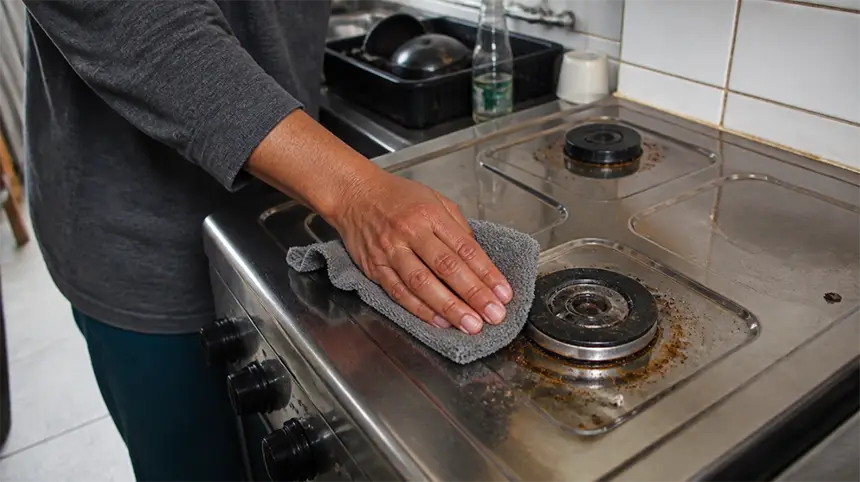
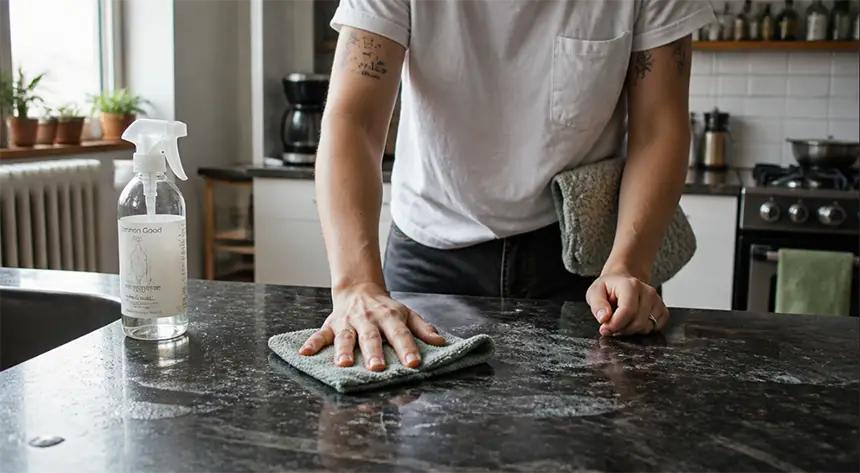
- Clean the surface by dipping a soft microfiber cloth or a non-abrasive sponge into the water and then wiping the countertop.

- Prepare the solution and make the cleaning agent according to the type of stain.

- Pay attention to spills when cleaning spots with food left behind or grease, simply clean them without scrubbing too hard.

- Clean the surface by wiping the soapstone countertop with a clean, damp cloth to get rid of the cleaning solution, and then finish by using a dry microfiber cloth to avoid water spots.


| Types of Stains and Cleaning Agents | |
| Everyday dirt, food spills, and general cleaning. | Mild dish soap + warm water solution works best. |
| For routine maintenance depending on the material of the countertops. | Countertop-specific cleaners used to remove specific stains. |
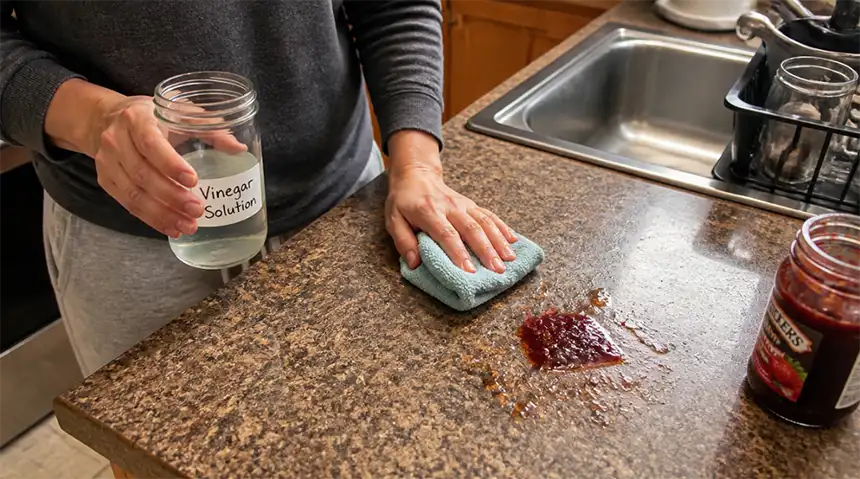
| For light mineral deposits | White vinegar solution |
| For stubborn stains and discoloration | Baking Soda Paste |
| To restore a uniform darker appearance. | Mineral oil works best for this problem. |
Common Soapstone Cleaning Mistakes to Avoid
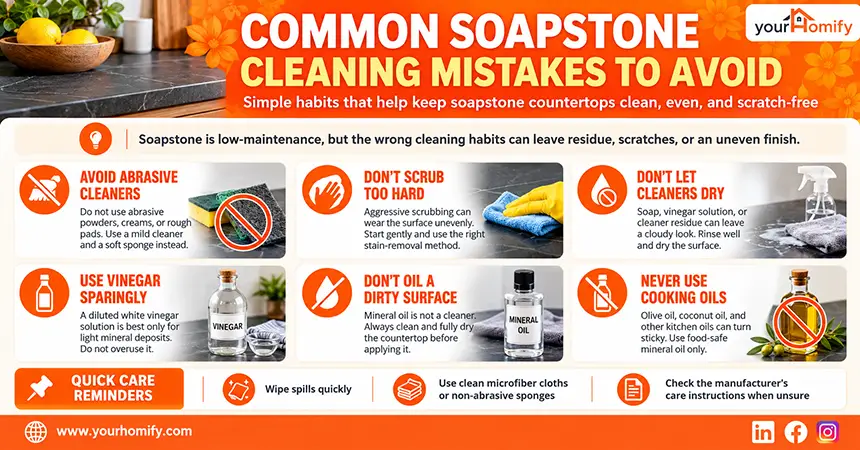
Soapstone is durable and relatively low-maintenance, but the wrong cleaning habits can leave behind residue, scratches, or an uneven appearance.
The following are the common errors to avoid when looking after soapstone countertops:
- When using harsh abrasive cleaners, do not use abrasive powders, creams, or rough cleaning pads. They can dull the surface or create unwanted scratches over time. To my surprise, a mild cleaner and a soft sponge did the magic!
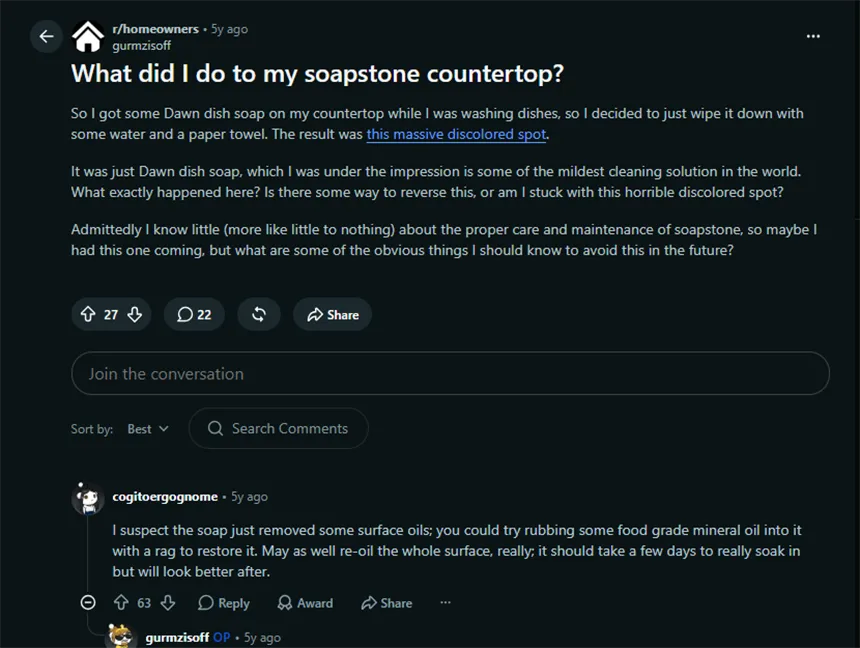
While researching how to clean soapstone countertops, I came across a real homeowner experience that highlights how everyday cleaning products can sometimes affect the appearance of soapstone. The discussion offers a useful reminder to be careful with dish detergents and to understand how mineral oil can help maintain an even finish. 
- If you scrub the stains too vigorously, the surface may be worn unevenly, particularly when attempting to get rid of stubborn stains. Instead, begin by cleaning gently and use an appropriate stain removal method.
- Do not allow soap, cleaner, vinegar solution, or other products to dry on the countertop. Residue can leave the surface looking cloudy. Rinse with clean water, dry after cleaning, and it’s done. Isn’t it amazing?!
- Don’t you think vinegar should come with a word of caution? I still reach for a diluted solution when there’s a mineral deposit to deal with, but I have learned not to overdo it.
Frequent cleaning with anything concentrated is just not needed here, relax! A small amount goes a long way, but if you are unsure, just follow whatever the manufacturer’s care card says. - Mineral oil should never be used as a replacement for cleaning. Applying it over grease, crumbs, or residue can trap the mess and create an uneven finish. Always clean and completely dry the surface before applying the oil.
- And here’s a mistake I made once myself—reaching for whatever oil was sitting in my kitchen cabinet to give the countertop a quick shine! Don’t do that.
Olive oil, coconut oil, any cooking oil, really, they all go sticky on soapstone and leave behind a residue you’ll be scrubbing off later. Food-safe mineral oil is your go-to option, trust me! - Mineral oil changes the color and appearance of soapstone but does not make the countertop stain-proof. Soapstone is naturally nonporous, so regular cleaning remains the most important part of maintenance.
- Although soapstone is nonporous, it is a good idea to wipe up immediately. Quickly removing acidic foods, oils, and strongly colored substances keeps the countertop looking clean and reduces unnecessary scrubbing.
- Dirty sponges or abrasive scrubbers can scratch the surface. Use clean, soft microfiber cloths or non-abrasive sponges for routine cleaning.
Soapstone care can vary depending on the finish, treatment, and installation. When in doubt, check the manufacturer’s recommendations before trying a new cleaner or treatment.
Final Words
Knowing how to clean soapstone countertops is important for their long-term maintenance. Keeping it clean does not require complicated products or intensive care. What I like most about soapstone is that it doesn’t ask you to be precious with it. You might be worried about the wine glass you just kept on the kitchen top if it is made of marble.
Soapstone just sits there, unbothered, getting a little darker with every year you use it. Isn’t this the best part when you’re picking countertops off a showroom sample?
FAQs
What is the best cleaner for soapstone counters?
The best and simplest method for cleaning soapstone countertops is by mixing a mild dish soap with warm water. This is perfect for daily cleaning. Always use a soft sponge or a microfiber cloth to clean the surface.
Is Dawn dish soap good for cleaning countertops?
Yes, a dilute mixture of Dawn dish soap and warm water is safe and effective for most common kitchen countertops. Although it is pH neutral, using it too often can strip off the shine of the surface.
What is the best mineral oil to use on soapstone countertops?
A standard food-grade mineral oil is best for soapstone countertops. You simply need to spread it evenly on the surface, give it some time to settle, and wipe it off using a clean, damp cloth. You can easily find it at a local pharmacy or a grocery store.