According to the U.S. Department of Energy, 43% of your utility bill goes to heating and cooling, making HVAC one of the biggest household expenses. Choosing the right air conditioning system isn’t just about staying comfortable during summer. It’s about reducing energy bills, improving indoor air quality, and avoiding costly repairs for years to come.
Before scheduling an AC installation, one should answer a few questions: Whether replacing their current system is the right decision, how to select the right unit, and why professional installation matters just as much as the equipment itself.
This guide walks you through these key considerations before making that investment.
KEY TAKEAWAYS
- Replace older AC units when repair costs and energy bills start seeming higher than getting a new unit.
- Choose an air conditioner that’s properly sized for your home’s layout, insulation, and local climate.
- Professional installation is essential for maximizing efficiency, comfort, and system lifespan.
- Regular maintenance helps prevent breakdowns, lowers energy consumption, and improves indoor air quality.
Repair or Replace?
When reviewing this complicated assignment on the agenda, many homeowners struggle with whether they need to replace or repair their existing AC unit. Repair always seems to be a cheaper option at the moment. But in the long-term, an aging unit can frequently break down and decline in efficiency. This makes replacement the more cost-effective choice.
There are several aspects to pay attention to when deciding about the repair or replacement of the AC:
- Age. An AC unit usually lasts for 10-15 years. If your AC is older than 15 years, it’s 100% time to replace it. Beyond that, when you replace the old model with the new one, you can save more.
- Rising energy bills. It’s a definite red flag that you need to replace your AC unit. When your routine is the same yet your energy bills are steadily rising, it means your current air conditioning unit isn’t working properly.
- Repair costs. If you have faced the situation that you need to repair your AC too often, cumulatively, all small repairs may reach or be equal to the value of the new model of AC unit. If it’s taking over $5,000 to repair, better get a new AC.
Factors to Consider When Choosing a New AC Unit
Whether you’re replacing your old AC or getting one for the first time, price shouldn’t be the sole deciding factor in buying a particular unit. The additional aspects to pay attention to are:
- The size of your property and the AC you want to install. It’s one of the most essential aspects. When choosing the correct system size for a specific property, it’s crucial to go above and beyond the mere assessment based on “what size the old system was.” In addition to keeping the chosen unit’s parameters in mind, it’s important to assess several other options together. Home square footage and ceiling height are the first key parameters to be reviewed when choosing an AC model. Walls, attic, and floor insulation have to be considered as well since they considerably affect how the home loses and gains heat. Window area, glass type, and orientation are other essential parameters when choosing the right AC unit.
- Climate and air quality. The key parameter in this case is the highest temperature the AC needs to handle. Property owners living in humid environments will require units with dehumidifying capabilities. Users living in especially hot climates will need a large AC unit to properly meet local needs.
- Reliability and efficiency. There are several types of AC models; some may be more reliable than others. In this case, only a professional can advise you on which is better. A more reliable option can save you money on future replacements while also being more efficient, reducing energy bills as well.
- Ductwork and maintenance. It’s a tricky moment, since even the most effective AC unit will fail to work when the duct system is poorly designed. Thus, before choosing and installing the new ductwork system, it’s essential to identify any leaks, restrictions, and improperly sized trunk lines, disconnected sections, etc. The AC model you choose should also be easy to integrate with and maintain alongside the rest of your home equipment, including those that rely on smart technologies.
- Budget and needs. When it comes to determining your needs, assess them accurately. You may save on cooling costs by leaving some rooms you don’t use uncooled. It’s also essential to calculate the expenses you’re likely to incur when installing the new AC system. Beyond the unit price itself, it’s essential to calculate the installation costs upfront. In addition, bearing the extra costs necessary for preparing the site may be required.
Why Does Installation Quality Matter No Less Than the Quality of Equipment?
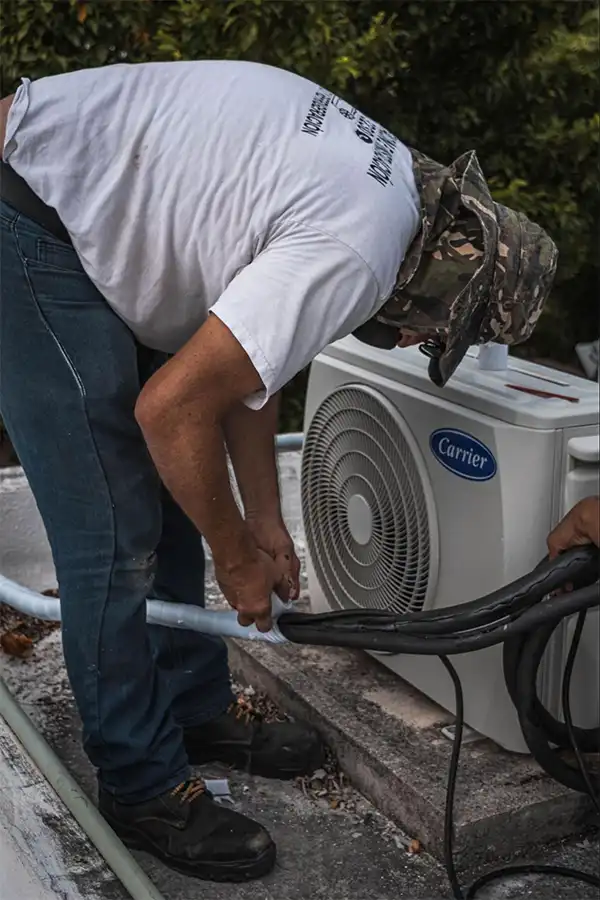
Proper installation is just as important as choosing the right air conditioner for long-term system performance. An improperly installed AC unit may reduce its effectiveness by 30% and, in turn, increase energy bills and maintenance costs. These extra electricity costs are absolutely avoidable. Thus, there are several important considerations: selecting the most appropriate AC equipment and arranging proper air conditioning installation per the chosen unit. However, on top of that, there’s also one more consideration, ensuring the longevity of AC maintenance.
INTERESTING INSIGHT
According to Haier, wrong tonnage wastes energy. An oversized AC switches on and off frequently, while an undersized AC has to run continuously to cool properly.
Why Is Air Conditioning Maintenance Also Important?
Even the best-installed air conditioning system requires routine maintenance to deliver reliable performance throughout its lifespan. It always depends on maintenance whether this unit will serve you 5 or 10-15 years, how often you will need to repair it, and how much it will cost. When the air conditioning system is properly and regularly maintained, it works seamlessly and lowers your energy bills. To this end, it’s essential to note the need to replace the filter on time. Regular inspections of your air conditioning system are a must, and they should be made at least once a season, yet always before the hot season starts. By properly maintaining your home, you can make it more comfortable, especially for people prone to allergies or suffering from respiratory conditions like asthma.
Bottom Line
Installing a new air conditioner is a long-term investment that affects your home’s comfort, energy efficiency, and monthly utility costs. It also affects air quality, which is sometimes crucial for people with allergies and respiratory conditions. If your current AC unit has been running for more than 15 years, you probably pay astronomical energy bills. Whether the need for a new AC is urgent or you require an effective, more efficient model, request a quote for professional services and enjoy splendid results for many years to come.
FAQs
How to know when to repair or replace the AC?
If your AC is over 10 to 15 years old, requires frequent repairs, or your energy bills continue to rise despite regular maintenance, replacing the system is often the more cost-effective option.
What size air conditioner does my home need?
The ideal size depends on several factors, including your home’s square footage, insulation, ceiling height, window placement, and local climate.
Does professional AC installation really make a difference?
Yes. Professional installation ensures the system is correctly sized, calibrated, and connected.