The backyard used to be the place for a grill and a few patio chairs. Now, it’s increasingly becoming another room of the house.
According to Houzz’s 2026 U.S. Outdoor Trends Study, 83% of homeowners renovating outdoor spaces are creating lounge or seating areas, signaling how much more seriously people are treating outdoor living.
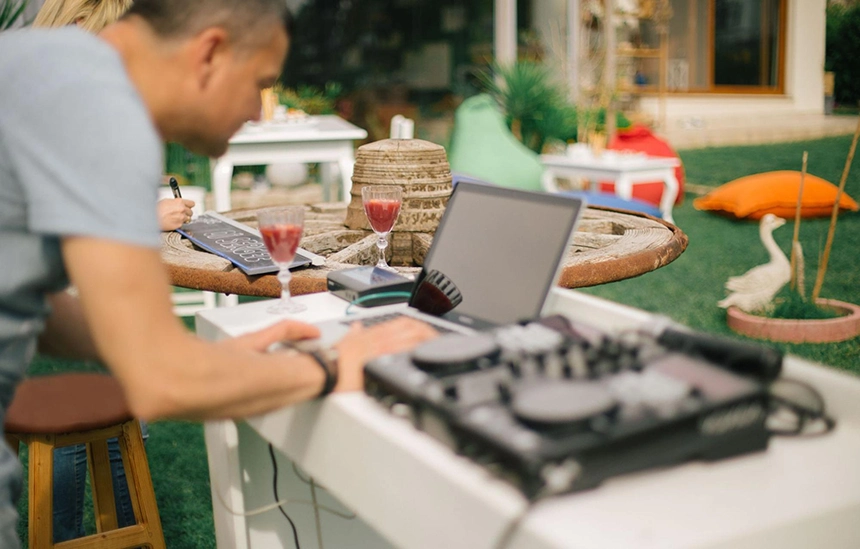
Entertainment follows next. Music that can fill an open patio without overwhelming conversation, and a screen that can deliver a clear picture through an evening. But taking indoor entertainment outdoors is not as simple as mounting a TV and adding speakers. Heat, dust, sunlight, monsoon weather, acoustics, networking, and equipment placement all require a different approach. A well-designed outdoor AV system turns a patio or pool deck into a space that can genuinely be used for movie nights, game days, dinners, and everyday relaxation.
What Makes Outdoor Audio Video Different From an Indoor System?
A home audio system improves your everyday entertainment. And fun gets double if it’s outdoors. But outdoor equipment has to survive conditions indoor components never face, so weatherproofing, mounting method, and cable routing all change even when the layout looks similar on paper. Indoor speakers are built around a sealed room with predictable temperature and humidity. Outdoor speakers, subwoofers, and displays are uncovered to direct sun, dust, monsoon humidity, and temperature swings that can run from well below freezing on a winter night to over 110 degrees Fahrenheit on a summer afternoon. That range alone rules out most standard indoor components.
If outdoor gear is not rated for the environment, it is a matter of when it fails, not if.
Beyond weatherproofing, outdoor systems also have to account for open-air acoustics. Sound that would bounce off walls and fill a living room simply dissipates outside, so speaker arrangement, zoning, and power all need to be planned differently from the start rather than adapted after the fact. In practice, this shows up in how a component gets mounted. A covered patio with a solid ceiling might still support in-ceiling speakers, since the roofline provides real protection from sun and rain. The same porch open on two sides usually needs eave-mounted speakers or rock enclosures instead, because wind-driven rain and reflected sun can reach a fixture that would otherwise be considered sheltered. Ignoring this is one of the more common reasons an outdoor speaker fails within its first year rather than lasting alongside the rest of the system.
Zoning follows the same logic. A pool area, a dining patio, and open yard space each call for distinct volume levels and different speaker spacing, since people relaxing near the water want a different listening experience than a group eating dinner twenty feet away. Splitting those areas into separate zones, rather than running one loop of speakers off a single volume control, is what keeps a pool bash from drowning out a conversation on the patio.
| Factor | Indoor System | Outdoor System |
| Weatherproof rating | Not needed | IP-rated enclosures, UV-resistant finishes |
| Speaker mounting | Wall or in ceiling | In-ground, rock enclosures, eave-mounted |
| Acoustic setting | Reflective, contained | Open air, sound dissipates quickly |
| Wiring | Standard interior cable | Direct burial or conduit-rated cable |
| Zoning needs | Room by room | Patio, pool, dining, and yard zones separately |
How Long Does an Outdoor Entertainment Installation Take?
Most undertakings move from an initial site walk to a finished, tested system in a matter of weeks rather than months, though the exact timeline depends on how much wiring, mounting, and automation work is involved. A simple patio audio zone with a couple of weatherproof speakers might be done in a single visit. A full backyard build-out, with a weatherproof television, multi-zone audio, and lighting control tied into an app, usually needs a site assessment first, followed by a written scope of work that spells out gear, cable runs, and mounting locations before anyone touches a drill.
That written scope matters more outside than inside. Once cable is buried or run through plaster and pavers, changes get expensive fast, so catching decisions on paper first, rather than mid-install, saves both time and rework. For homeowners planning a backyard upgrade, working with a local outdoor entertainment specialist such as Amp-AV means that scope of work, along with the equipment list and mounting plan, is documented before installation starts rather than figured out on the fly.
Sequencing also matters. A typical process runs through four stages: a walkthrough to map speaker zones and sightlines, a wiring and mounting phase, equipment installation and calibration, and a conclusive walkthrough where volume levels and app controls get tested with the homeowner present. Skipping the calibration step is one of the more common reasons outdoor systems sound uneven from one zone to the next, since a speaker near the pool requires different tuning than one facing an open yard, where sound reflects off water in one spot and simply disperses in the other.
Can Outdoor Audio Systems Tie Into Existing Smart Home Controls?
Yes, in most cases, a properly installed outdoor system can join the same app or control panel already running indoor audio, lighting, and shades, rather than operating as a separate island. That matters for households that already have multi-room audio inside and just want the patio and pool area added as another zone instead of a second remote to keep track of. Centralized lighting and automated shades are often part of the same conversation, since a backyard movie night usually involves dimming a string of lights and cueing melody at the same time as turning on a screen.
Networking is the piece that gets overlooked most often. Outdoor video and streaming components need a stable connection, and running a wireless signal from an interior router across brick, plaster, and pool equipment rarely holds up. A wired run or a dedicated outdoor access point tends to be the more reliable fix, and it is worth asking any installer how they plan to handle connectivity before equipment goes in. Skipping that step will get you a streaming picture that buffers halfway through a movie night, right as the yard is full of guests and the grill is going.
Security cameras frequently ride along on the same project, since the same conduit runs and network planning employed for outdoor audio and video can carry camera wiring as well. Homeowners who are already opening up a wall or trenching a yard for speaker cable often find it makes sense to handle cameras and outdoor lighting control in the same pass instead of repeating the work later, since a second trench or a second stucco patch adds cost and disruption that a single coordinated dig avoids entirely.
Maintenance is worth planning for too, not just the install itself. A seasonal check each spring, before triple-digit heat sets in, gives an installer a chance to test seals, connections, and mounting hardware, since a full Arizona summer of sun, dust, and monsoon storms can loosen or corrode components that looked fine the year before. Thermal expansion and squeeze from repeated heat cycles are a common culprit behind a loosened eave bracket or a speaker that has drifted out of alignment, and it rarely announces itself until the sound is already uneven. That single visit, usually an hour or two, can catch small issues like a loose bracket or a failing seal before they turn into a dead speaker or a shorted connection.
None of this needs to happen all at once. A patio audio zone can go in first, with video and automation scheduled later once the wiring backbone is in place. What matters most is starting with a plan that accounts for Arizona’s climate, realistic sound coverage across an open yard, and how the new zone will fit into whatever control system already runs the remaining house. A backyard that was built for a barbecue once in a while can become the place where movie nights, game days, and everyday evenings actually happen.
FAQs
What equipment is needed for an outdoor entertainment system?
A typical outdoor entertainment system may include weather-resistant speakers, an outdoor-rated television or display, an amplifier, streaming equipment, networking hardware, and a control system.
Can regular indoor speakers or TVs be used outdoors?
No. Outdoor equipment needs to be designed for exposure to factors such as UV radiation, moisture, dust, and temperature changes.
How do you get good sound coverage in an open backyard?
A properly designed system uses speaker placement, spacing, power levels, and separate audio zones to provide more even coverage, as there are fewer walls and surfaces to contain sound.