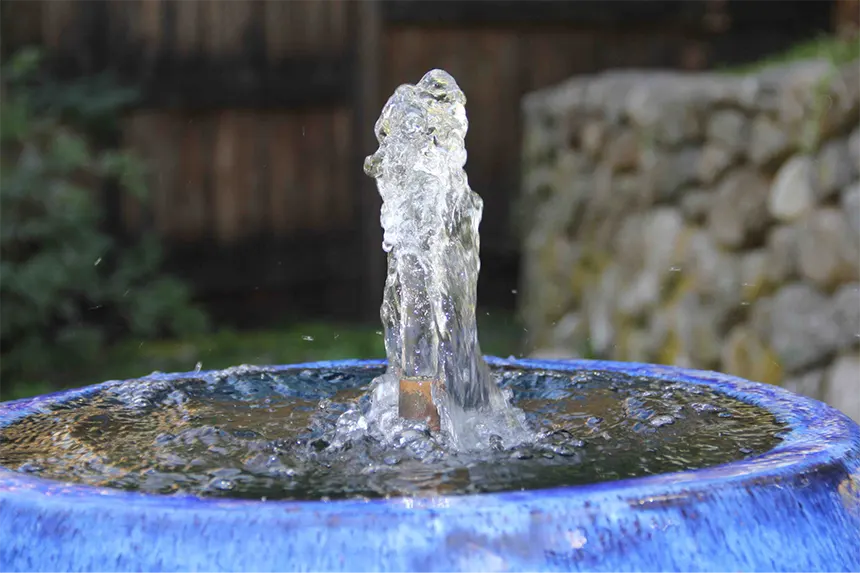
Installing a disappearing fountain involves placing a hidden reservoir underground with a submersible pump, topped with a metal grate sheet and a layer of mesh and decorative stones as a base of the water feature. The centerpiece of the fountain is then connected to the underground pump through tubing and connected to a nearby outlet for a continuous flow of water. This creates an illusion of water flowing down to the ground and emerging back naturally.
As per my experience in building a disappearing fountain, a stable base and regular cleaning are the best tips for long-lasting efficiency.
If you too are looking forward to building a pondless fountain, come along as I take you through a detailed guide about how to install a disappearing fountain, essential tools required, common mistakes, and maintenance tips.
Quick Answer
To install a disappearing fountain, start by digging a hole 1 inch deeper than the height of the reservoir and place the basin gently in it, ensuring it is properly levelled. Go on by placing a submersible pump in the reservoir and covering the top with a grate and mesh for a stable base. Now, place the centerpiece on top, and connect it to the pump using tubing, and turn on the connectivity after covering the base with decorative stones.
What is a Disappearing Fountain?
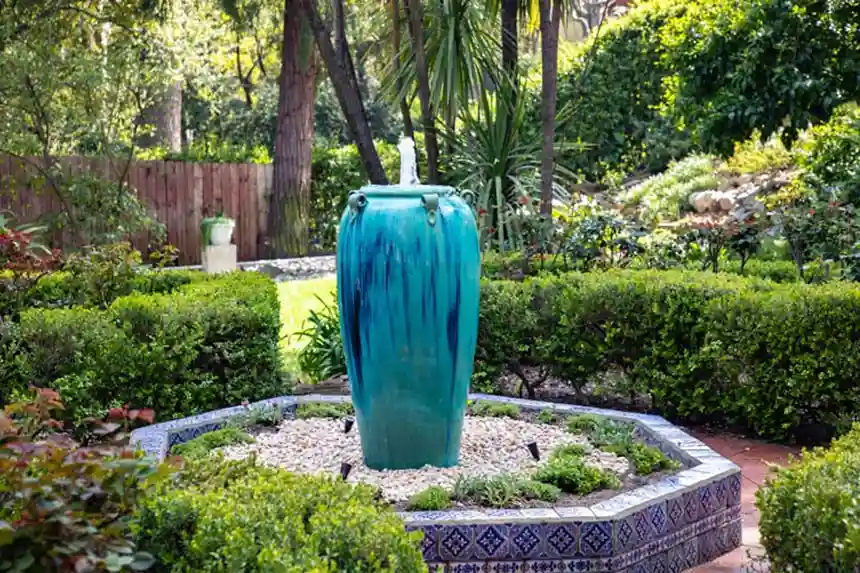
A disappearing fountain is a water feature that involves a hidden reservoir pumping water up to a centerpiece and down to decorative stones, creating an illusion of water emerging from the ground and merging back into it naturally. The disappearing fountain is not only space-efficient but also extremely environmentally friendly, as it acts like a water source for wildlife and is safe for both pets and children.
As compared to the open reservoir, disappearing fountain water never comes in contact with sunlight, reducing the chance of algae growth. Alongside, the debris accumulation is comparatively less due to the rocks, which can be managed easily.
Moving further in the article, I have discussed some essential materials required to install a disappearing fountain, followed by a step-by-step guide.
Materials and Tools Required to Install a Disappearing Fountain
The materials required for installing a disappearing fountain are a reservoir, a decorative fountain piece, a water pump, a grate, cinder blocks, and decorative branches.
Take a look at all the materials required for a disappearing fountain in detail with key specifications for easier installation:
1. Fountain Piece
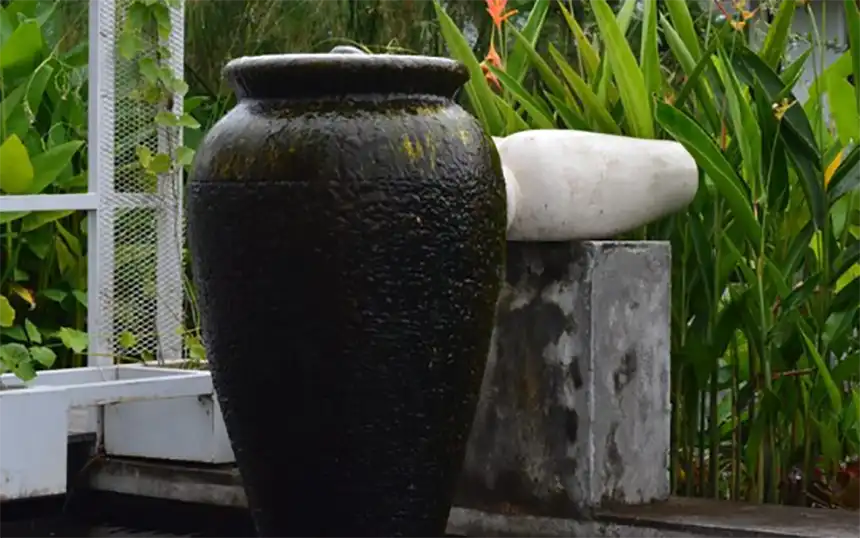
There are numerous options for a fountain piece, like a ceramic urn or a large boulder. The size can vary as per the size of the reservoir or vice versa. This decorative feature acts as a focal point of decor and creates the illusion of water flowing from inside the piece naturally.
2. Reservoir
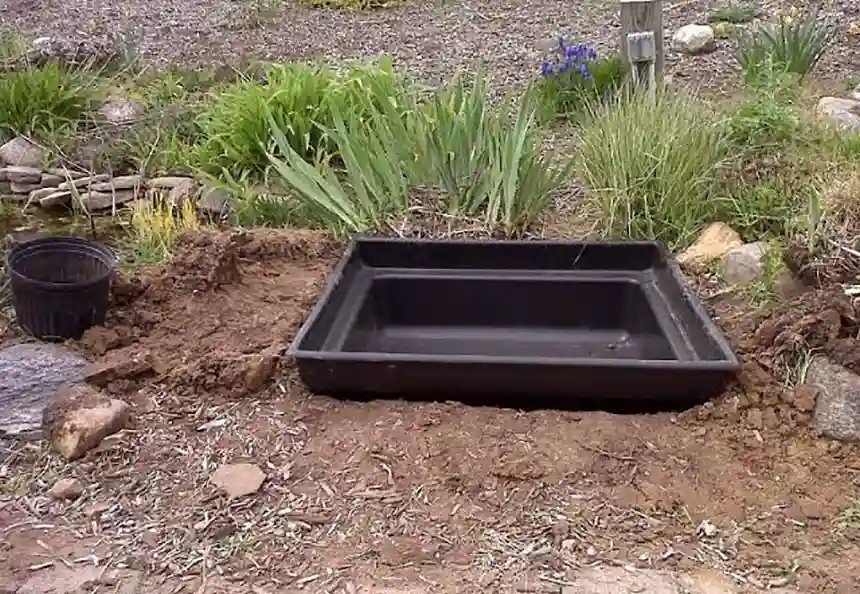
A water basin is used as a reservoir for holding the water underground, which eventually gets pumped upwards with the help of a water pump. An ideal reservoir for a disappearing fountain is a heavy-duty polyethylene-based reservoir that is equipped to hold the weight of metal grates and a fountain piece.
As the water does not come in contact with sunlight, it limits the growth of algae but does not stop it completely. An ideal reservoir is designed to hold around 15-120 gallons and hence can be selected as per the size of the fountain feature.
3. Grates
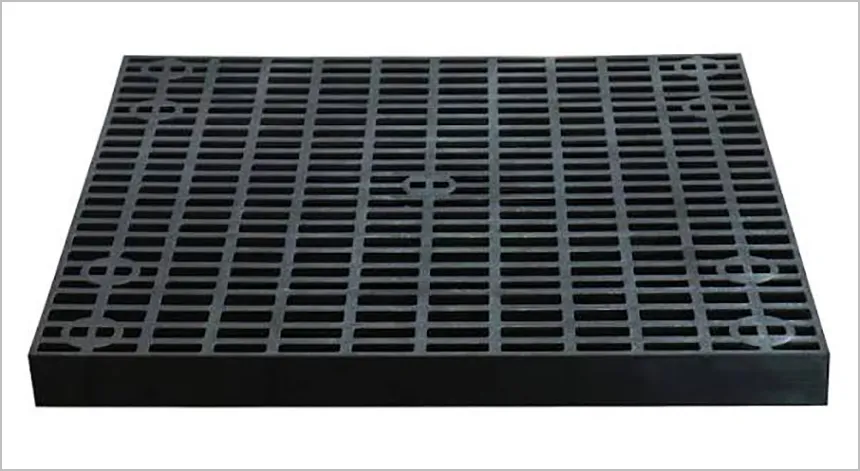
Grates are a grid of metal bars that are used as a structural support on basins and allow the water to flow right back into the basin. I use the heavy-duty PVC grates, which are waterproof and sturdy, to hold the weight of the piece above it, along with resisting rot due to consistent moisture. Grates are generally covered with a mesh netting, which further prevents any debris from accumulating in the basin and damaging the water pump.
4. Water Pump
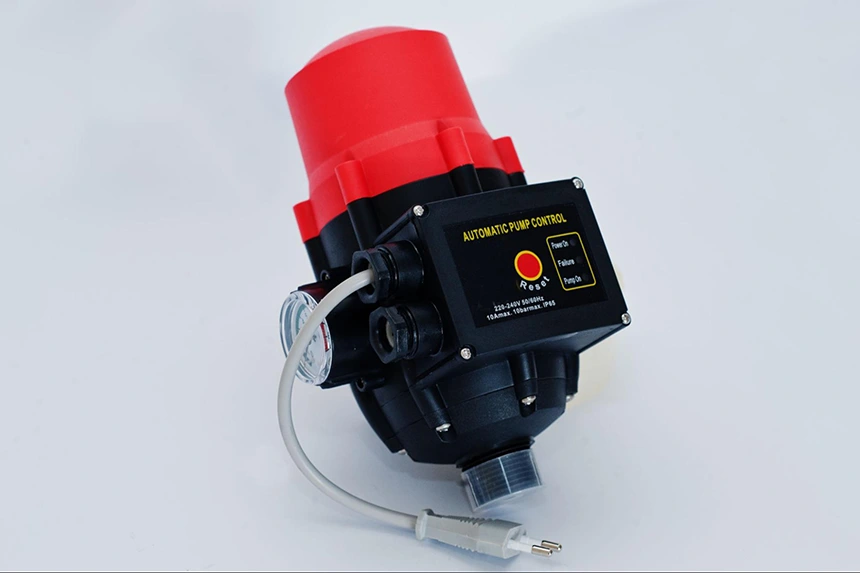
An ideal pump option for a small to medium disappearing fountain is a 350 GPH submersible water flow control water pump. A water pump is necessary for an even and continuous flow of water, as it is responsible for the movement of water upwards, which can be controlled as needed. The one with a flow control helps you control the speed and bubbling height of water.
5. Cinder Blocks
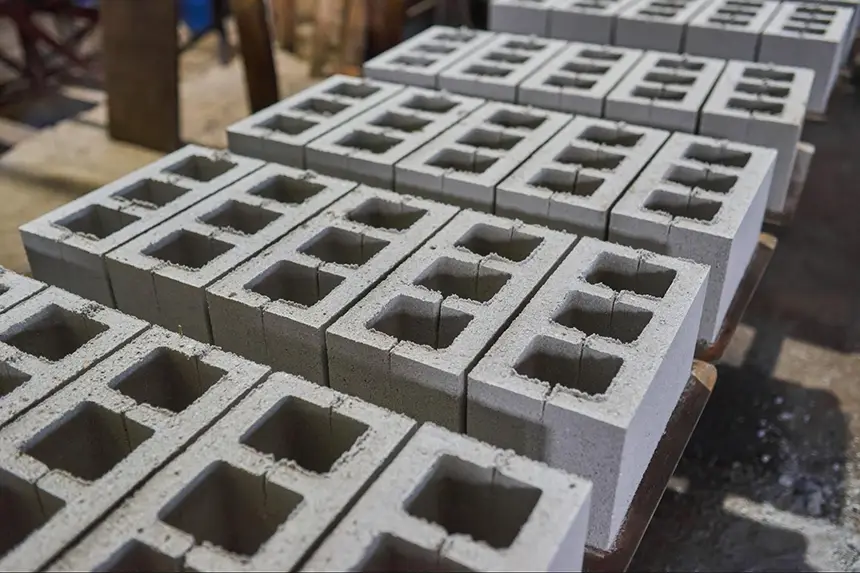
Cinder blocks are lightweight rectangular blocks with a hollow space between them. They are used as a structural support for the fountain jar or boulder, along with ensuring continuous flow of water through them. These blocks are much more reliable than the metal blocks due to their low cost and durability.
6. Decorative Stones
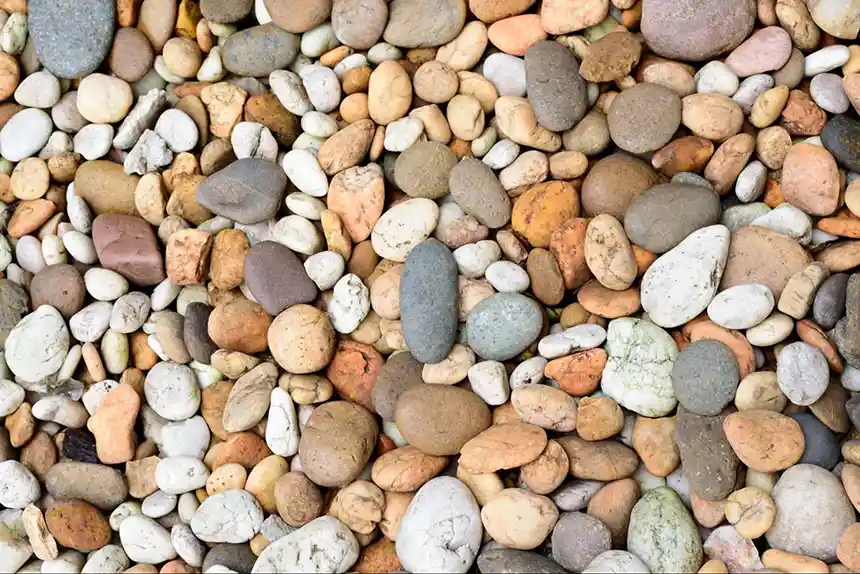
Small pebbles and rocks are used as a final cover on the mesh for the disappearing fountain. It holds the structure in place, blocks the sunlight, covers the basin, and creates an illusion of water flowing into the rock and re-emerging naturally.
How to Install a Disappearing Fountain? From Site Prep to Final Touches
To install a disappearing fountain, start by digging a hole in the selected area and placing the heavy-duty reservoir in the hole along with a submersible pump. Fill up the corners with soil and place a grate on top to filter out the debris and allow the water to flow back to the basin. Connect the water pump to the fountain piece with the help of tubing after you place it on top of the grate.
Take a look at a step-by-step guide on how to build a disappearing fountain:
Step 1. Dig a Hole
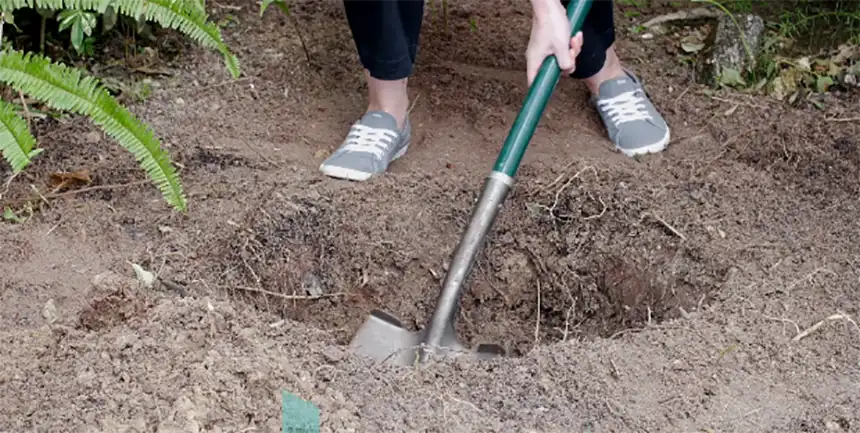
Dig a hole in the selected site as deep as the reservoir. A simple trick to analyze the right size is to put the basin upside down and mark it accordingly. The depth of the hole should be 1 inch deeper than the height of the basin for accurate leveling. I would suggest using gardening tools like a spade shovel for digging a hole and a flathead shovel for little leveling.
Step 2. Place the Reservoir
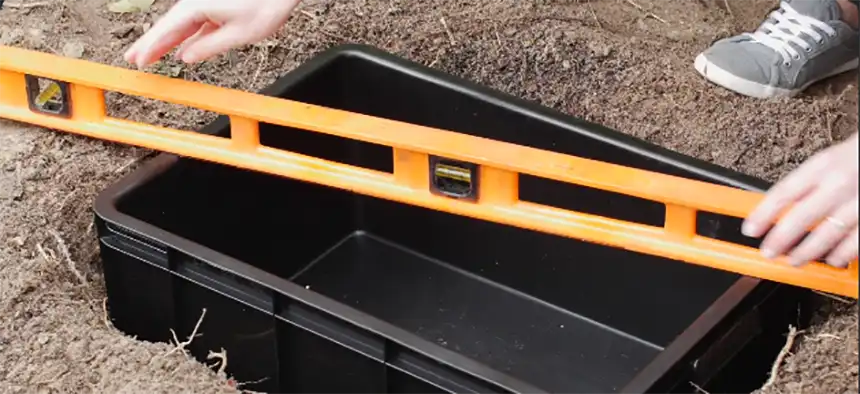
Take a reservoir of your choice. I use something between 2’x2’ and 3’x3’ as the most manageable option. Place the reservoir in the hole and make sure it is properly levelled from all sides. If not, adjust the hole so that it can hold the weight of the fountain properly. I use a carpenter’s spirit level to check if the reservoir sits well with the excavated hole.
Step 3. Grating and Netting
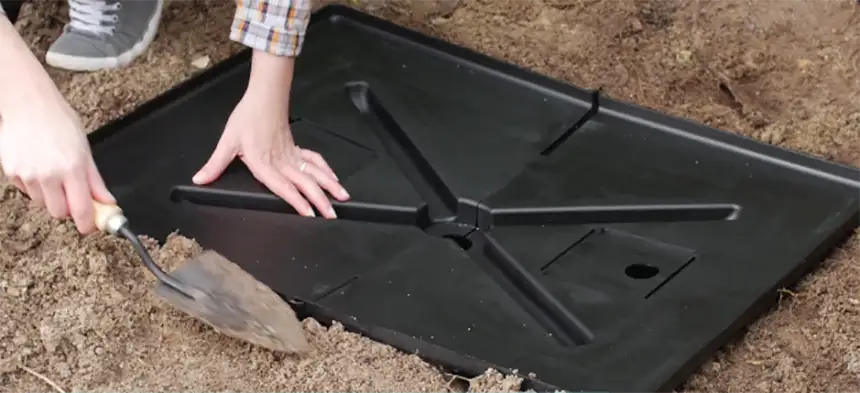
Now, place a grate sized exactly the same as the reservoir’s outer dimension. This extends up to 2’x2’ for smaller basins to 4’x4’ for large boulders and fountain features. Cover the grate with a layer of thin mesh netting, which helps filter out debris and ensures accurate placement of the decorative stones afterwards.
Make a hole in the netting for the tube to pass through to secure a connection with the water pump. Ideally, cut out a part in a corner of the grate to get access to the water pump.
YourHomify Tip
I would advise you to add some cinder blocks in the reservoir for added stability.
Step 4. Place the Fountain Feature
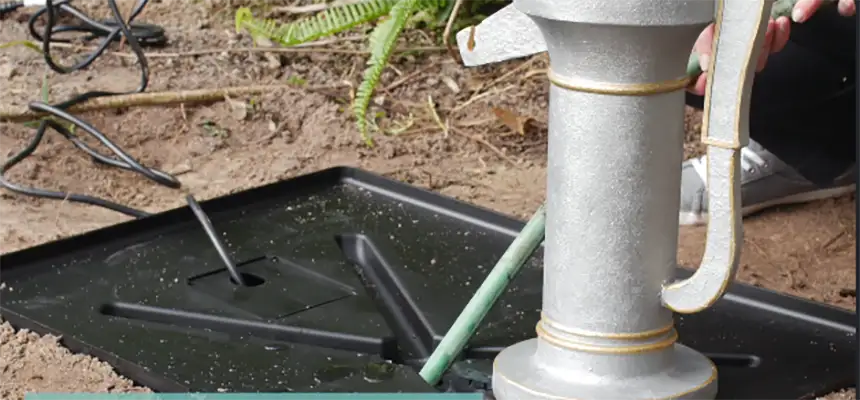
Take the fountain feature of your choice, preferably a ceramic urn, which has a hole at the bottom for the tubing. Gently place the urn in the middle by letting the tube pass through the hole in the middle. Fill the entire basin with water before moving on to the next step.
YourHomify Tip
Use a silicone sealant to secure the tubing in the fountain feature to ensure it remains water-tight and does not leak. Apply the sealant a day before and leave it overnight before use.
Step 5. Connect the Tubing to the Water Pump
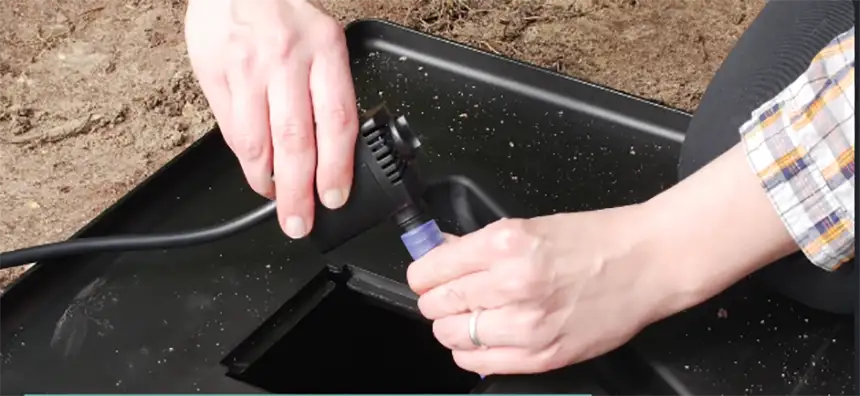
After the urn is properly placed, using the corner hole in the grate, connect the tubing to the water pump. I prefer using a 350 GPH submersible water pump with flow control, while it completely depends on the size of the entire structure. Plug it into the nearest outlet. Make sure you use a GFCI-safe outlet to prevent any electrical hazard.
YourHomify Tip
A GFCI (Ground Fault Circuit Interrupter) cuts off the electricity as soon as water comes in contact with it to avoid any shock risks, which are high with submersible pumps used in disappearing fountains.
Step 6. Decorate With Rocks and Pebbles
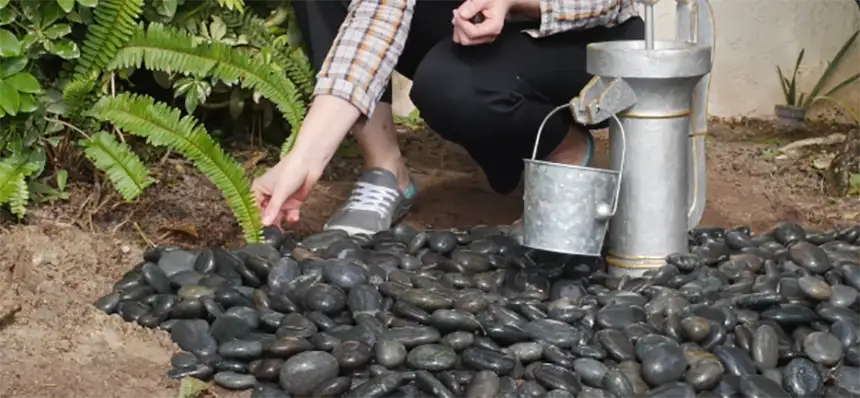
Place decorative pebbles and rocks of different sizes and shapes around the water feature to give an illusion of water flowing down to the ground and reemerging from it naturally.
YourHomify Tip
While installing a disappearing fountain does not require any prior legal permission, if your electrical outlet requires a new hardwire electrical circuit connected to your home’s electrical panel instead of a GFCI outlet, you may require an electrical permit. Hence, check with your regional rules before starting the installation.
Common Fountain Garden Mistakes With Their Solutions
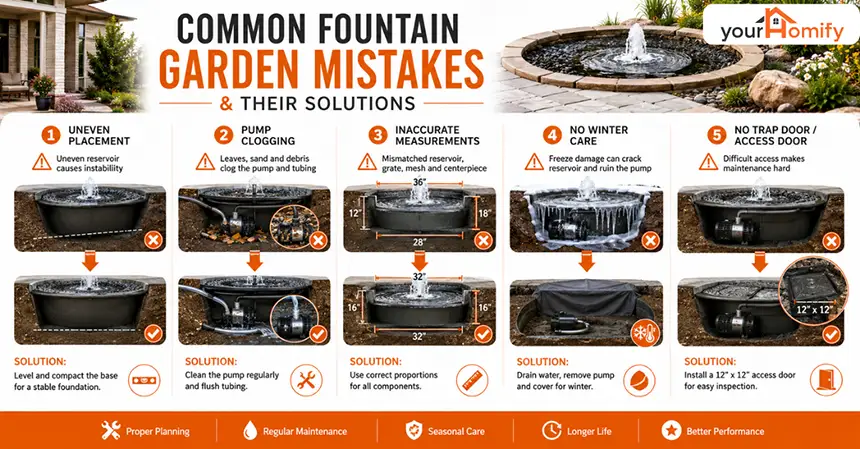
Some common fountain garden mistakes include uneven placement of the reservoir that can lead to instability, overlooking clogging issues in water pumps and neglecting their care, using tools with inaccurate measurements, no winter care, and having no access door to check on the water pump. All of this can lead to maintenance issues, which in turn will reduce the efficiency of the disappearing fountain.
Here are the common fountain garden mistakes along with steps to avoid them:
Mistake 1: Uneven Placement
Placing the reservoir directly in an excavated hole will create instability and can, in turn, make it shift its position.
Solution:
Use a spade shovel to dig holes and a flathead shovel to even the base out. This will help remove all the pebbles and sand that can create inconsistency at the base.
Mistake 2: Overlooking the Clogging Issues
Clogging issues can also arise in disappearing fountains. A small amount of debris, sand, and leaves can still accumulate at the base and clog the water pump and the tube.
Solution:
Turn off the power supply and separate the water pump and the tubing. Remove the cover plate of the pump and clean the impeller using a wire coat hanger. You can also dip the water pump into a 1:1 mixture of white vinegar and warm water.
For the tube, place a garden hose at one end after disconnecting it from the pump. Now run high-pressure water and flush out all the debris.
Mistake 3: Inaccurate Measurement of Materials
Using inaccurate measurements for the reservoir, grate sheet, mesh, and centrepiece can create instability. Every measurement in a disappearing fountain needs to be proportional for it to work together as an installation. The base of the fountain should be stable enough to hold the weight of the centrepiece; therefore, a disproportionate size can lead to imbalance.
Solution: The depth of the excavated hole should be 1 inch deeper than the height of the basin. The grates and mesh size should match the outer dimensions of the reservoir to fit perfectly. Lastly, the capacity of the water feature and the reservoir should match for both structural stability and water flow control. For instance, a water basin equipped to hold only 30 gallons of water cannot work in accordance with an urn/boulder, which can hold more than 50 gallons.
Mistake 4: No Winter Care
The disappearing fountain cannot tolerate temperatures below 32°F, and freezing cold winters lead to frozen water, which can cause cracks in the reservoir, damaging the water pump and tubing.
Solution: Unplug the water pump and drain out all the water from the pump. After disassembling, place the water pump indoors in a bucket full of water. Cover the basin with a weather-resistant sheet to prevent snow accumulation.
Mistake 5: Not Installing a Trap Door
While installing, many people skip the step of installing an access gate/trap door at the corner of the base of the fountain, which leads to no regular checkup and inspection of the reservoir. This trapdoor acts as a detachable panel that provides access to the underground reservoir and water pump without removing the entire base.
Solution: To install an access gate for the water pump, make a 12”x12” cut at one corner of the base. Close it properly and use it to check on the water pump and stored water regularly.
How To Maintain A Disappearing Fountain?
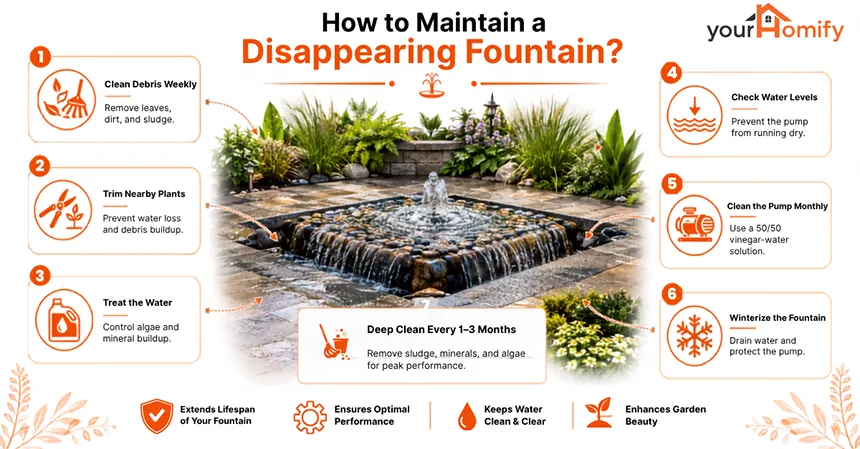
Maintaining a reservoir can be divided into weekly and monthly care. This involves clearing out the debris, maintaining the water pump, trimming the adjacent plants, taking care of the GFCI safety, and winterizing.
Take a look at the maintenance tips for the disappearing fountain divided into weekly and monthly schedules for less overwhelming care:
Weekly Maintenance
- Clean out the debris: Debris like leaves, dust, and dirt might accumulate in and around the reservoir or on the surface. To clean the reservoir, turn off the water pump and remove all the surface dirt manually. You can use a vacuum to clean out the sludge accumulated in the reservoir.
- Trimming Out Adjacent Plants: Remove the plants surrounding the plants, as they can absorb the water and dry out the hidden reservoir. Wilted plants can also lead to debris accumulation on the base of the fountain, which can lead to clogging issues.
- Treating Water: Disappearing fountain benefits from weekly water treatment using a liquid algaecide. This helps in preventing algae growth while simultaneously making sure there is no mineral buildup in the water pump and the base of the reservoir. Treated fountain water is also safe for pets and birds to drink.
YourHomify Tip
The treated water is only safe for birds and pets and not for fishes or aquatic species; hence, keep them away from the fountain water.
- Maintaining Water Level: The water pump should not run dry; therefore, check that the water levels are maintained consistently throughout the life of the fountain.
Monthly Maintenance
- Keep the pump clean: The water pump of a disappearing water fountain should ideally be cleaned every month. To clean the water pump, unplug it, remove the water pump from the reservoir, and remove the tubing. Dip the pump in a 50/50 mixture of white vinegar and water.
- Winter Care: Winterizing disappearing fountains is essential to prevent the hidden reservoir from cracking as the temperature drops below 32°F. Start by unplugging the water pump, draining the water, and placing the pump in a bucket of water to avoid any cracking in freezing cold weather.
- Deep Cleaning: A disappearing fountain should be deep cleaned every 1-3 months to prevent excessive mineral buildup and algae growth. Deep cleaning involves disassembling all the parts and cleaning the underground sludge and dirt after draining all the water and refilling with fresh water.
YourHomify Tip
Replacing the disappearing water fountain every 1-3 months is considered ideal for outdoor fountain care. Just because the reservoir is placed underground does not mean it is not prone to algae growth.
Concluding Remarks
A disappearing fountain installation is a simple way to add a water feature to your yard. The installation itself is simple and can be customized as per personal preference. Start by ensuring that all the required materials are sized properly for proper stability. My personal advice for beginners would be to start small to get their hands on the functioning and expand as they get used to it. Lastly, regularly inspect the fountain for any dirt and follow a regular cleaning schedule.
FAQs
What is a disappearing fountain?
A disappearing fountain is a water feature that features a hidden reservoir that pumps water up to a fountain piece down to decorative stones at the base. It creates an illusion of water emerging from the ground and merging back into it naturally.
How much does a fountain cost to install?
A professionally set up disappearing fountain costs somewhere around $1,100 to $7,500, and DIY installation costs can range from $30 to $2,500. Professional services cost much more, as they use high-quality materials and skilled labor for the same.
What are the downsides of having water fountains?
The disadvantages of having disappearing fountains are the risk of contamination due to stagnant water, cleaning costs, and regular maintenance. This involves weekly checkups, cleaning water pumps, and checking for water pump burnout.
Can I make a disappearing fountain at home?
Yes, you can make a disappearing fountain at home using a hidden reservoir, a submersible pump, and a decorative centerpiece. Dig a hole and place the water basin, properly covered with a grate and mesh, in the hole. Place the water pump in the water basin and connect it to the centerpiece using tubing, and turn on the connection.
How to make a base for a water fountain?
To create a base for disappearing fountains, start by digging a hole as deep as the height of the water basin. Place the reservoir in the hole and check if it is properly levelled on all sides. Now, lay a metal grate and mesh on top to secure the top.