


According to Virginia’s state geological survey, expansive and compressive soils cause more damage to structures nationally than earthquakes, tornadoes, and hurricanes combined, with the American Society of Civil Engineers estimating that roughly a quarter of homes in the U.S. have experienced some damage from this kind of soil movement.
Considering this, helical pier has become a reliable and practical solution for proper soil movement. Rather than hiding the root causes, it helps to resolve those issues.
To better understand this, explore 5 reasons that make helical piers a reliable and long-term investment.
1. They Transfer Weight to Soil That Won’t Shift
Unlike surface repairs that work with the same sloppy soil causing the problem in the first place, helical piers are screwed down until they reach deeper, bearing soil that isn’t affected by the seasonal moisture changes, breaking down the layers above it. This points out that the home’s weight rests on ground that was never the source of the shift to begin with.
Because that deeper soil doesn’t shift the way surface soil does, the support helical piers provide doesn’t wear away over time the same way a small fix would.
2. The Steel Components Are Built for Decades of Use
Helical piers are made from galvanized steel engineered precisely to resist corrosion over long periods below the surface. This isn’t a cosmetic material choice, it directly reflects how long the support system continues functioning as expected, well after installation is finished and forgotten.
A material that degrades over ten or fifteen years would probably recreate the exact problem the piers were intended to solve. Durable, corrosion-resistant steel is what powers the system to keep working decades after the original installation has finished.
3. They Address the Cause, Not Just the Symptom
Cracks, sloping floors, and sticking doors are all signs of a foundation that’s still moving. Cosmetic repairs, like masking a crack or replacing a section of drywall, focus only on what’s visible without doing anything about the hidden soil movement causing it.
Helical piers stop that movement right away by removing the home’s dependence on the unstable soil entirely. Once the actual cause is solved, cosmetic repairs made afterwards are likely to hold, since the foundation is no longer destined to shift beneath them.
4. Installation Doesn’t Depend on Weather or Soil Conditions
Some foundation repair services are highly sensitive to soil moisture or seasonal timing, which can affect when work can actually be done or how reliable the results are. Helical piers, by contrast, can typically be installed in a wide range of soil and weather conditions, since the piers are mechanically powered to a specific depth rather than counting on the surrounding soil to set or cure.
This consistency matters for long-term safety, since a repair that depends heavily on ideal conditions at the time of installation produces variability that a mechanically driven system avoids entirely.
5. They Can Also Lift a Settled Structure Back Toward Level
Beyond simply stopping unwanted movement, helical piers can often push portions of a home back toward its initial position during installation. This isn’t probable in every case, but when it’s possible, it means the investment involves both the underlying cause and some of the visible damage already done, rather than only saving things from getting worse.
This dual benefit, stabilization plus slight lift, is part of why the repair continues to feel more complete than options that only stop the problem from advancing further.
Also, learn what every homeowner should know about home exterior care.
Choosing the Right Foundation Repair Company
Not every company installing helical piers brings the same level of experience or commitment to the job, and that difference matters deeply once the work is finished and the warranty is what stands behind it.
- Discuss their engineering process, since a proper assessment should shape the plan, not a generic package applied to every home
- Ask about warranty length and what it actually involves, since terms vary greatly between companies
- Look into their local track record, since experience with your specific region’s soil conditions matters more than general structural repair experience
- Check how they discuss the process, since a company that presents its reasoning clearly is usually more responsible for the results
There are a bunch of companies installing helical piers as part of a long-term foundation repair plan, and it’s worth comparing warranty terms and local training before choosing one.
Dry Otter Waterproofing is one of the companies that supplies helical pier foundation repair in the greater Charlotte area, with solutions individualized to the property’s specific foundation issues rather than based on a one-size-fits-all approach.
Also, learn ways to choose top-tier roofing care – revive your shelter.
What Happens if the Problem Is Left Unaddressed
Waiting to tackle foundation settling rarely makes the problem smaller. Small cracks and minor sticking doors seem to progress into more severe structural movement over time, and the areas affected often spread as the foundation’s soil continues shifting season after season.
By the time movement becomes transparent throughout a home, the repair involved is often more extensive, and more expensive, than it would have been if resolved early. This is part of why a proactive, long-term solution is expected to cost less over the life of a home than repeatedly patching visible warning signs as they reappear.
Also, explore 5 simple ways to protect your walls, ceilings and floor from hidden damage.
Final Thoughts
At the end of the day, when it comes to a damaging cause of a home. Even a single foundation crack can result in uneven floors, a sticking door and future expensive repairs when not dealt with properly. Considering the same, making an investment in a solution that deals with the root cause can not just save money but also time and effort.
When they are installed by experienced professionals, they actually give you peace of mind that you have ensured a strong and reliable foundation for your home.
FAQs
What are helical piers used for?
Helical piers ensure that the building’s weight is transferred directly to the deeper and more stable layer of soil.
How long do helical piers last?
They last for more than a decade, this is why they are considered a long-term investment.
Is a helical pier better than surface foundation fixes?
Yes, because a helical pier does not just hide the issue, but tries to fix it, while reducing future expenses.


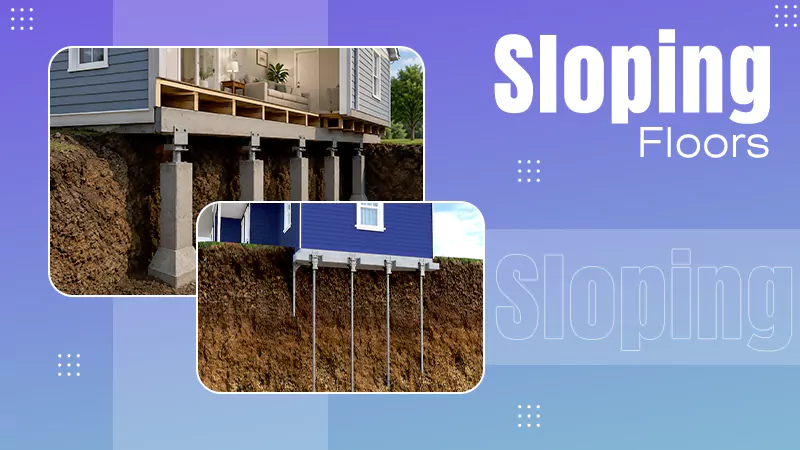
Common Fixes for Sloping Floors, Including Push Piers
[…] many cases, helical piers can also be the right […]