Most homeowners assume that fixing the paint colour, making the guest bathroom look more aesthetic, and replacing the flower beds will get them a better price. It won’t.
The number doesn’t usually depend on the colour of your house or the condition of your garden. The number actually depends on the condition of household systems like water or electricity and legal disclosures, which most homeowners skip even thinking about until the agreement reaches the table.
So, while it’s important to make sure your house looks clean and livable, it’s more important to check the things that actually matter before you list your property because these are the exact things that make the number you expect and the number you get the same.
Central Ideas
- Most people assume that just with simple renovations, their house sale price will go up but until the renovation shows in your sales, it wont.
- The cost of repair is usually less than the cost offered once the buyer sees all damage, hence it is advised to check your house for renovations which are needed before listing it.
- No matter how expensive an addition is, if it is not functional for the house and is used as a decorative piece, then the appraisal really will never increase.
- Federal law requires disclosing known lead paint hazards in homes built before 1978, and states often add their own requirements on top.
Does the Renovation Actually Pay You Back?
According to a Remodeling Impact Report published by the NARI in 2025, complete renovations for the kitchen and a minor kitchen upgrade both have a cost recovery rate of about 60%. This number increases for certain aspects of the house; wood flooring has a 71% cost recovery. This means that every single penny that you spend on renovation does not get earned back. In fact, the gap between what a project actually costs and what it actually is when you list your property is bigger than most people assume it to be.
This basically means that if you spend $40,000 on renovating a kitchen, you might only get $24,000 of it back, which is going to be reflected in your sale price. Just because the renovation was expensive or the products you use were high quality, the price does not increase. This gap between spend and return is where most homeowners go wrong, and that is why it’s worth understanding before you ever list out a property.
On top of this, if you choose the wrong contractor, that gap on returns shrinks further. Our guide on choosing a Renovation contractor gets into what actually separates a smooth job from an expensive one, because delays, change orders, and rushed finishing work all eat into that 60%.
Match the Upgrades to Your Home Type
While thinking of renovations, don’t waste your time listening to generic advice about “adding value” to your home because a 1960s ranch and a new-build townhome fail inspections for completely different reasons.
Understanding what your home type is and what renovations it actually needs can save you a lot of money and can help you list the property for a lot more than you would have for. Because if your home type has an outdated tank or sump setup, an inspector will flag it, and a buyer’s agent will use it to negotiate the price down before you’ve even had the chance to counter. So older homes tend to lose money on things that are mostly not listed, like the plumbing, water systems, or even the storage capacity of the house.
None of this is about being dramatic; it’s about your house having different needs than your neighbours. So renovating your house according to what it needs and not according to what you think will help an inspector read off on his report as “nothing to worry about,” which is exactly the impression you want for listing a good rate of your property.
What Damaged Flooring Really Costs You
Most sellers underestimate this part, but this is exactly the one that loses them more money than any other renovation defect might. A buyer who spots damaged flooring doesn’t just deduct the cost that he will incur while fixing it; he deducts more than that because now he’s questioning what else in this house wasn’t maintained and what are the costs he’ll have to incur while fixing it.
Get a real quote before you list, not a guess. The repair usually costs less than what buyers will knock off once it’s visible.
Three things worth checking before you decide whether to fix or disclose:
- Whether the damage that needs renovation is structural and necessary, or is it just superficial, like a bad wall paint colour.
- Whether the damage is confined only to one room or does it spread across shared spaces.
- Whether fixing it now is cheaper than the price reduction a buyer is likely to negotiate.
It’s a notion that skipping renovation is actually a way of saving money, but it’s not. You are just taking out the cost from your contractor’s invoice into the buyer’s offer, which is usually a lot more.
Personal Touches the Appraisal Won’t Count
Not every renovation will help in increasing the value of your listed property. What actually helps in an appraisal is things like comparable sales, the square footage of the house, and the condition of its systems like water or electricity. Personal touches that add ‘personality’ to your house rarely ever matter on paper.
That custom neon signs feature you installed over the bar cart, the one that makes the room feel like yours? It won’t move the number. Neither will most decor choices, however much they cost or however many compliments they get at parties.
So while it’s okay to still keep these things in the house, just remember to not expect any extra return on it. This is also because these decor pieces aren’t useful to the standard way of living; families can still function without it and hence they do not become factors that are counted in while listing a property.
Selling Fast vs Selling for More
| Traditional Listing | Cash Buyer Service | |
|---|---|---|
| Typical timeline | Weeks to months | Days to two weeks |
| Sale price | Usually higher | Usually below market |
| Repairs required | Often yes | Rarely |
| Certainty of closing | Can fall through | Higher |
Traditional listings and cash-buyer services solve different problems, and it’s worth being honest about which one you actually have. Companies such as I Buy SD buy homes directly from sellers in San Diego County, skipping the usual listing process. That route trades a lower price for speed, which makes sense if you need to move fast, and far less sense if maximizing your sale price is the actual goal.
Know which one you’re optimizing for before you pick a path. Most sellers assume they want speed until they see the number.
What You’re Legally Required to Disclose
A part of the listing that can significantly make closing the deal take longer than it was expected is legal procedures. These have nothing to do with renovations or how a house looks, so most homeowners forget about this part, but not knowing these properly is an expensive mistake to make.
Federal law requires sellers of homes built before 1978 to disclose known lead paint hazards, hand over the EPA, HUD, and CPSC’s joint pamphlet, and give buyers ten days to inspect. States often add their own rules on top, covering asbestos, wetlands, or floodplain location tied to FEMA’s flood insurance program.
Missing such important disclosures isn’t just a mistake; it’s a whole bunch of new problems that arise either in closing the deal or while deflecting the legal cases after a sale happens.
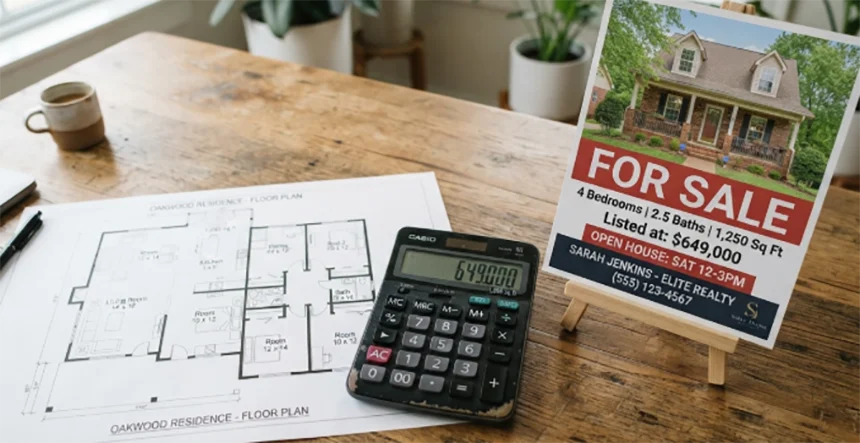
Crunch the Numbers Before You List
Calculating the cost of these numbers is essentially important in offering the right rate for your property. These calculations can actually move the sale price because they include the daily functional features of a house that a family cannot survive without, like water or electricity systems. While none of this is as satisfying as picking a paint color, they are usually the calculations that narrow the gap between what you expect and what you actually get.
So, before you list a property, always make sure you know what your house type is and do the renovations according to it. Renovations done mindlessly or by the wrong contractor are equal to no renovations at all. And usually these renovation costs are much lower than what you get in the offered price once the buyer sees the damage.
FAQs
Does renovating before selling actually increase my home’s value?
While some mindful additions, like fixing the damaged plumbing or flooring, can help you increase your home’s value for selling it. Most renovations do not increase your home value at least to the extent you expect; for example, only 60% of the cost is recovered on major kitchen renovations.
Is fixing damaged flooring before listing a better option than just disclosing it?
Get a repair quote first. In most cases, fixing it costs less than the price cut a buyer will negotiate once they’ve seen it.
Do I have to disclose damage even after a house inspection?
Mostly, you are required to disclose damage inside your house if those particular issues are covered by federal or state laws. Not disclosing it is a legal risk, not just a missed conversation.
Is selling to a cash buyer worth it?
Only if speed and certainty matter more to you than getting the highest possible price. It’s a different trade-off, not a worse one.
- National Association of the Remodeling Industry, 2025 Remodeling Impact Report
- disclosure requirements, via Study.com’s lesson on mandatory federal disclosures in real estate