As per the EPA, solar panels typically have a lifespan of over 25 years. But the roof beneath them may not last that long. That simple mismatch can turn an otherwise smart home improvement into an expensive sequencing mistake.
When homeowners consider solar, the conversation usually revolves around reduced electricity bills, system size, incentives, and payback periods. The roof tends to be treated as little more than the surface holding the panels. In reality, installing solar physically changes the roofing system by adding mounting penetrations, altering drainage and wind loads, and making future work considerably more complicated.
That is why the condition and remaining life of the roof should be evaluated before the system is planned for. If an aging roofing needs replacement halfway through the panels’ service life, the array may have to be removed and reinstalled just to complete the roofing work. Planning the two systems together can avoid that expense and help both the roof and solar array perform as intended.
What Solar Installation Does to the Roof Below It
Solar panels mount to a roof through a racking system that attaches to its structure at multiple penetration points. Each of these attachment points goes through the roofing material, the underlayment, and typically into the structural members beneath. Properly installed, these penetrations are sealed and flashed in ways that maintain the roof’s weather barrier at each mounting point. Improperly installed or inadequately sealed, they become entry points for water that may not produce symptoms immediately, but that creates ongoing moisture infiltration beneath the roofing system at each penetration location.
Installing an array does more than add weight to the roof. It changes how that roof behaves thermally and aerodynamically. Panels mounted close to the surface create a channel between the panel and the roof material where heat accumulates, which can affect shingle performance and accelerate aging in the covered sections. Wind loads on the roofing structure change with the addition of panels that catch wind differently than a bare roof surface, which affects the structural loads the framing experiences during high-wind events.
The panels also change how water moves across the roof surface during rain events. Water that previously drained across the shingle field in a relatively even sheet pattern is redirected by panel edges and racking components in ways that concentrate flow at specific locations, which affects where the roof experiences accelerated wear and where debris accumulates at the edges of panel arrays.
Why Roof Age at the Time of Solar Installation Matters
One question should come before the installation decision: Will the roofing last as long as the panels? Solar arrays have expected operational lifetimes of twenty-five to thirty years. A roof that has ten to fifteen years of remaining service life at the time of solar installation will need replacement while the solar system is still active and producing, and that replacement requires removing the entire solar array, replacing the roof, and reinstalling the array afterward.
Here are the issues that can impede your installation:
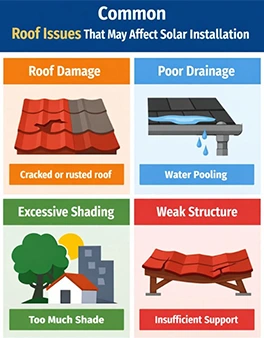
Alt: Common Solar Installation Issues
This removal and reinstallation process costs significantly more than the solar installation cost alone. The labor involved in safely removing panels, storing them, managing the racking system during reroofing, and reinstalling and reconnecting the array after the new roof is installed adds a cost that wasn’t factored into the original solar investment calculation. This additional future cost changes the actual economics of the solar compared to the calculation that was used to justify it.
Homeowners who install solar on a roof with significant remaining service life, ideally a relatively new roof or one that has been recently replaced, avoid this future cost entirely. Those who install on aging roofs that are within a decade of needing replacement will almost certainly face it.
Working with a qualified Roofing Contractor services provider to assess the roof’s current condition and projected remaining service life before committing to solar installation provides the information that makes this decision accurately rather than discovering the need for early roof replacement after the solar system is already in place and the array removal cost is already unavoidable.
The Case for Replacing the Roof Before Adding Solar
If the roofing is already approaching the end of its useful life, the smarter sequence is usually simple: replace the roof first and install solar second. A new roofing provides the full remaining service life that matches the solar system’s operational period, eliminates the future array removal cost that a mid-solar-life roof replacement would create, and provides the optimal surface condition for solar racking installation that gives the mounting system the best possible attachment foundation.
A new roofing also provides the opportunity to ensure that the roofing material selected is compatible with and optimal for solar installation. Certain roofing materials work more effectively with solar racking systems than others, and selecting a roofing material with this consideration in mind during a planned replacement produces a better installation foundation than whatever material happened to be on the roof when the solar decision was made.
The combined cost of roofing replacement and solar when both are planned together is often less than the cost of each planned independently and executed separately, because the coordination efficiencies, contractor relationship management, and single project permitting process reduce the overhead that independent projects each carry separately.
Understanding the Cost of Solar Installation
The number at the bottom of a solar quote tells only part of the story. The costs vary based on system size, roof configuration, local labor rates, and the specific equipment specified, and understanding these variables is essential to evaluating proposals accurately rather than comparing total price figures that reflect different scopes and specifications.
The cost components that most affect solar installation price include panel efficiency and the quantity required to meet the target production level, the racking system and its compatibility with the specific roofing type and pitch, inverter selection and whether a string inverter or microinverter system is specified, and the electrical work required to connect the system to the home’s panel and to the utility grid.
Researching the install solar panels cost from qualified solar and electrical installation professionals provides the baseline for evaluating proposals accurately and understanding what different price points reflect in terms of equipment quality and installation scope rather than simply accepting the proposal that produces the most favorable payback calculation on paper.
The Permit and Inspection Process for Combined Projects
Roof replacement and solar installation may each trigger local permit and inspection requirements, making project sequencing more than a matter of contractor convenience. But combining these projects also creates an opportunity for coordinated permit management that reduces the administrative overhead of managing two separate permit processes independently.
The inspections required for a new roofing installation and for a solar system installation have different triggers and different requirements, but they share the same inspecting authority and the same scheduling process. Coordinating the project timeline so that roofing inspections are completed before solar racking installation begins, and solar installation inspections are scheduled efficiently after the electrical connection work is complete, keeps the project moving without the delays that poorly sequenced permit processes create.
The combined project also creates documentation that covers both systems together, which simplifies the property record for future owners and for insurance purposes compared to the documentation gap that exists when two independent projects were permitted, completed, and documented at different times without any coordinated record of how they relate to each other.
FAQs
Should you replace your roof before installing solar panels?
If the roofing is likely to require replacement well before the solar panels reach the end of their expected lifespan, replacing it first can prevent the added expense of removing and reinstalling the array later.
Do solar panels damage your roof?
Properly designed and installed solar panels should not inherently damage a sound roof.
Can a roof be replaced after solar panels are installed?
Yes, but the solar panels generally need to be removed or otherwise accommodated before reroofing and then reinstalled afterward, adding labor, coordination, and potentially electrical work to the project.