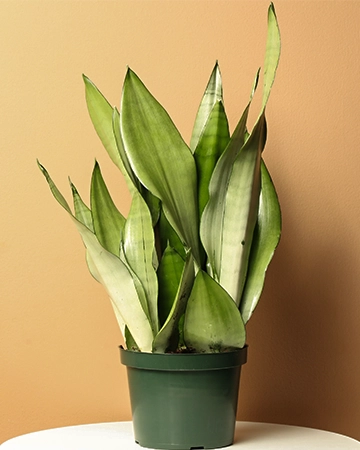
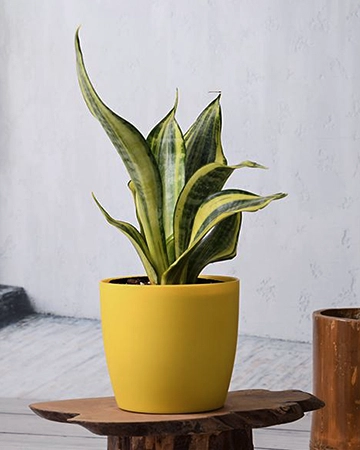
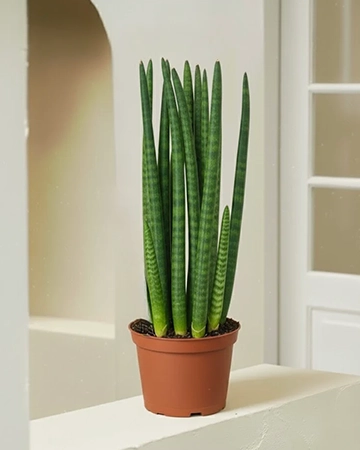
The snake plant, also known as “mother-in-law’s tongue,” is characterized by its high resilience, ability to thrive in harsh conditions, and its upward-growing, sharp, sword-like leaves.
Snake plants, or Sansevieria species, are a genus of xerophytic perennial herbs. The propagation of this genus is a simple process that is primarily done in three ways: propagating by division, propagating in water, and propagating in soil.
Let’s delve into this article to discover how to propagate snake plants and discuss them in detail.
Snake Plant: Overview, Features, and Taxonomy
This genus is a hardy, low-maintenance indoor plant. It has web-like underground roots and thick, sword-like leaves with unique patterns and shading. They can purify the indoor air quality and remove toxins. Snake plants can thrive in various light conditions, from low light to bright indirect sunlight, requiring infrequent watering as they are prone to root rot.
Features of Snake Plants:
Appearance
Thick and fleshy leaves.
Variegated green, yellow, or silvery patterns.
It can grow several feet tall.
Care
Thieves in bright, indirect light.
Can tolerate low light.
Requires infrequent watering.
Air Purification
Can filter toxins like xylene, benzene, and formaldehyde from the air.
Unique Feature
Are capable of converting carbon dioxide into oxygen at night.
Names
Mother-in-law’s tongue.
Viper’s bowstring hemp.
Taxonomy of Snake Plants
Kingdom
Plantae
Phylum
Tracheophyta (Vascular plants)
Class
Liliopsida (Monocots)
Order
Asparagales
Family
Asparagaceae (Asparagus family)
Subfamily
Nolinoideae (or Convallarioideae)
Tribe
Dracaeneae
Genus
Dracaena (formerly Sansevieria)
Species
Dracaena trifasciata
Why Propagate Snake Plants?
Snake plants are propagated in order to multiply them easily for free. The various reasons to propagate these air-purifying plants include:
Instead of buying new plants, one can expand their collection by propagating them, which will result in saving money.
Propagation helps in managing the crowded plants, as division provides space and keeps the mother plant healthy.
Tall snake plants can get damaged, and the leaves may bend over. Cutting them helps to turn the damaged leaves into a whole new plant, and can prevent further
Propagated plants make an outstanding gift for family and friends.
How to Propagate a Snake Plant? The Three Different Methods I Tried
These plants can be propagated through three main methods, which include water propagation, soil propagation, and division. Now, let’s go into details regarding the methods to understand how to propagate these snake plants correctly:
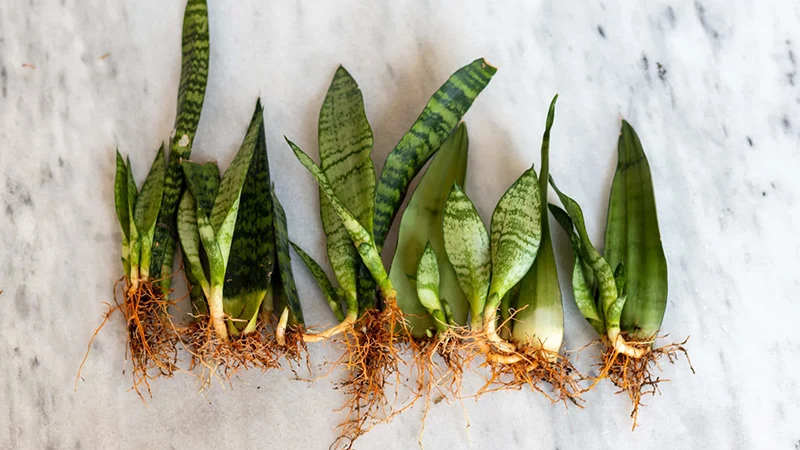
How to Propagate Snake Plants by Division (Rhizomes)?
This is considered the fastest method and is ideal when the plant is crowded, and you want to produce new, established plants quickly and maintain specific variegation. This method constitutes the following steps:
Remove the plant from the pot and shake off the excess soil.
Identify the pups, and separate the root balls into different sections, making sure that every part has roots.
Use a sharp and clean knife to cut through the rhizomes.
Replant each section in its own pot.
How to Propagate Snake Plants in Water (Leaf Cuttings)?
This method is preferred to monitor the root development and to reduce the risk of uncertainty, as it ensures high success rates. To know how to propagate a snake plant in water, let’s go through the following steps:
Select a healthy leaf, and cut it near the base.
Let it callus for a few days to prevent rot.
Place the bottom end of the cuttings in a jar or container of clean water.
Ensure that only the base of the cuttings is submerged.
Place it in bright, indirect light, and change the water every week until roots and new pups appear.
Once roots appear, plant the cutting in well-draining soil.
How to Propagate Snake Plants in Soil?
This method of propagation is best when seeking long-term stability, higher success rates against rotting, and the ability to handle multiple cuttings at once. It also eradicates the need to transfer them to soil later on. To propagate snake plants in soil, we follow these steps:
Choose a firm and healthy leaf, and cut it at the base with a sharp knife.
Keep the cuttings in a shaded, dry place for 2 to 5 days to callus.
Insert the cuttings about 1-2 inches deep into the pot (make sure they are placed bottom-side down).
Water them sparingly (only when the soil is completely dry) to avoid rotting.
Place the pot or jar in a bright, indirect light.
Be patient as rooting may take around 6-8 weeks.
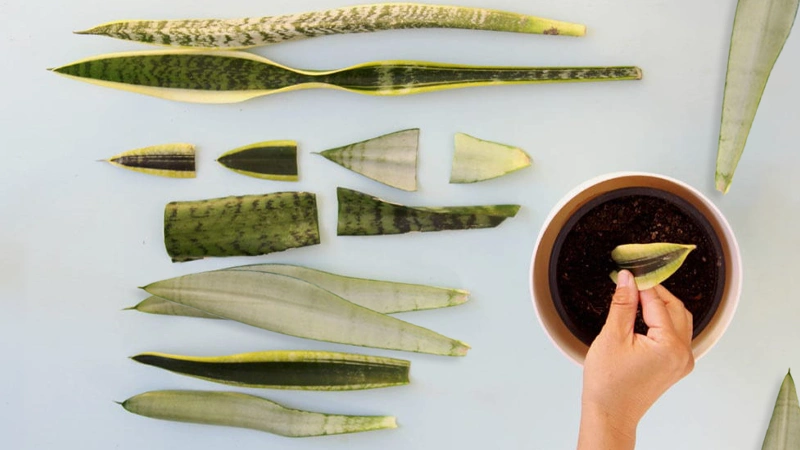
How to Cut Snake Plant for Propagation?
We always wonder how to cut a snake plant for propagation, what is the correct way, did I do it in the wrong manner, and so on. Although it is an easy task, but also quite delicate, as it includes certain steps or methods that need to be kept in mind:
While cutting, ensure that you use a disinfected, sharp knife to make a clean cut.
It is preferred to cut it in a V-shape to increase the surface area.
After cutting the leaf into segments, allow them to dry and callus for a few days.
Maintain the original polarity by placing the bottom end down in the soil or water.
Now, wait patiently for roots to form before transplanting.
Did you know?
Water propagation of variegated snake plants can result in non-variegated or green new growth. Therefore, it is best to propagate them by using the division method.
Best Time to Propagate a Snake Plant
The best time to propagate snake plants is in spring or early summer, as it is their active growing season. During this period, the temperature is warmer (around 65°–80°/18°–27°), and the days are also longer, which results in optimal growth of these plants and reduces the risk of rotting.
Important Tips for Success:
The best method to propagate a snake plant is via leaf cutting in water or soil.
Another successful method is to separate the pups during repotting.
Always keep the original, bottom side of the leaf cutting facing down in the soil or water, because polarity matters a lot when it comes to propagation.
Before planting, allow the leaf cuttings to dry for 1-2 days in order to prevent rotting.
Place the cuttings in bright, indirect light, and do not put water unless the soil is absolutely dry.
You have to be very patient as they are very slow-growing, and their rooting can take several months.
It is better to take cuttings in the early morning or late afternoon to minimize the stress on the plant.
If we are propagating snake plants in water, then it is essential to transfer them to soil later on for their long-term survival and growth, because water can not provide the required nutrients and strength to the roots, resulting in weak and rotted plants.
How to Transfer Water-Propagated Snake Plants to Soil?
Water-propagated snake plants can be transferred to soil, which typically takes several weeks, once the roots are at least 1-2 inches long. Step-by-step guide to understanding how to transfer them:
Prepare a container (terracotta is the best choice as it helps the soil to dry out) with drainage holes.
Prepare the soil with succulent or cactus potting mix. A regular potting mix consisting of perlite (for extra drainage) can also be used.
Now place the rooted cutting in the pot and fill it with soil, making sure the roots are fully covered and the cutting is stable. But do not bury it too deep.
Initially, water the plant lightly to settle the soil.
During the first few weeks (1-3), ensure that the soil is slightly moist, rather than completely dry, to help the roots adjust from water to soil.
Around week 3, when it’s established properly, allow the soil to dry out completely before watering again. Avoid overwatering as these plants are prone to rot.
Care Tips for Newly Propagated Snake Plants
Newly propagated snake plants require bright, indirect light, well-draining succulent soil, and minimal water to establish strong roots and prevent rotting. The important care tips for newly propagated snake plants include:
Place them in bright, indirect light, as direct sun can burn the new, soft, and tender leaves.
Good drainage is very crucial; therefore, use a fast-draining succulent potting mix.
Water only after every 10-15 days, when the soil is completely dry. Since the plant becomes dormant in winter, reduce watering significantly.
Snake plants prefer to be slightly root-bound, so using small pots are better choice.
If there are any yellowing or damaged leaves at the base, trim them to keep the plant healthy.
Do not use fertilizers immediately after the new propagation. Only feed sparingly during spring or summer, if necessary.
If rooting in water, change the water every week to prevent bacteria.
Common Problems During the Propagation
Just like any other plant, Snake plants also suffer from certain problems that take place during propagation. The most common problems in propagation include:
Rotting and Desiccation: This is the most common problem, in which the leaves become mushy or slimy due to excess water and lack of oxygen.
Loss of Variegation: When propagating by leaf cuttings, the pups often lose the yellow variegated edges and revert to plain green.
For example, in Laurentii varieties.
Fungal Diseases: Excessive humidity or mist can lead to fungal infections. Not using a sterile tool to take cuttings can also lead to infections.
Temperature Issue: If the temperature is cold, i.e., below 10°C (50°F), it can hinder the development of roots.
Improper Cutting Orientation: Accidentally placing the cuttings or segments upside down will prevent them from rooting.
Leaves have a unique, luminous silvery-green color.
Can appear almost white or grayish in lower light.
Usually grows up to 1-3 feet.
Texture is smooth and slightly waxy.
Very drought-tolerant.
Highly versatile in nature.
Is an easy-to-take-care-of plant.
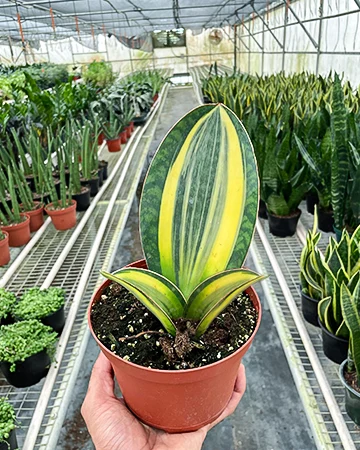
Golden Hahnii
Leaves are short, wide, and sword-shaped.
Arranged in a tight, cup-like rosette.
The leaf’s center is variegated with dark green.
Has silvery-grey-green bands.
Has golden-yellow striped borders.
Is a dwarf cultivar.
Grows in a dense, succulent, spiralling, bird’s-nest shape.
Highly resilient and “hard-to-kill”.
Prefers bright, indirect light as it enhances its yellow colour.
Requires very little water.
Prefers warm and dry conditions.
Cylindrica
Leaves are tubular.
Can grow up to 7 feet.
Dark green in colour, with lighter grey-green cross-bands.
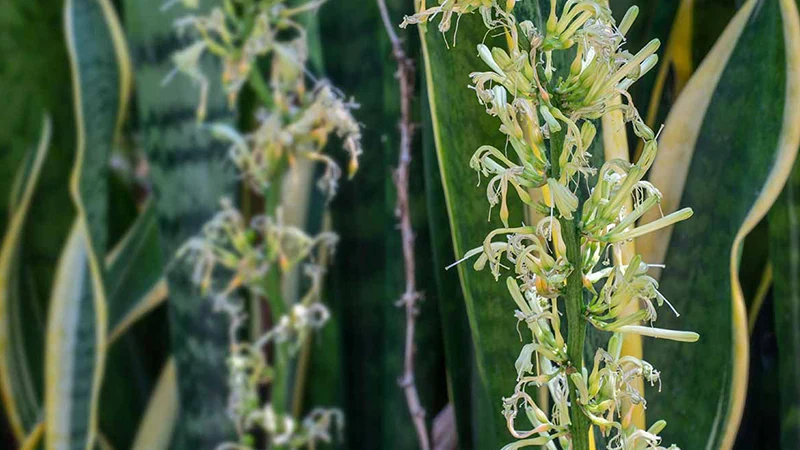
Mature plants may produce small, fragrant, cream, white, or pink flowers.
Upright, stiff, and slow-growing.
Extremely drought-tolerant.
Stores water in their leaves.
Toxic to pets and children if ingested.
Laurentii
Upright, sword-like leaves.
Arranged in dense, vertical clumps.
Has bright yellow edges.
Is a mix of dark green and light grey-green, wavy, and “snakeskin” banding.
Grows up to 4 feet.
May produce small, fragrant, greenish-white flowers.
Extremely resilient.
Thrives in bright, indirect light.
Prefers well-drained, dry soil.
Conclusion
Snake plant propagation is very effective, successful, and straightforward, which yields the best results by division of mature plants or leaf cuttings (in water or soil) to expand its growth.
When it comes to snake plant propagation, there are three effective methods, which are: Division method (the fastest and most reliable method), Soil propagation (best method for mass production), and Water propagation (most beginner-friendly method).
It is quite slow-growing, usually taking around 6-8 weeks to root. Propagation through cuttings may result in the loss of variegation, reverting it to solid green. And avoid overwatering in order to prevent root rot.
FAQs
What is the best way to propagate a snake plant?
Division is the fastest and best method, as there is no risk of loss of variegation.
Can you grow a snake plant from a single leaf?
Yes, a single leaf can be cut into multiple sections, creating several new plants.
How do I make sure I don’t plant it upside down?
Cut the bottom of the segment in a V-shape or mark it with a small notch to keep track of the orientation.
What type of soil should I use?
Use a well-draining potting mix, such as succulent or cactus mix.
How to prune snake plants?
Trim dead or damaged leaves at the base with clean shears.